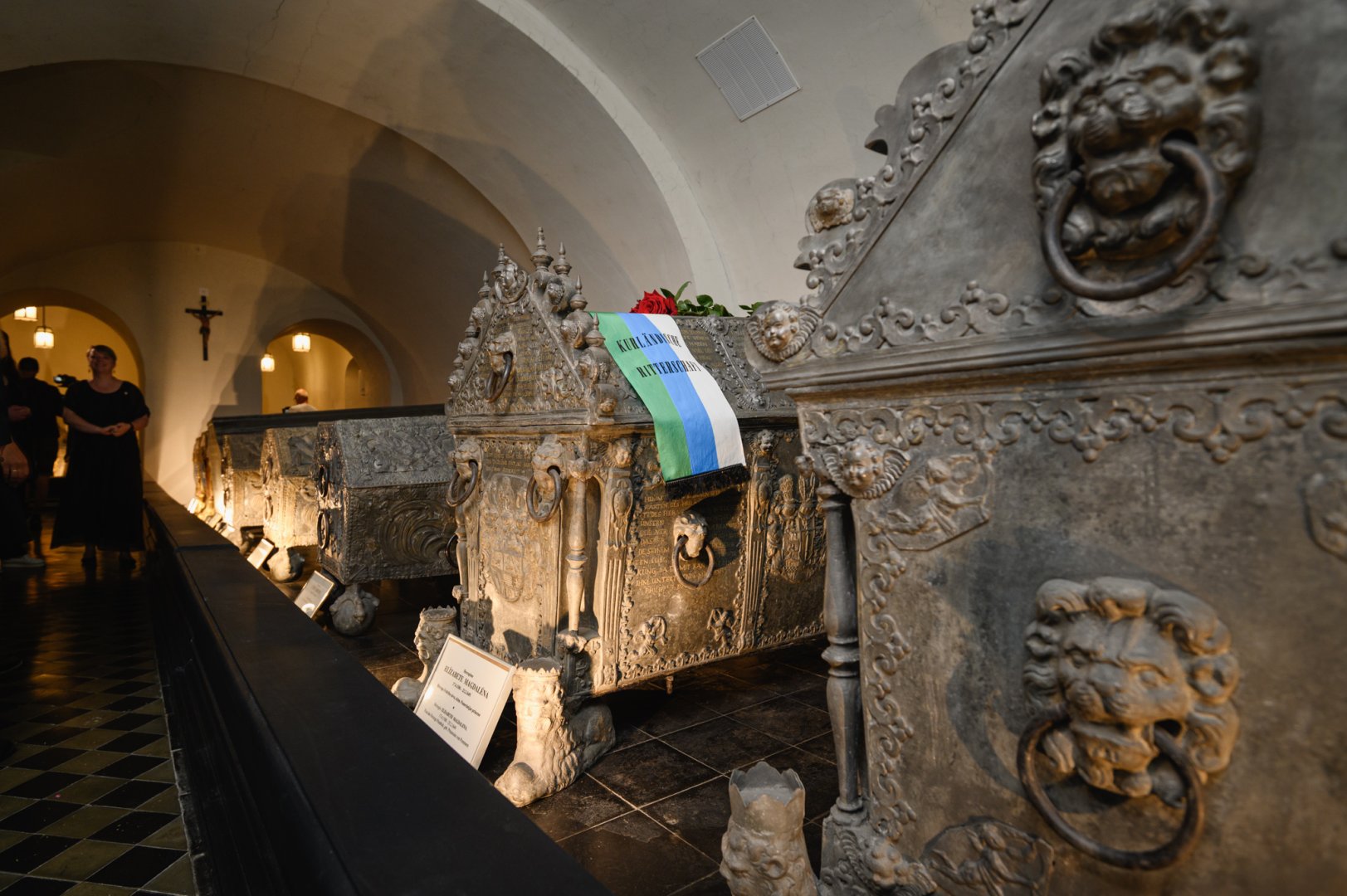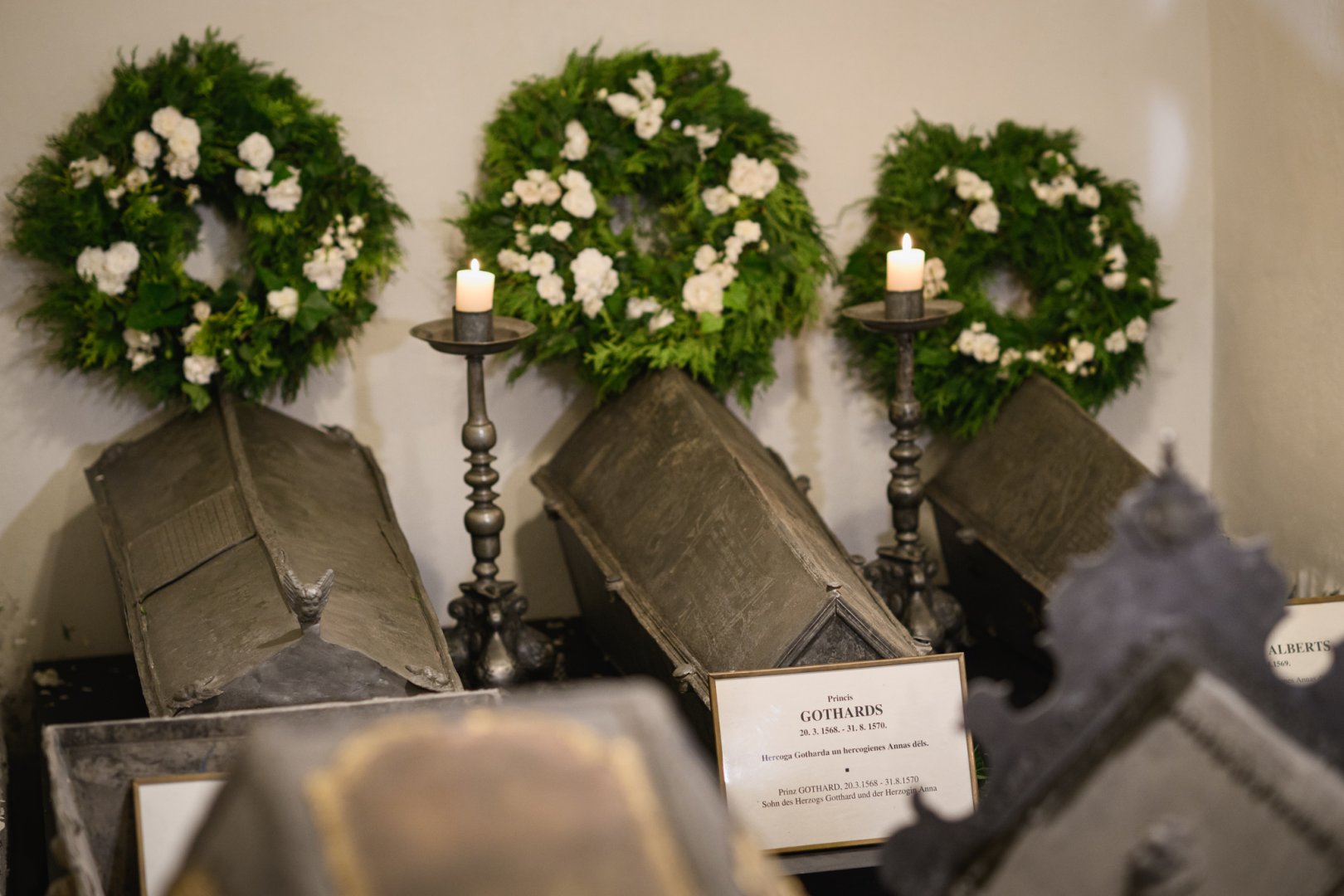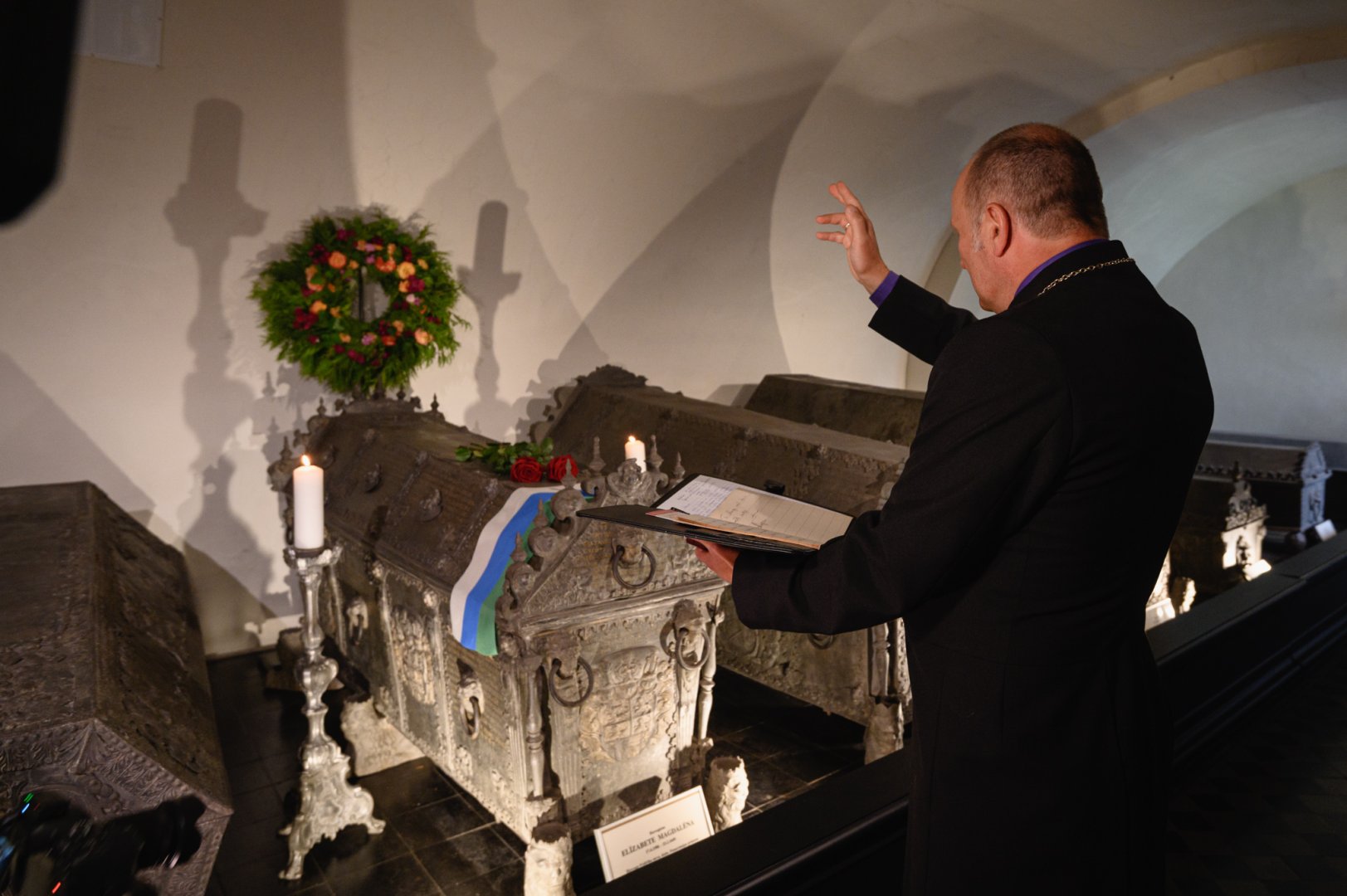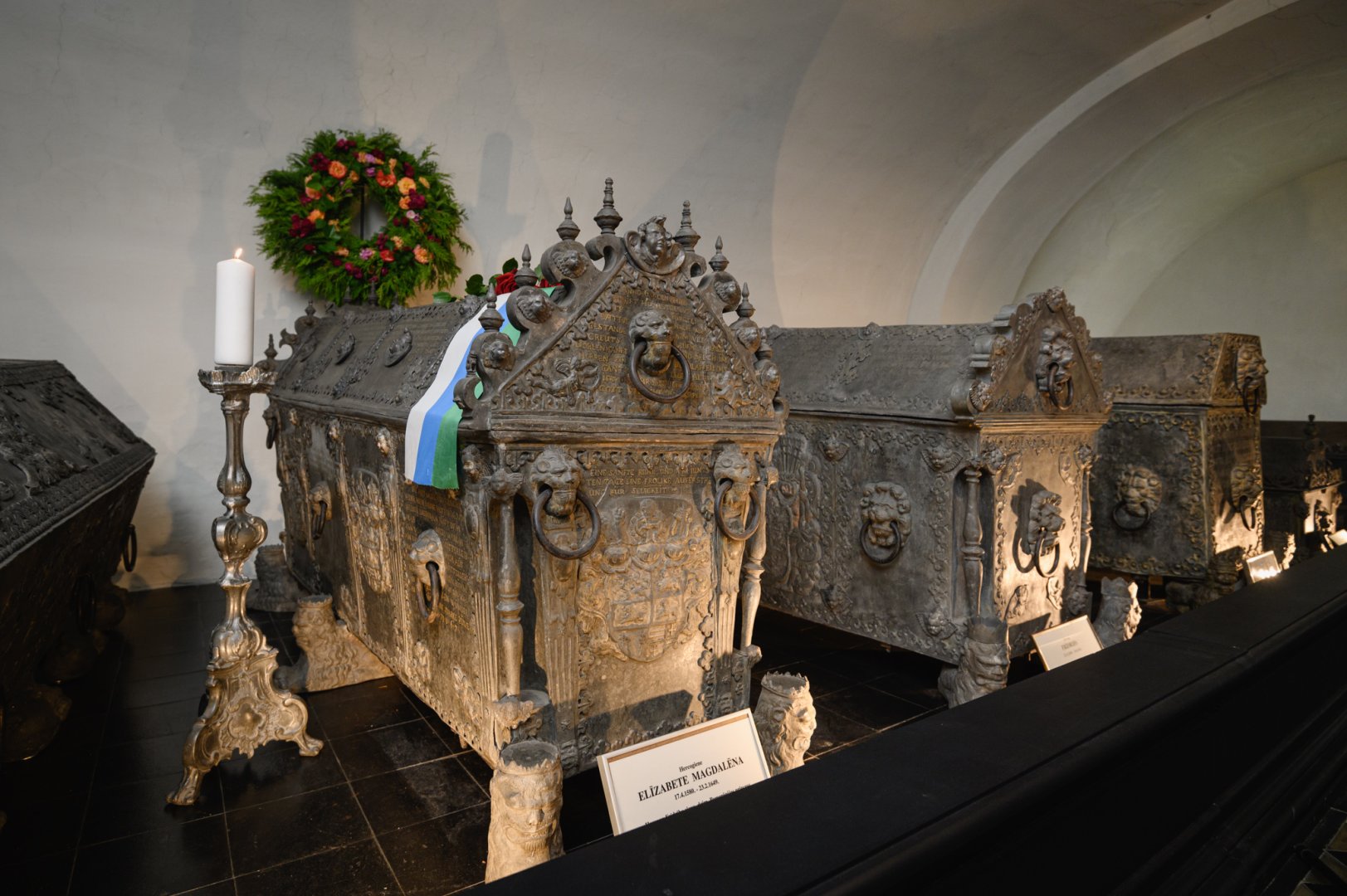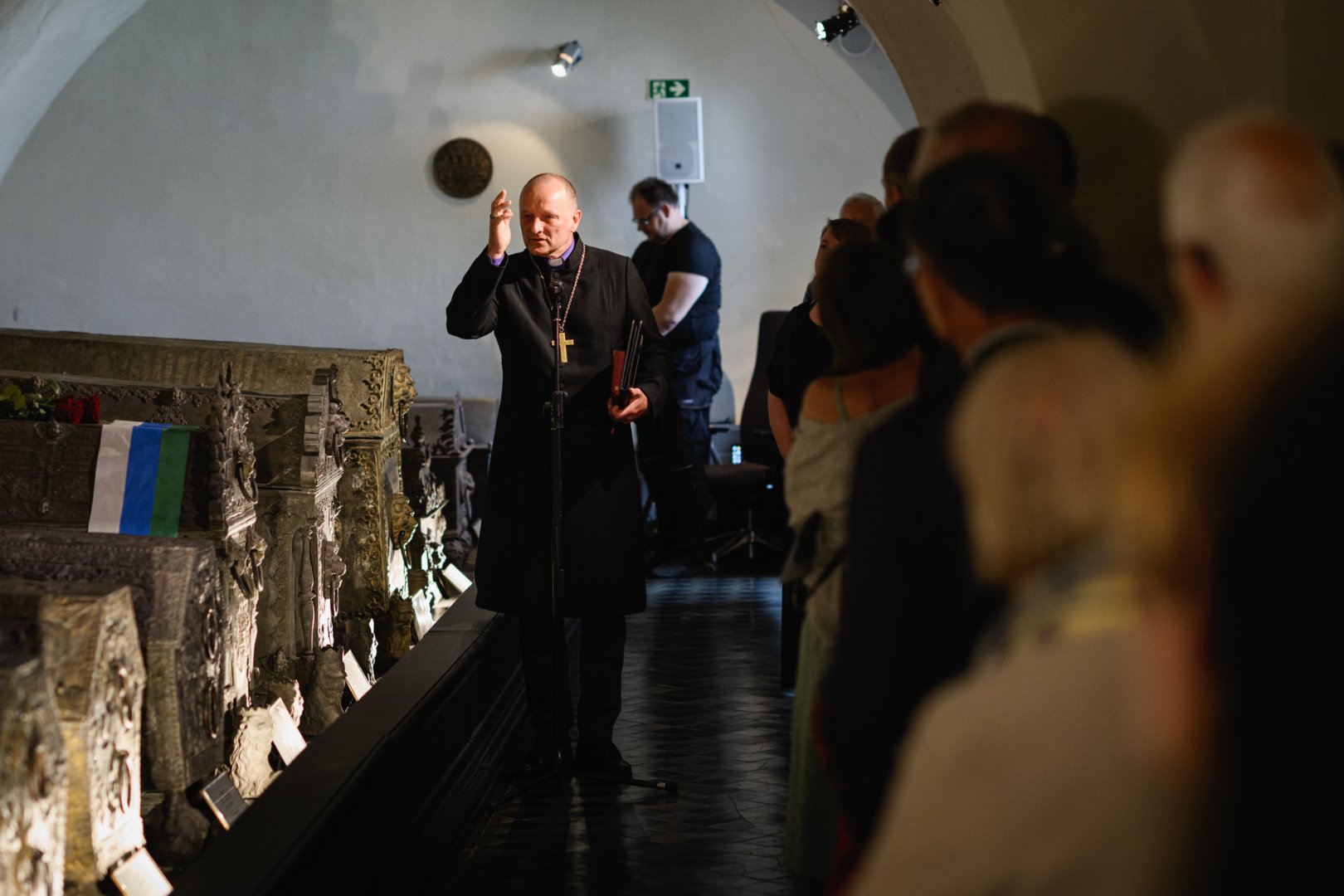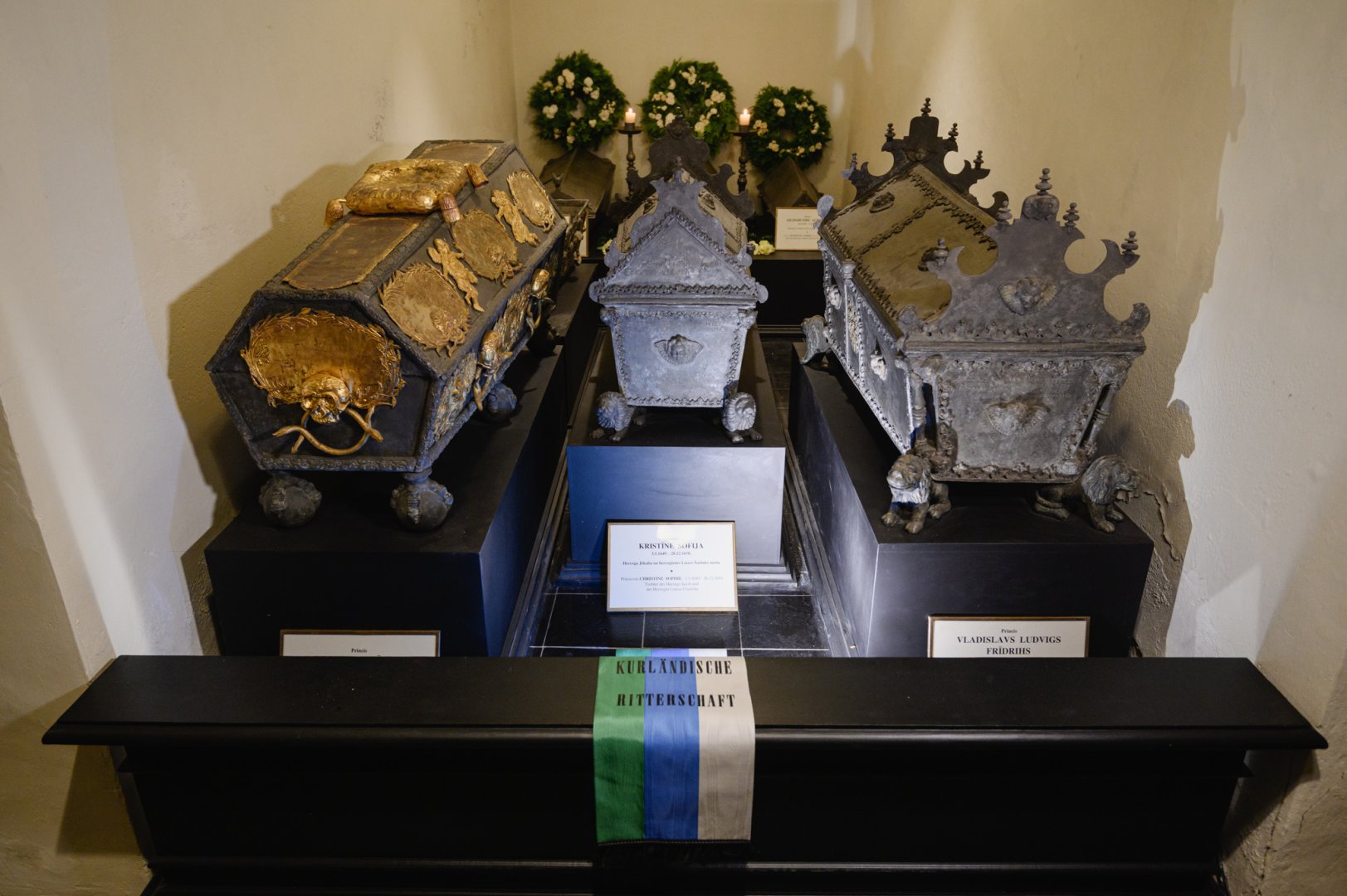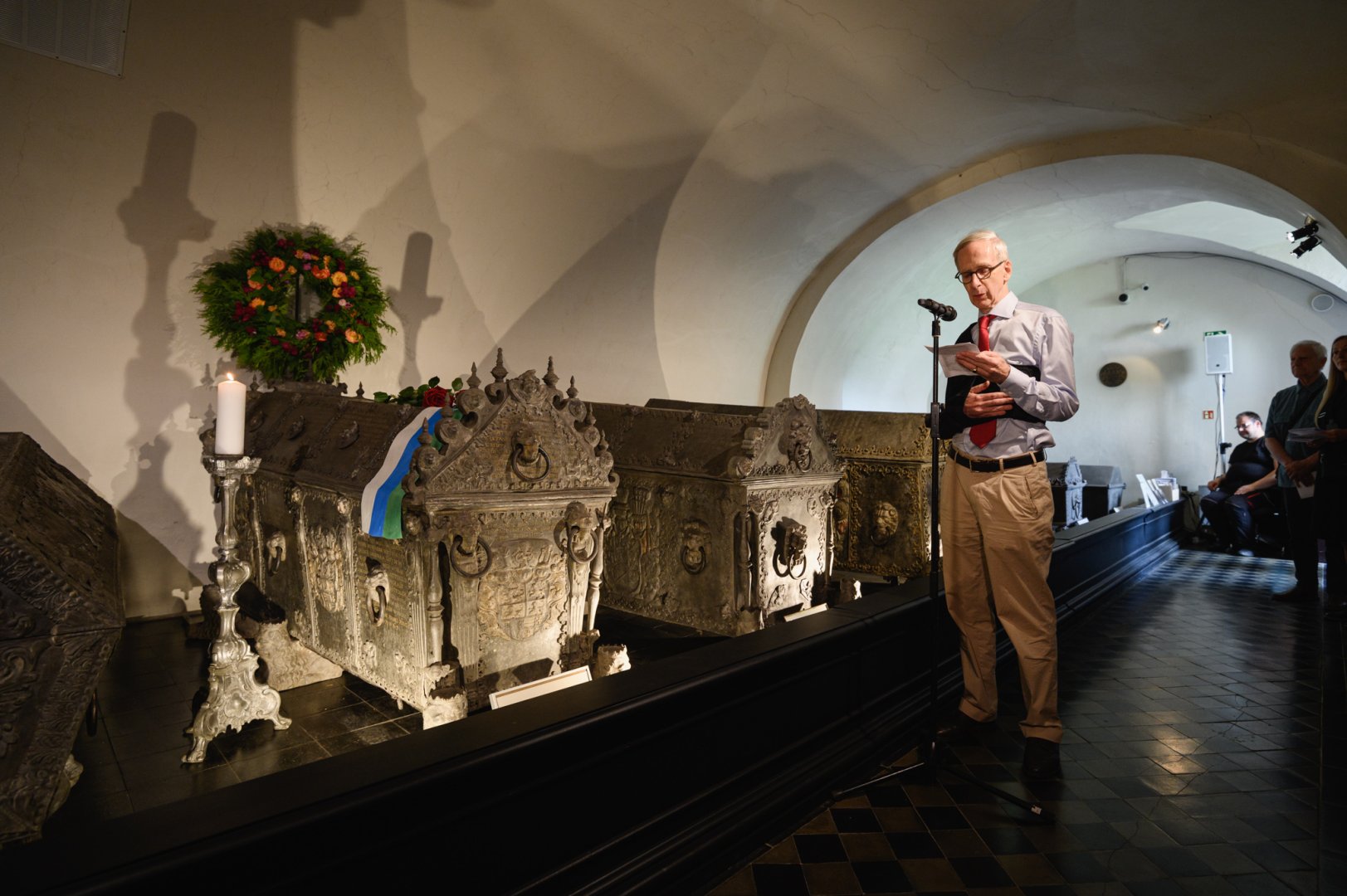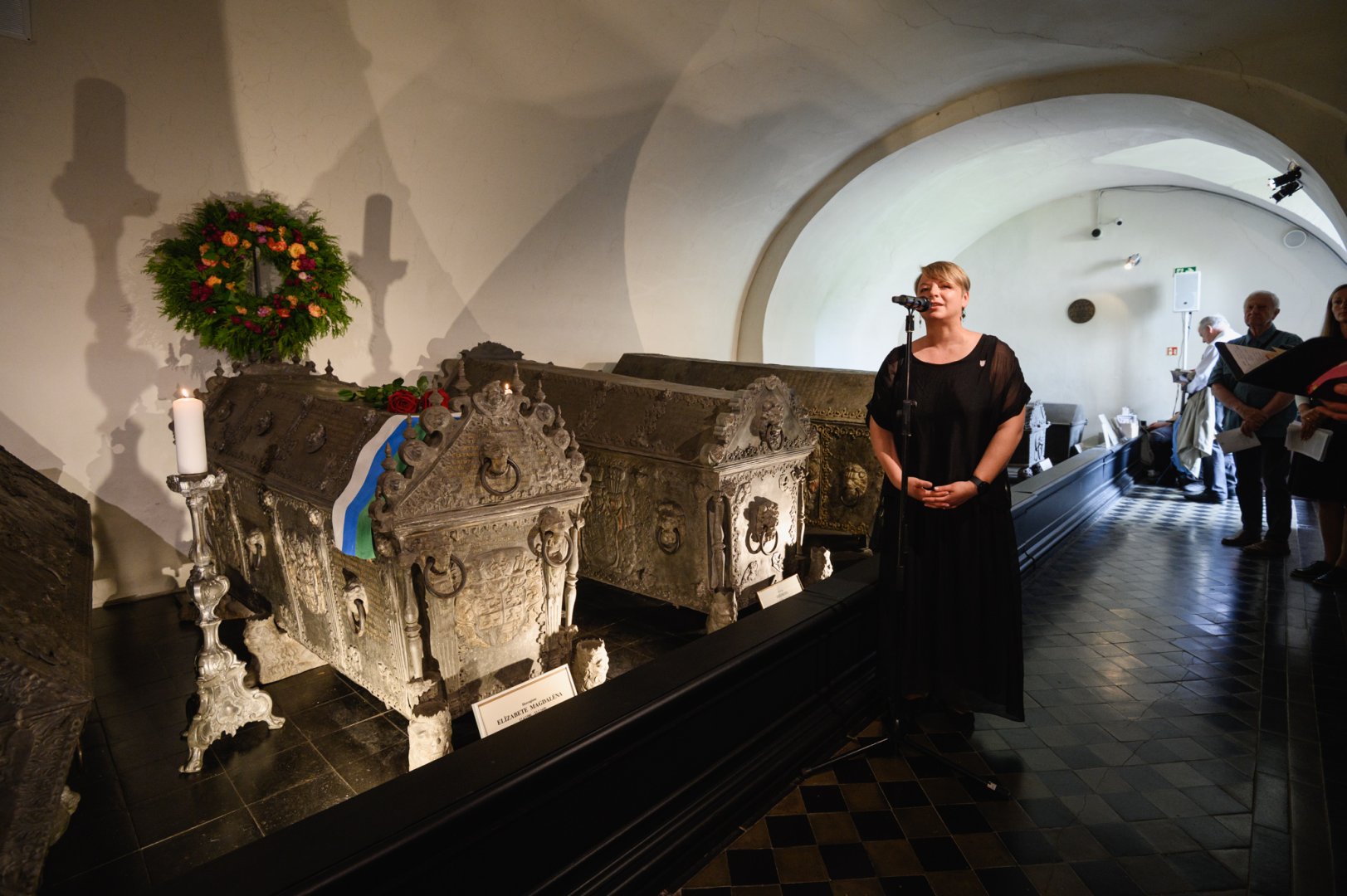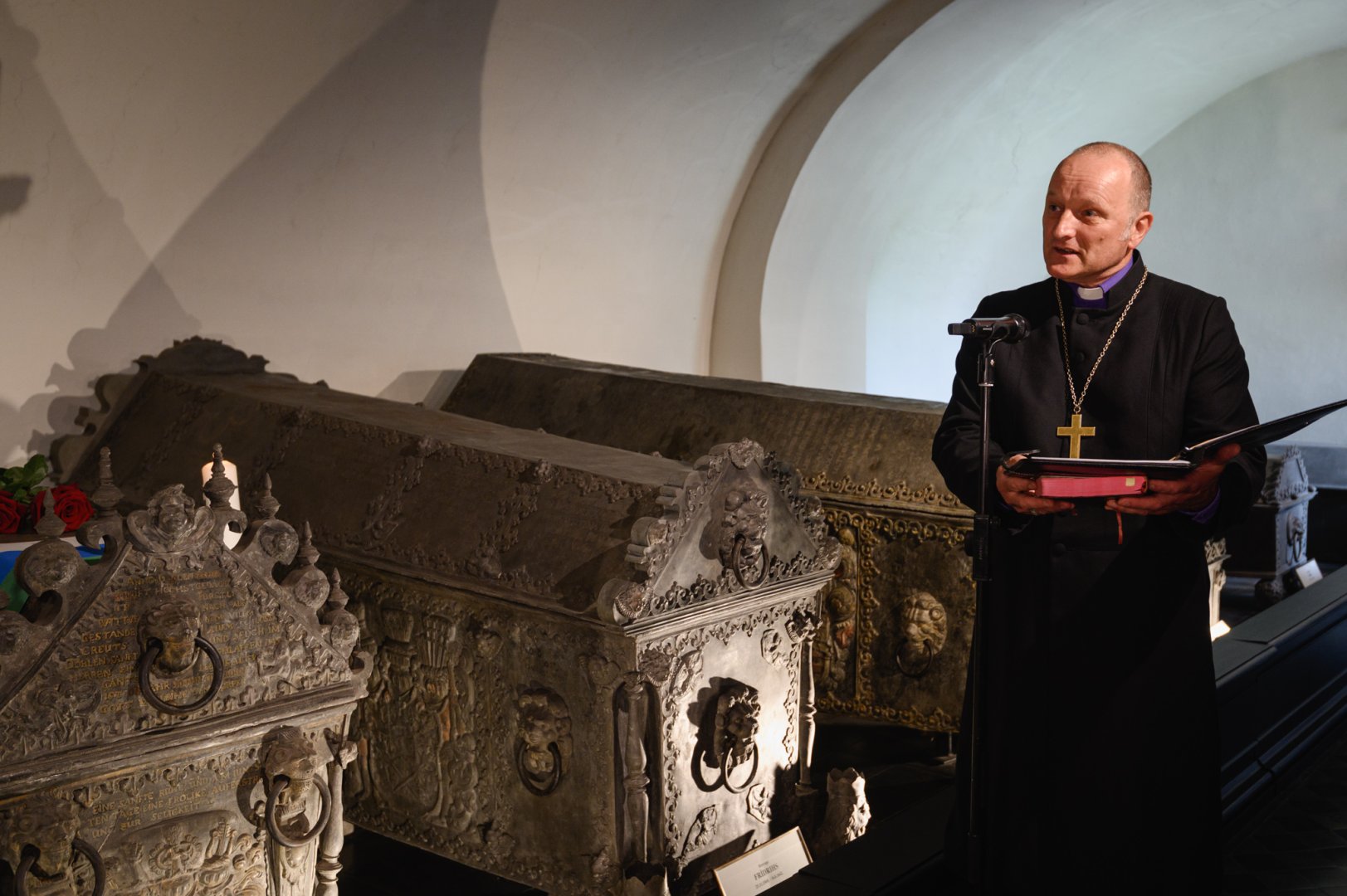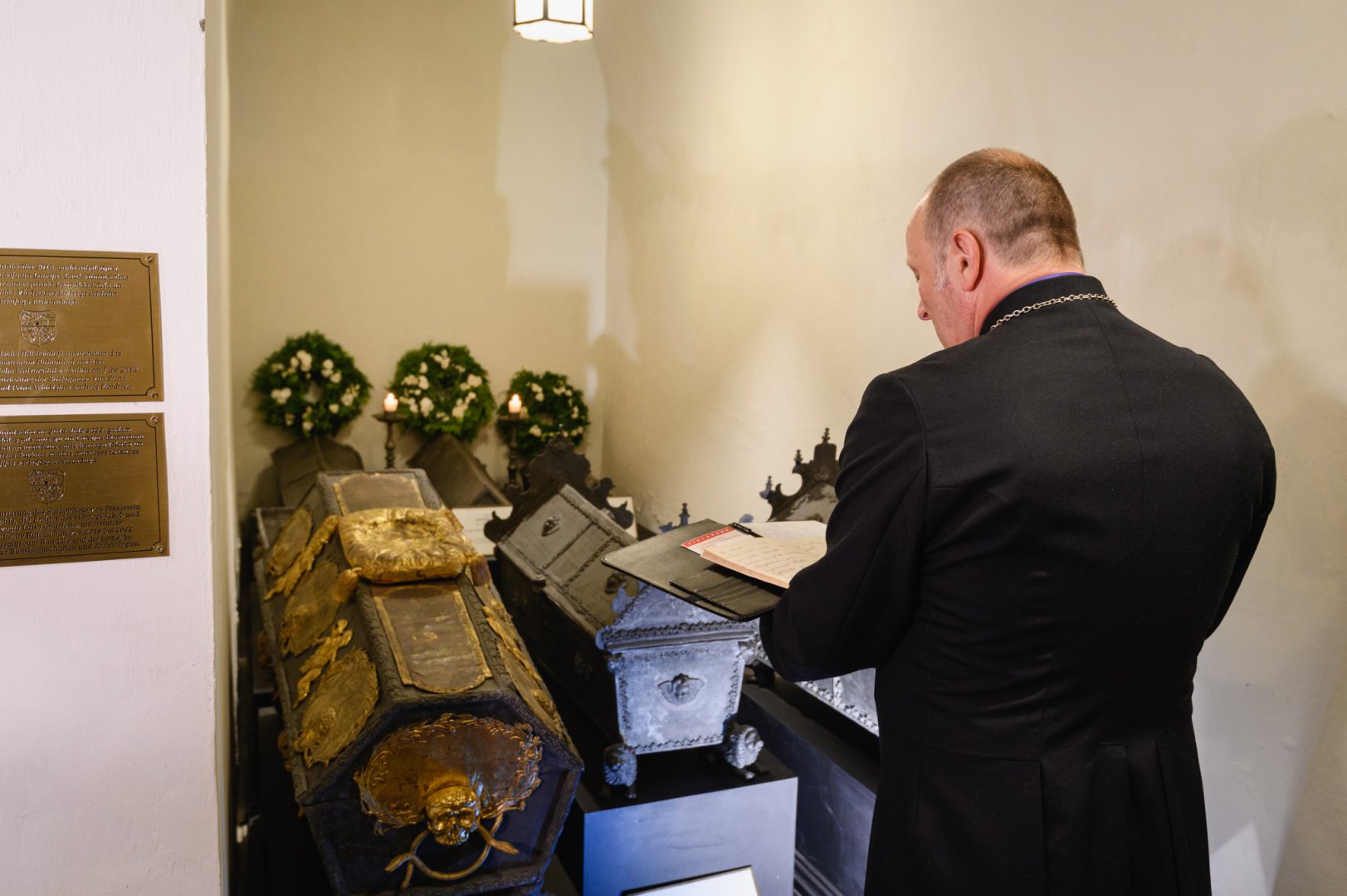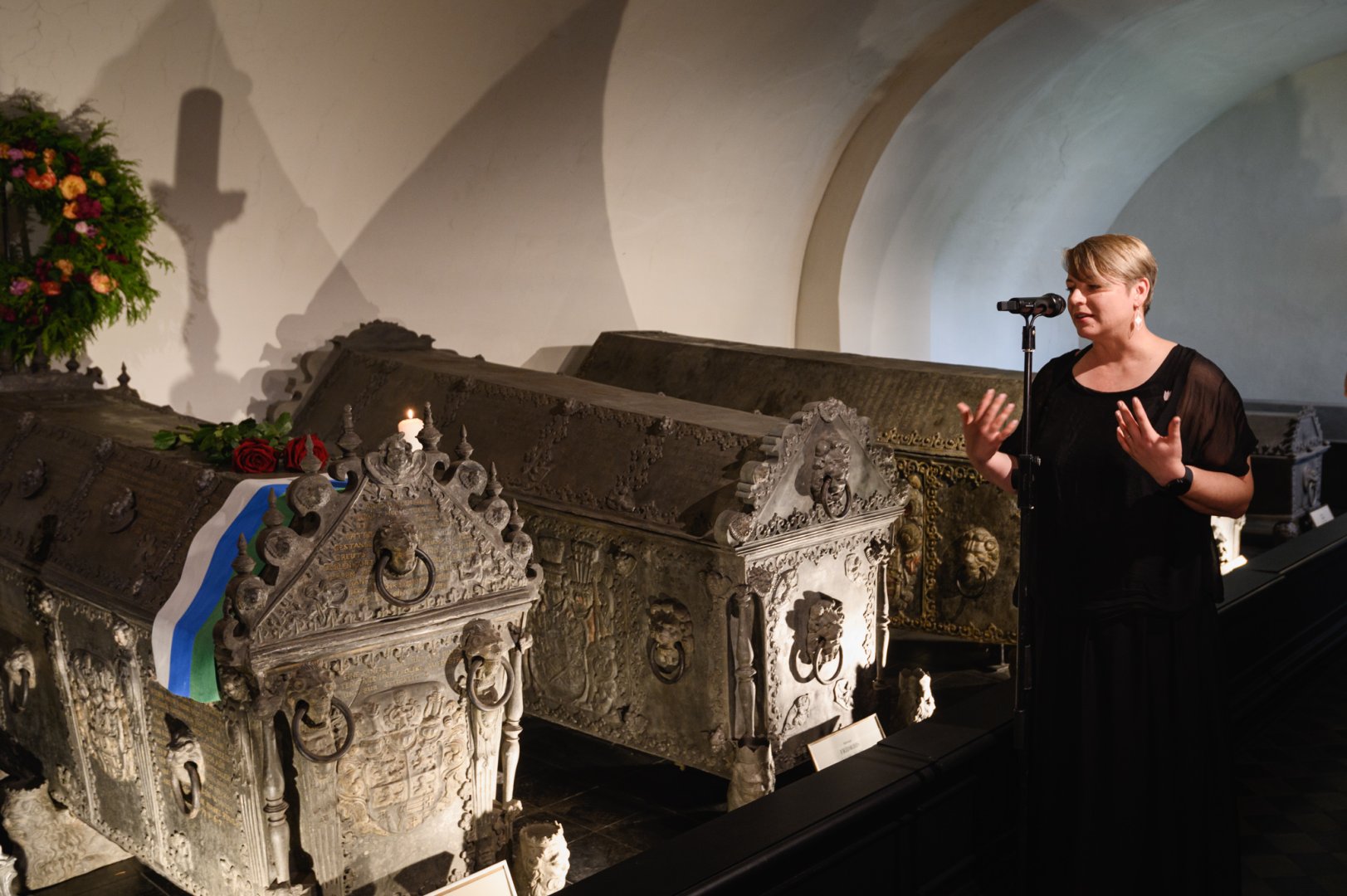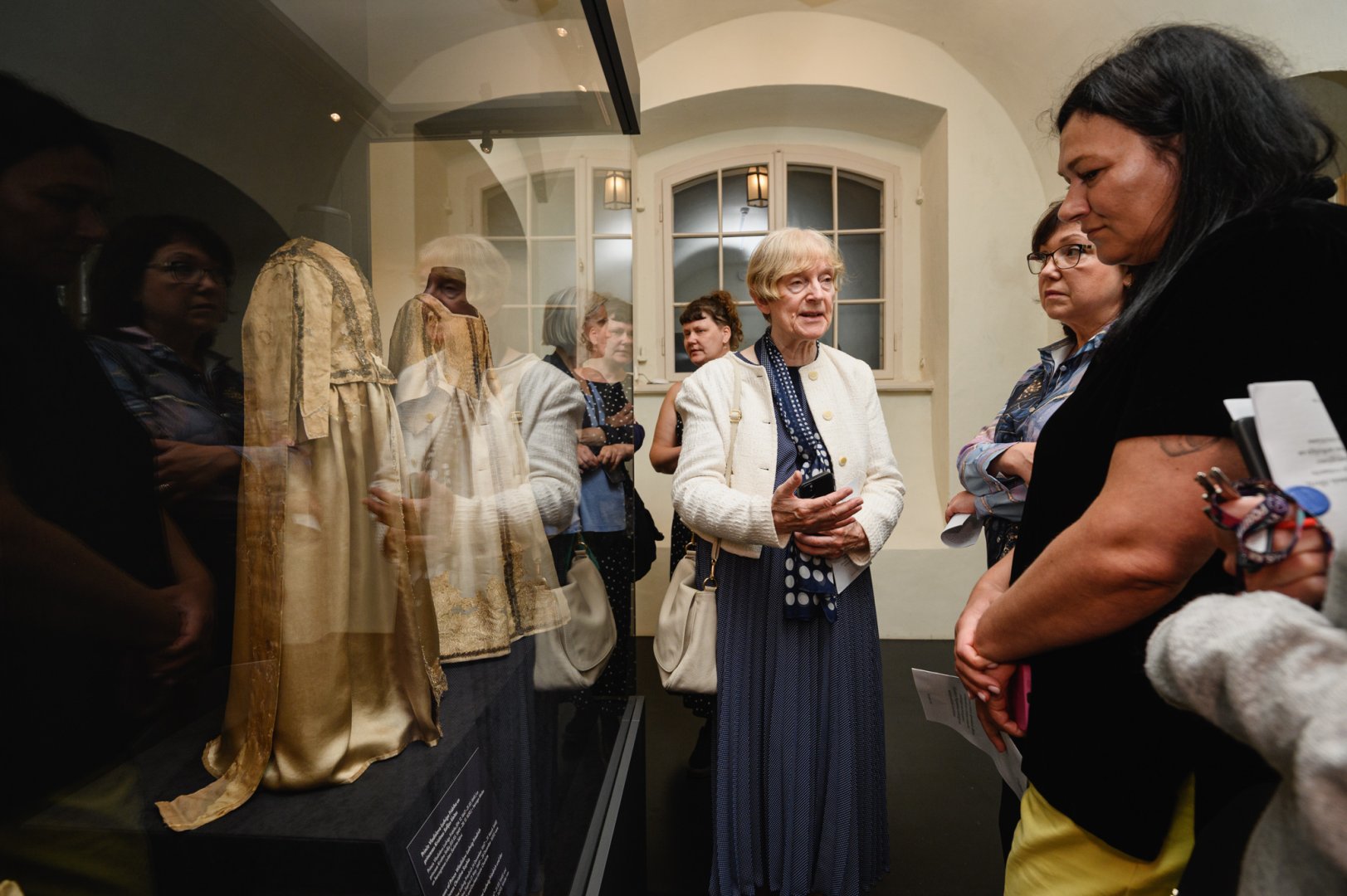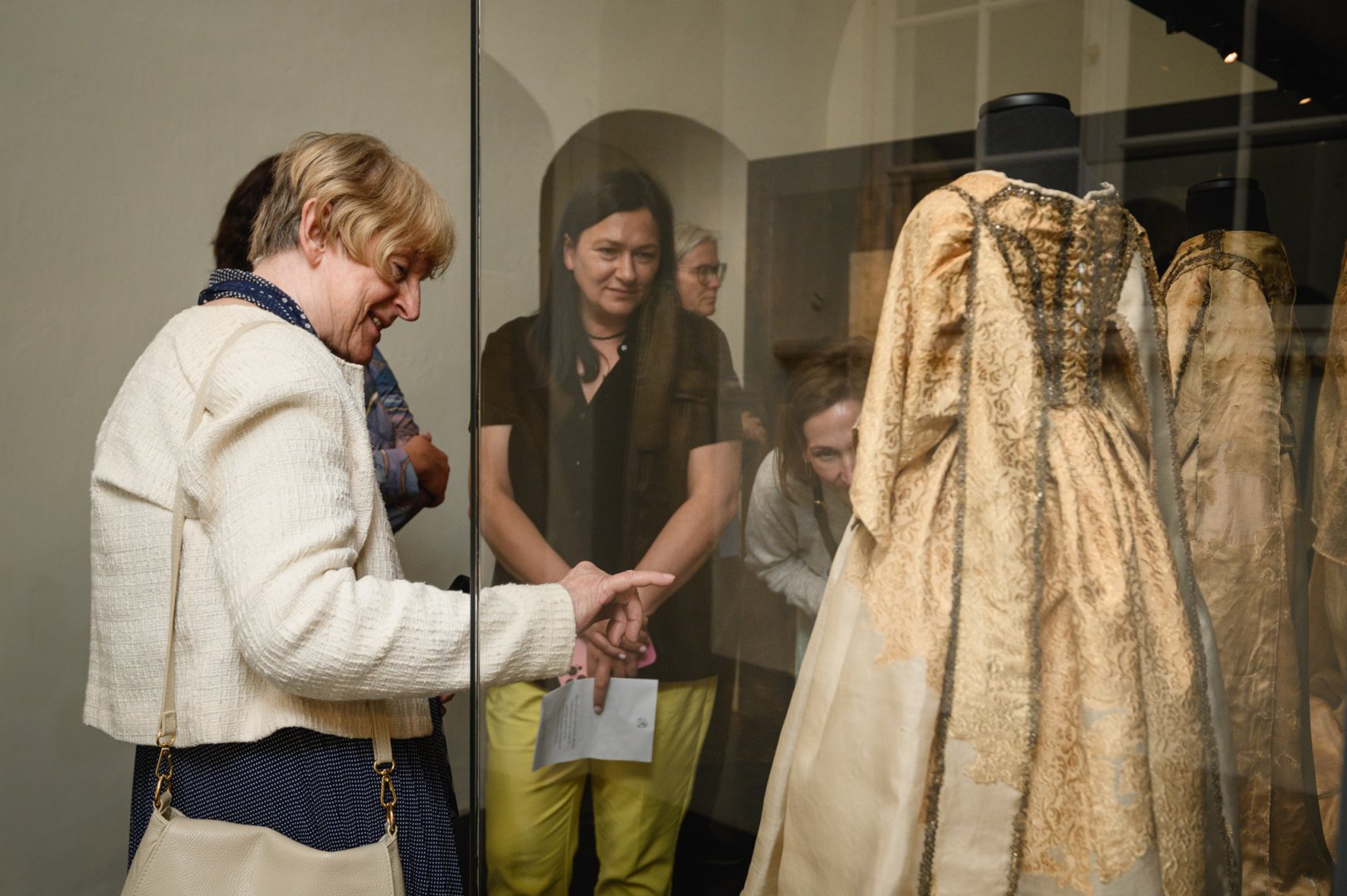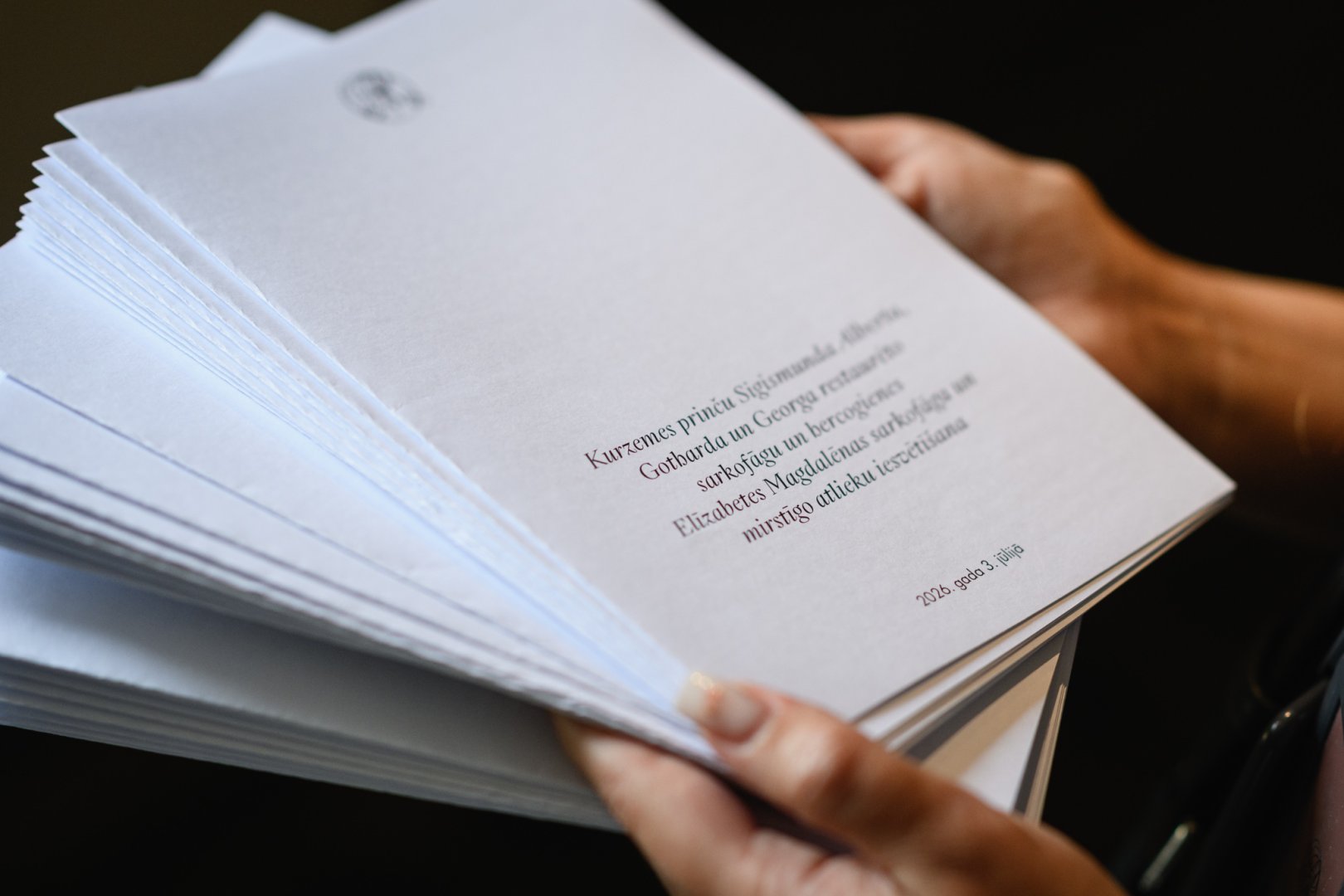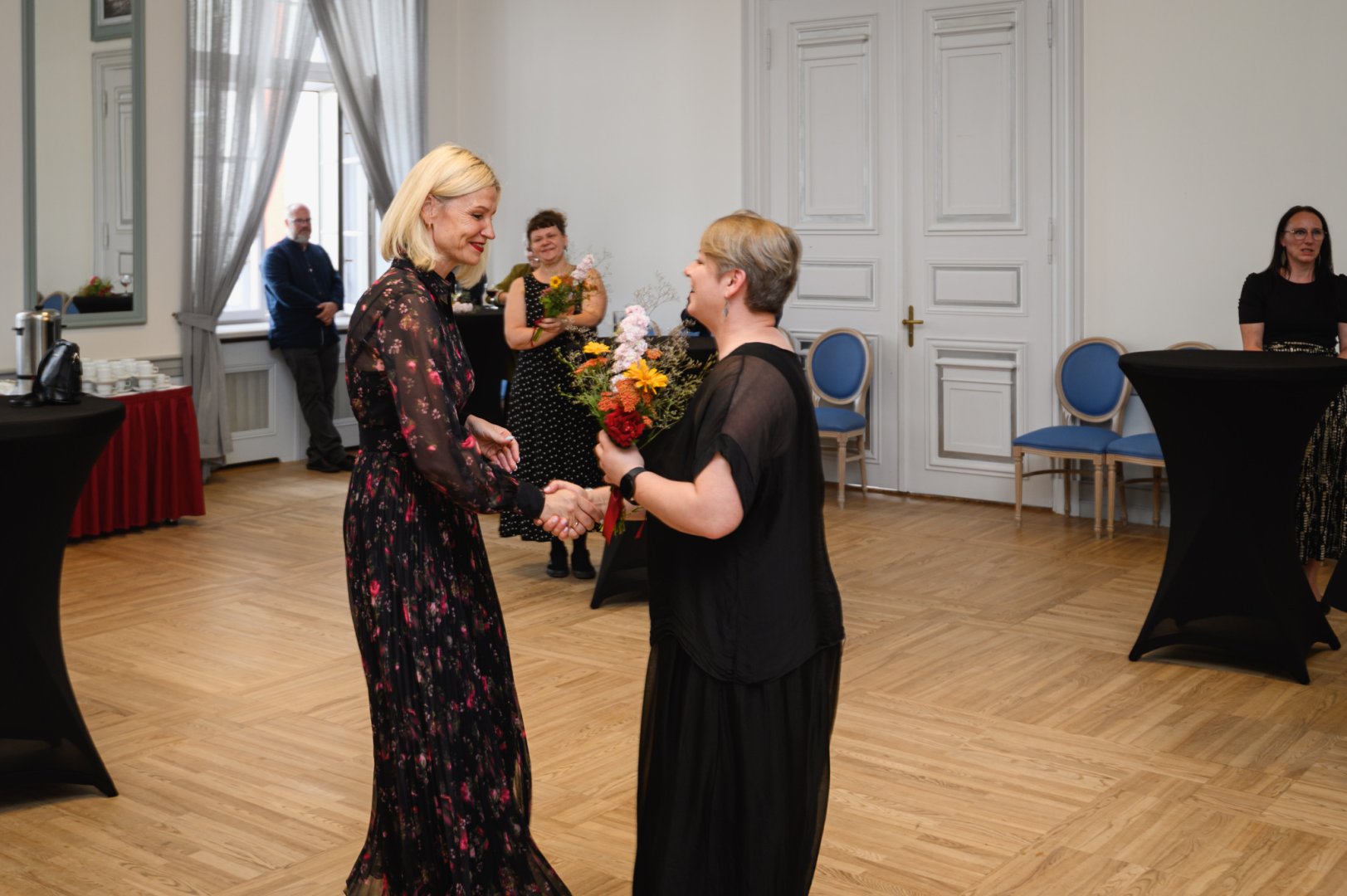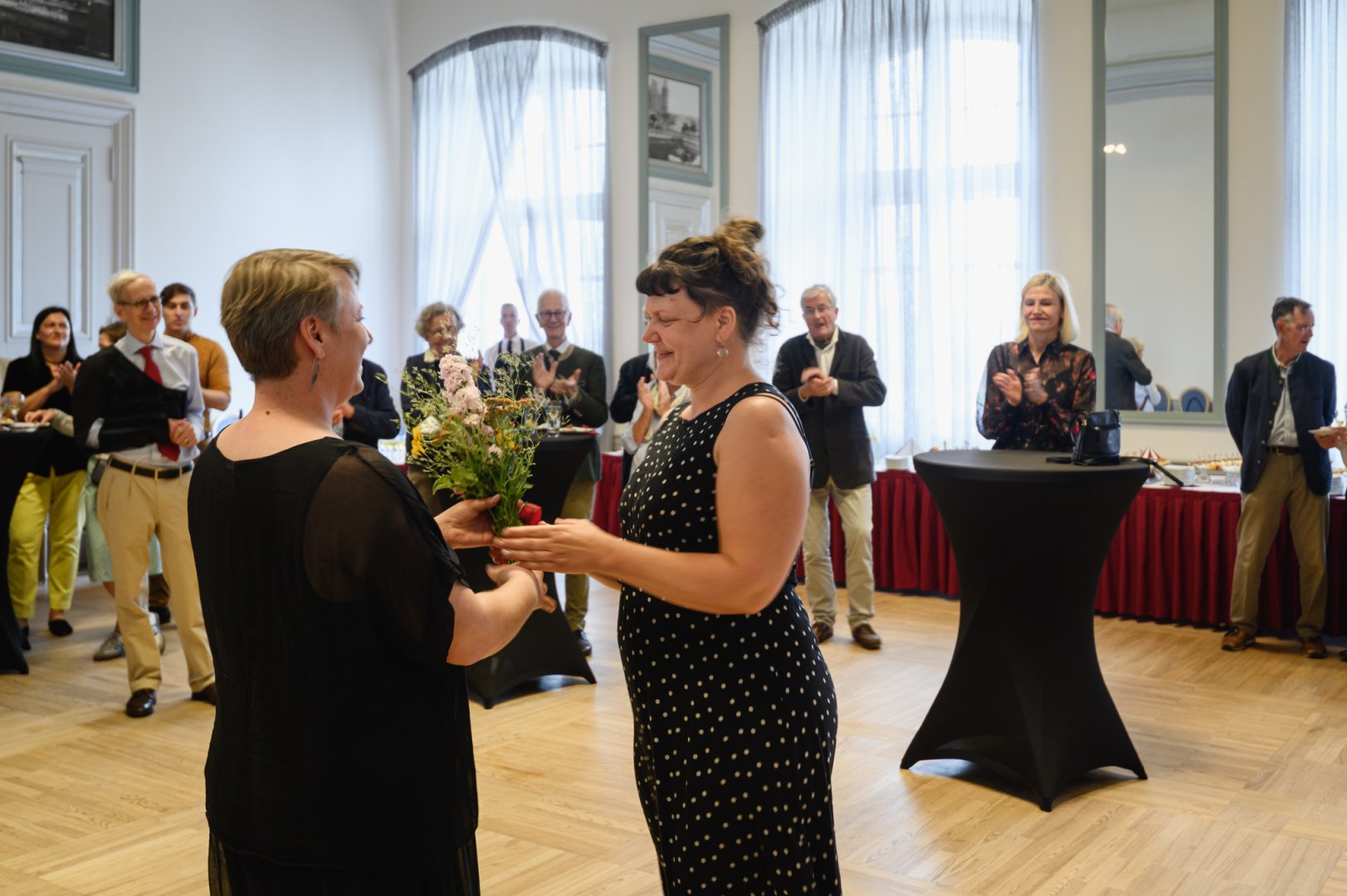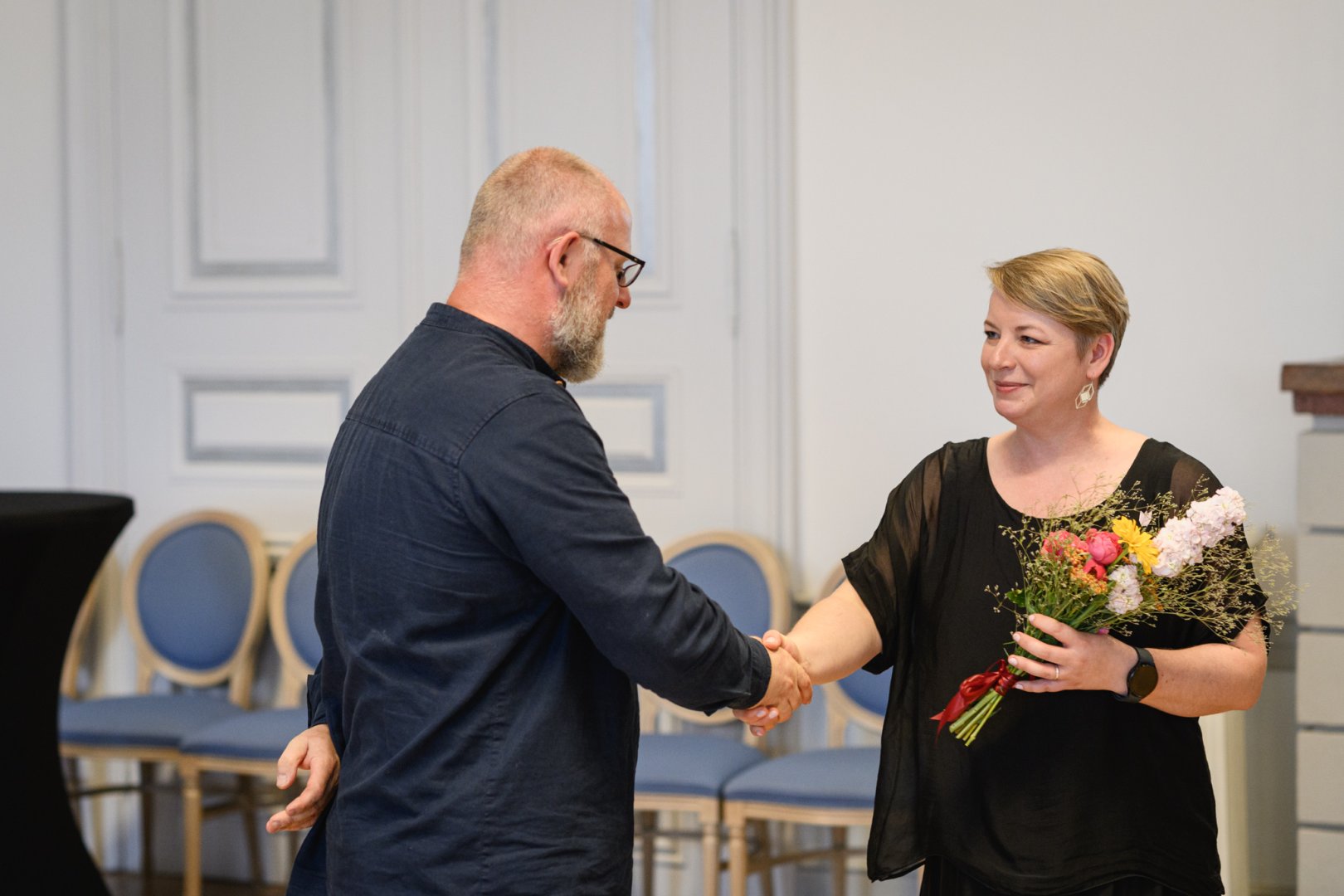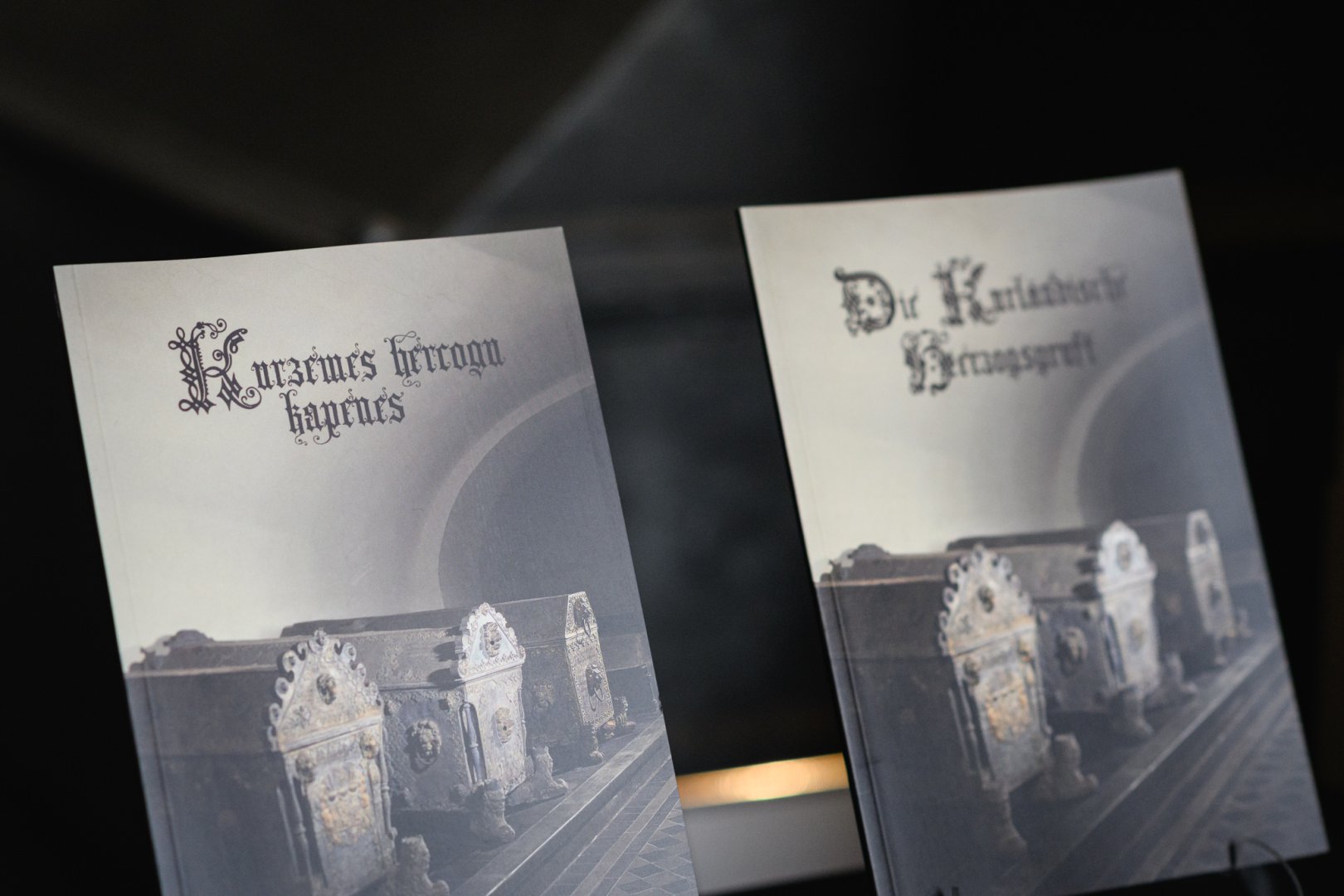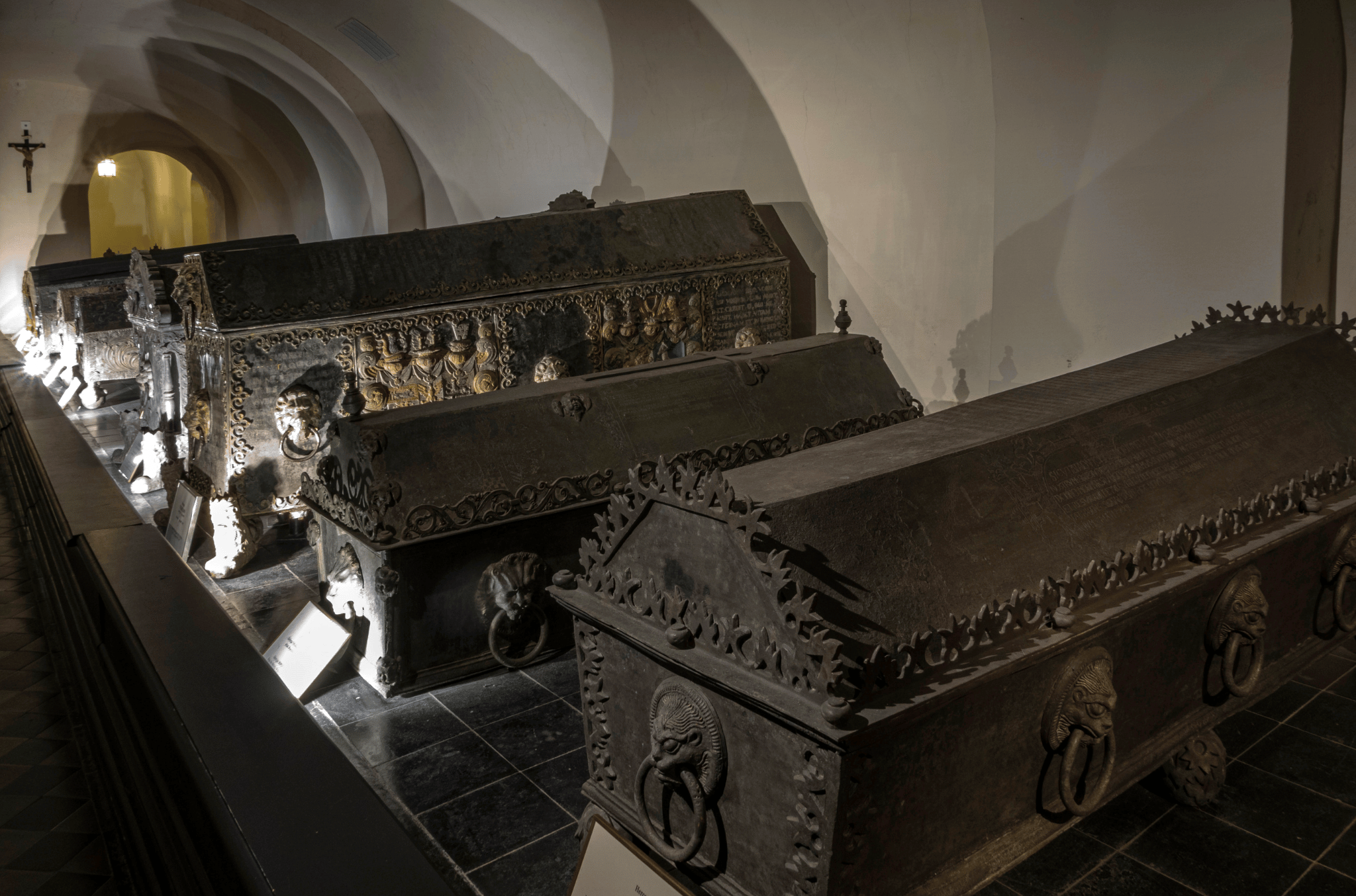
On 3 July 2026, the dedication of the restored sarcophagi of Prince Sigismund Albert (1567–1569), Prince Gotthard (1568–1570), and Prince Georg (1572) who were children of Gotthard, Duke of Courland, and also the restored sarcophagus and the remains of Elisabeth Magdalena, Duchess of Courland, (1580–1649) took place at the Family Vault of the Dukes of Courland in Jelgava Palace.
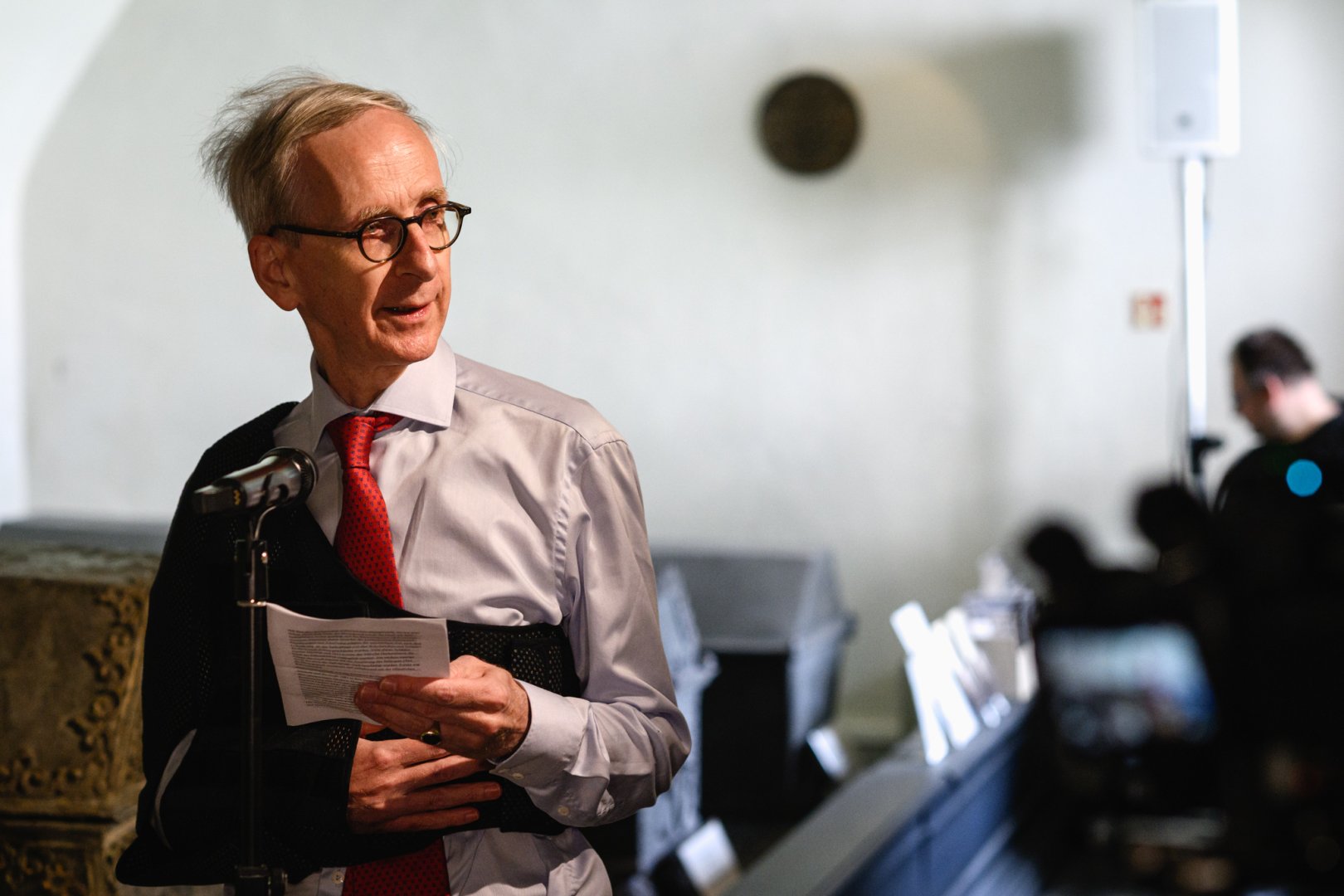
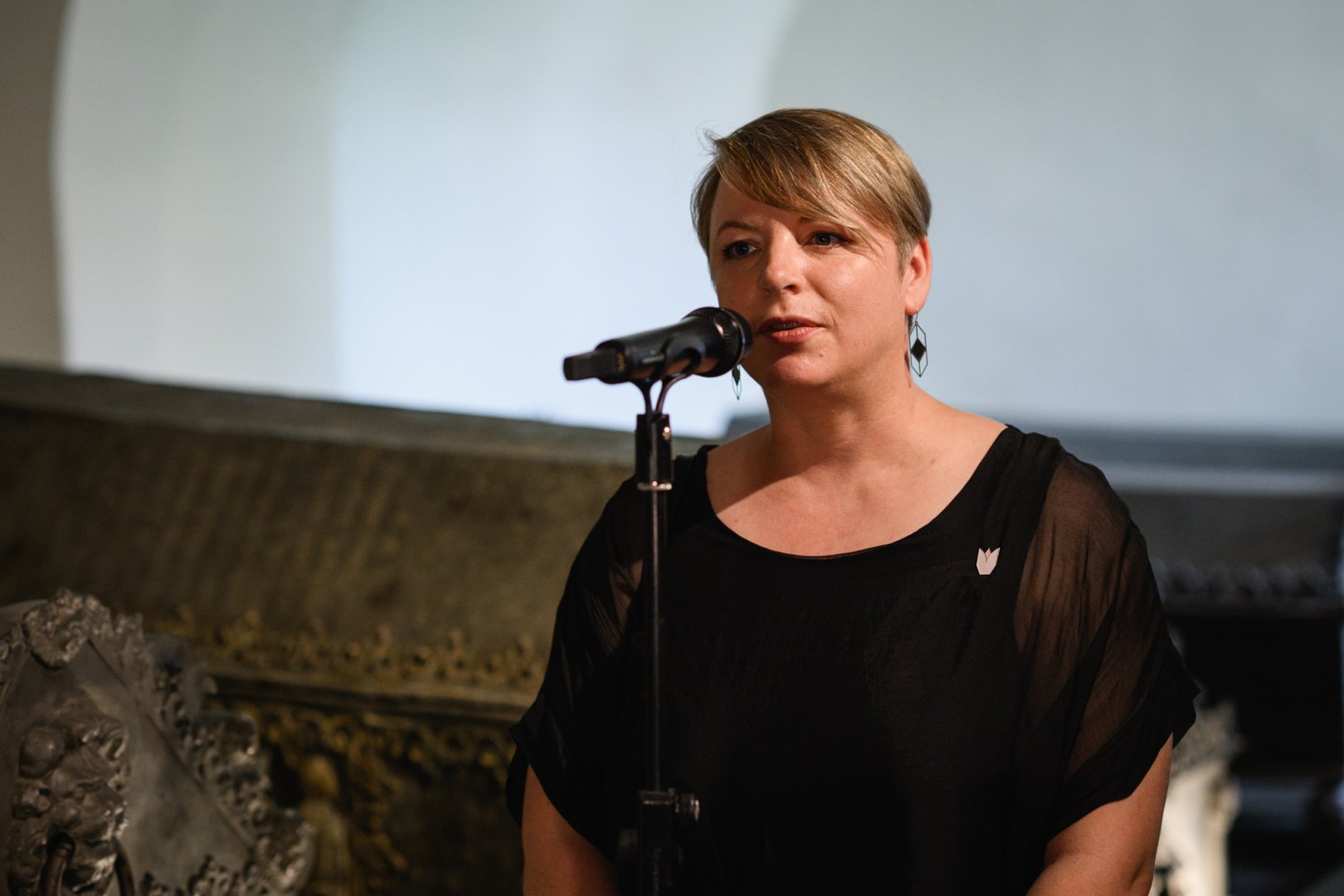
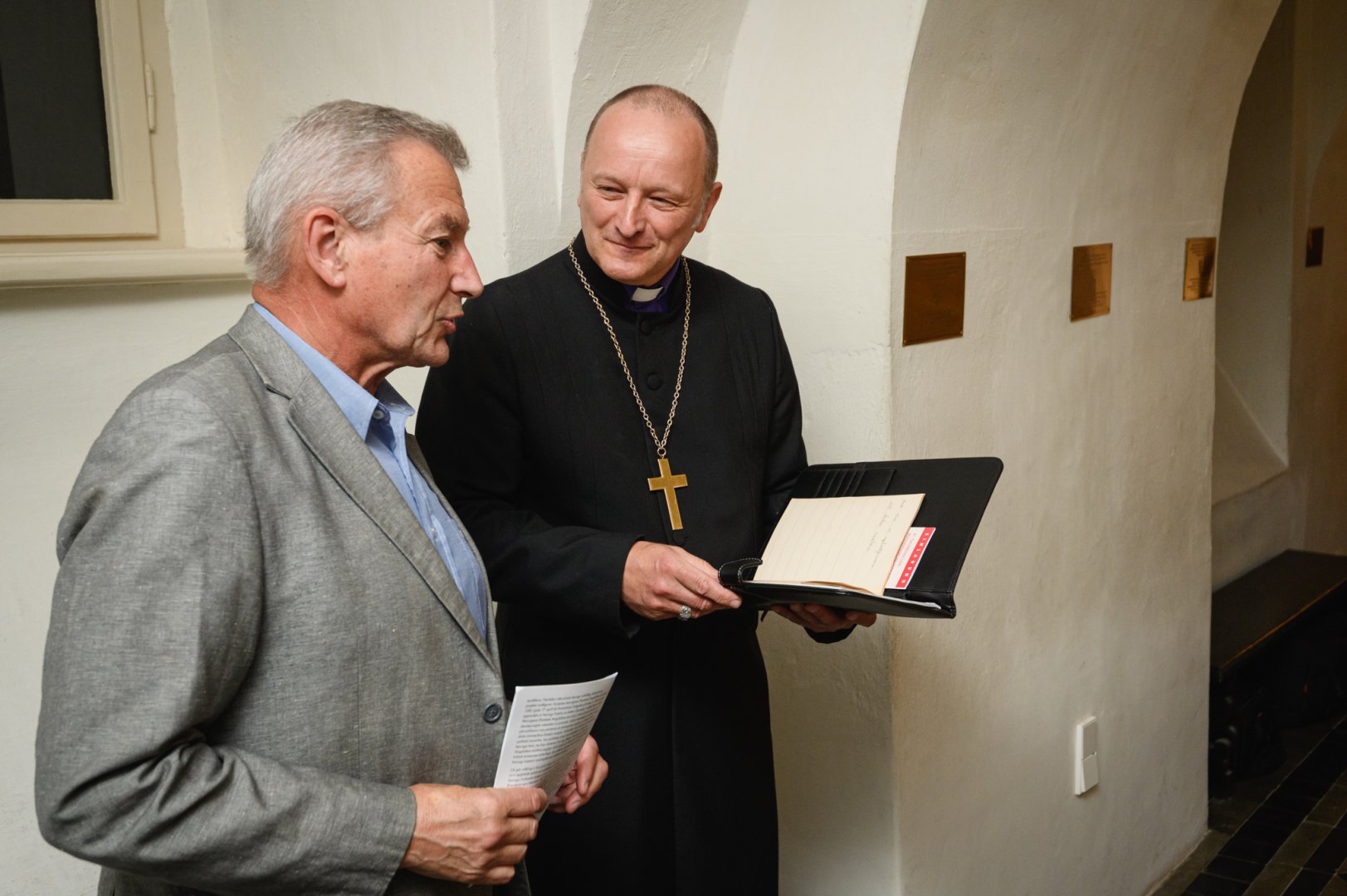
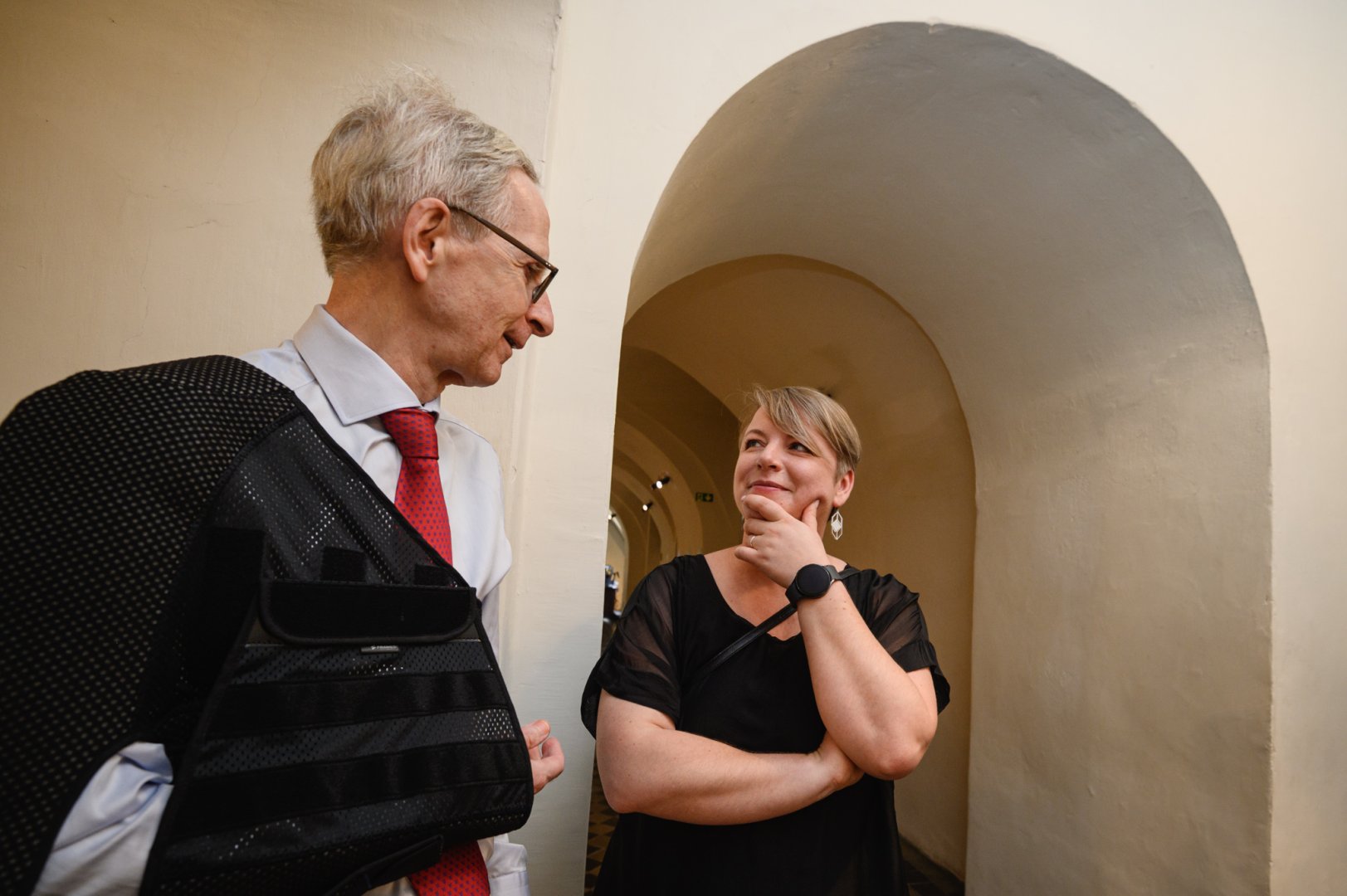
An official ceremony took place at the Family Vault of the Dukes of Courland, with the participation of Uldis Gailītis, Auxiliary Bishop of the Diocese of Liepāja of the Evangelical Lutheran Church of Latvia, Baron Nicolas von Behr, the Chairperson of the Courland Knighthood, Laura Lūse, Director of the Rundāle Palace Museum, representatives of the Latvia University of Life Sciences and Technologies, restorers, representatives of the Courland Knighthood, and other sectoral specialists.
Since 2004, restorers of the Rundāle Palace Museum have been carrying out a sarcophagi restoration programme, with the financial support from the United Courland Foundations of Courland Knighthood (Germany), the State Culture Capital Fund (Latvia), Rüdiger Zellentin, Baron Nicolas von Behr, members of the Biron family, and other private individuals. Dedication of these four sarcophagi after restoration concludes the restoration project of the Kettler Dynasty’s sarcophagi.
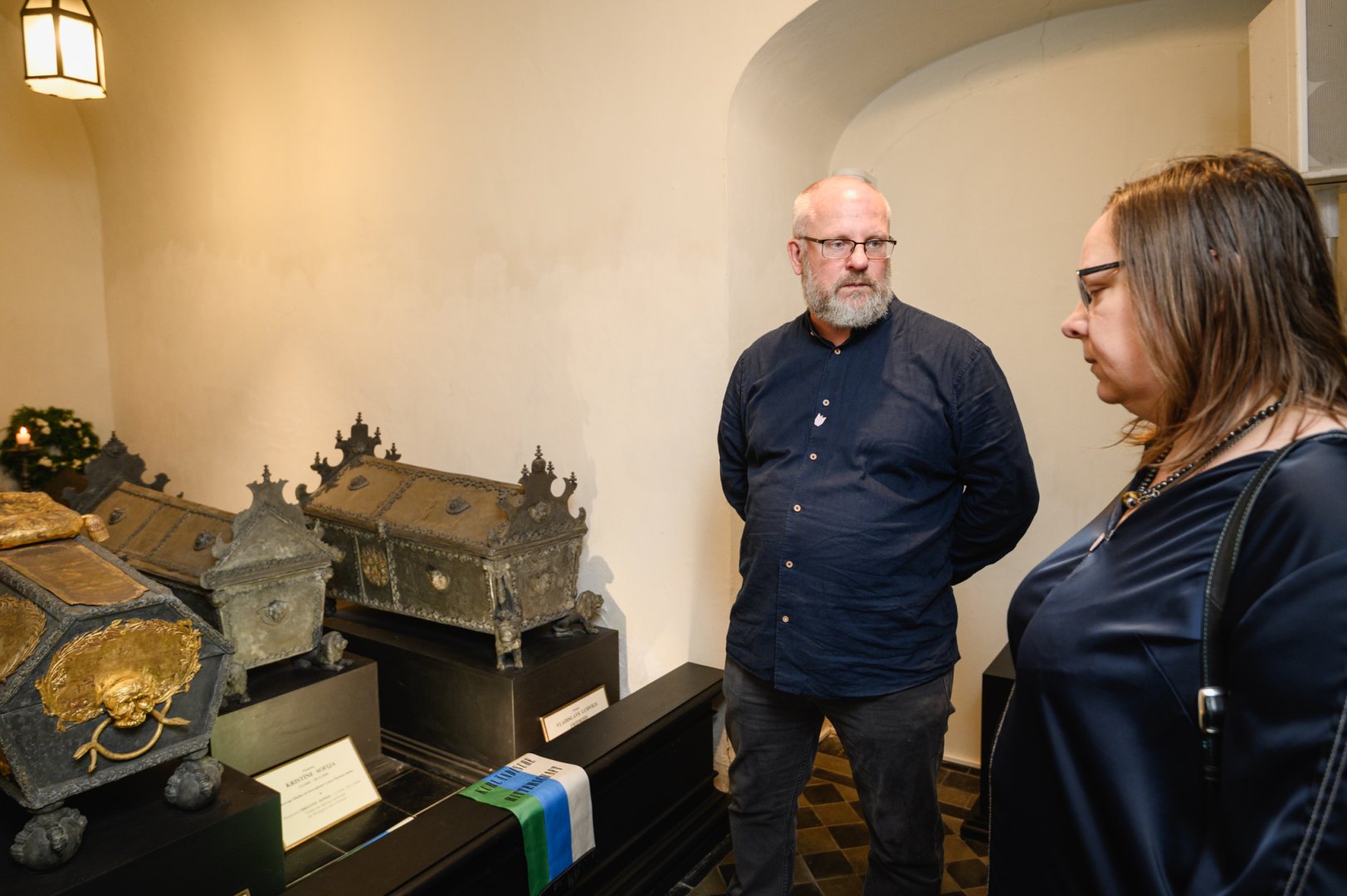
During the final stage of the programme, sarcophagi of Prince Sigismund Albert, Prince Gotthard, and Prince Georg, the three deceased infant sons of Gotthard, the first Duke of Courland, and Anna, Princess of Mecklenburg, were restored. Those are the oldest burials of the Kettler Dynasty in the Family Vault of the Dukes of Courland. Initially, Princes were buried in Kuldīga, but the sarcophagi were moved to Jelgava after 1587. Only individual parts of the original tin sarcophagi have survived, meanwhile the additions made in the 1920s have been preserved as the restoration testimonies of the particular time. During restoration, the structures of sarcophagi were stabilised, the deformations were evened out, the damages were eliminated, and metal was conserved, ensuring lasting preservation of sarcophagi.
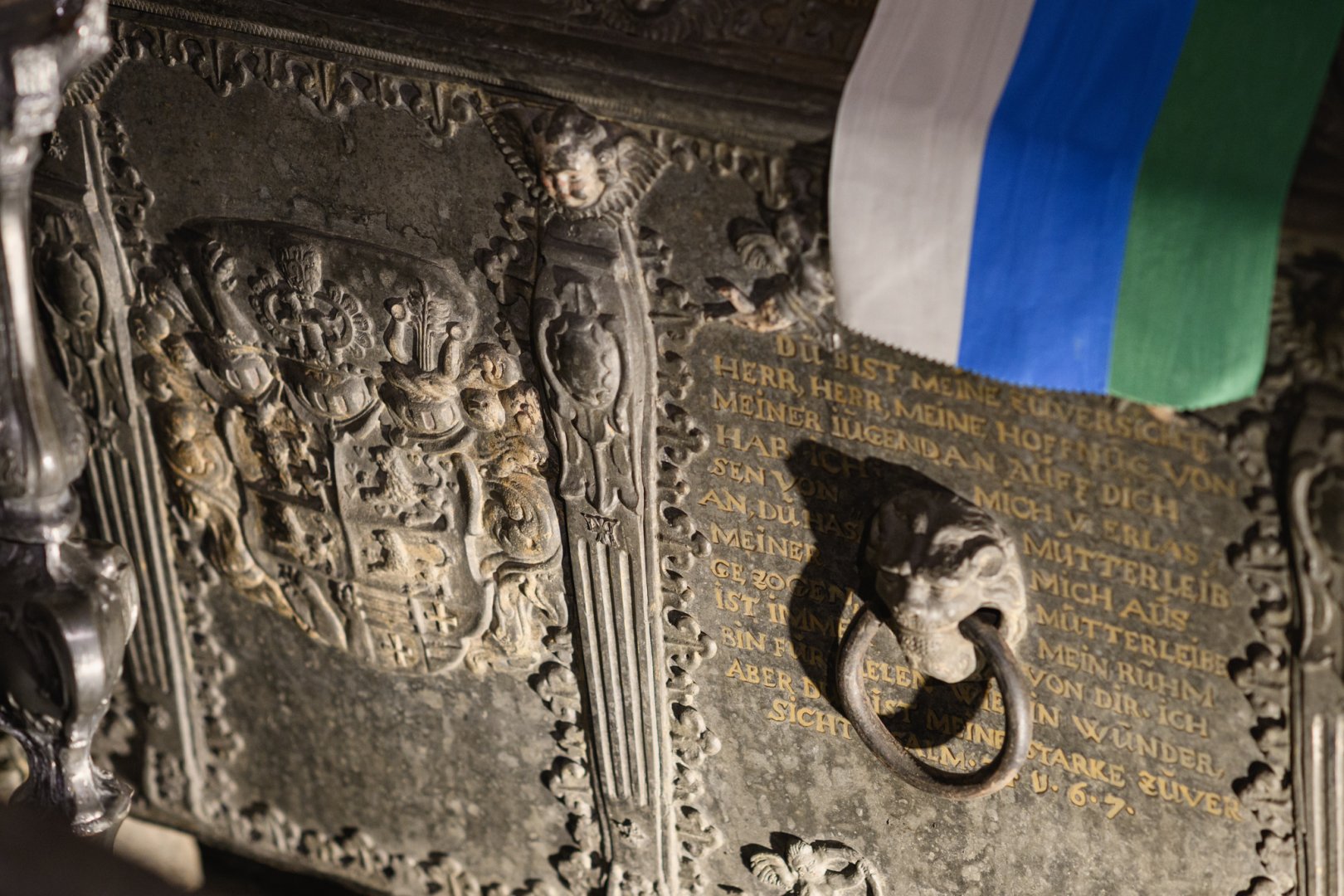
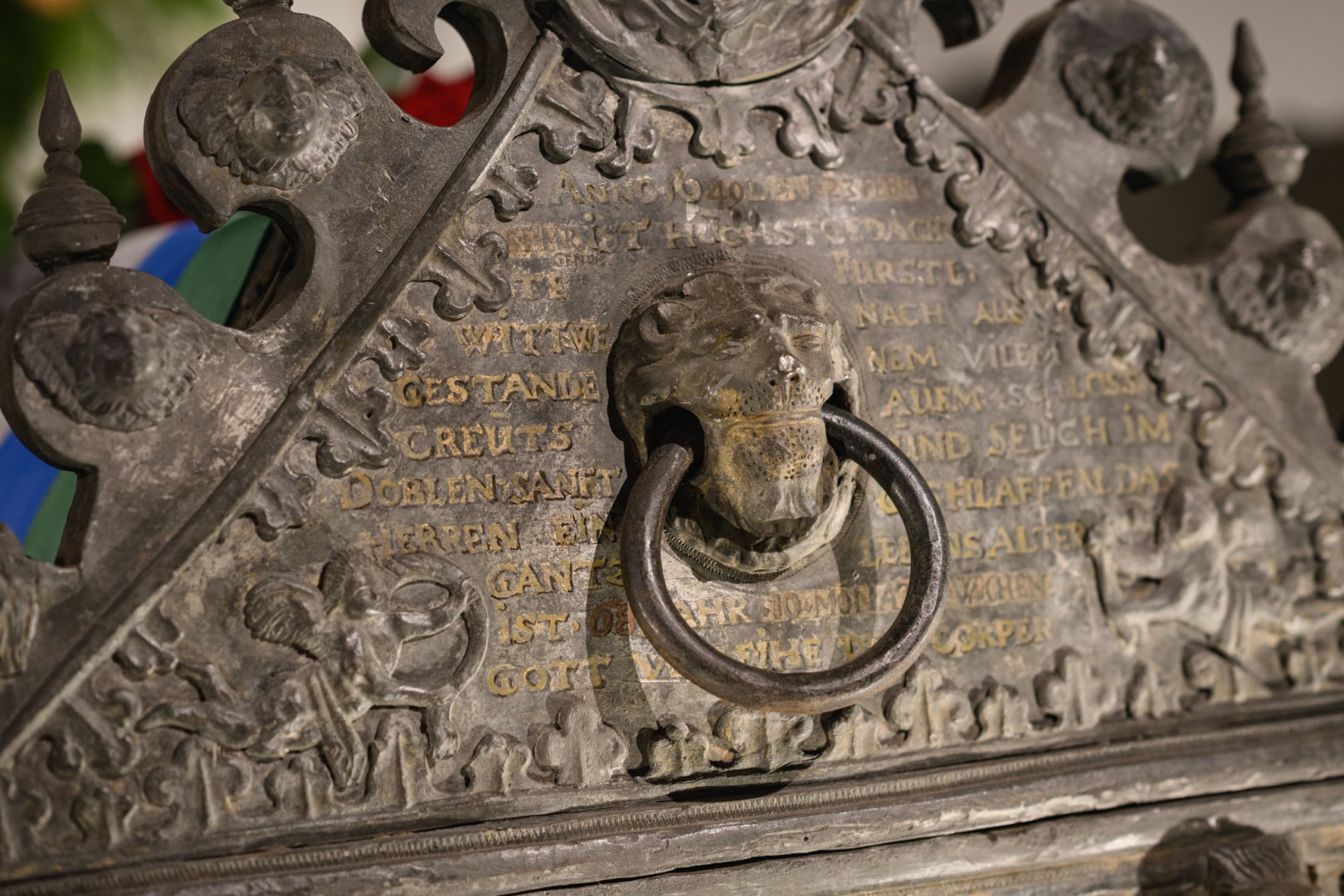
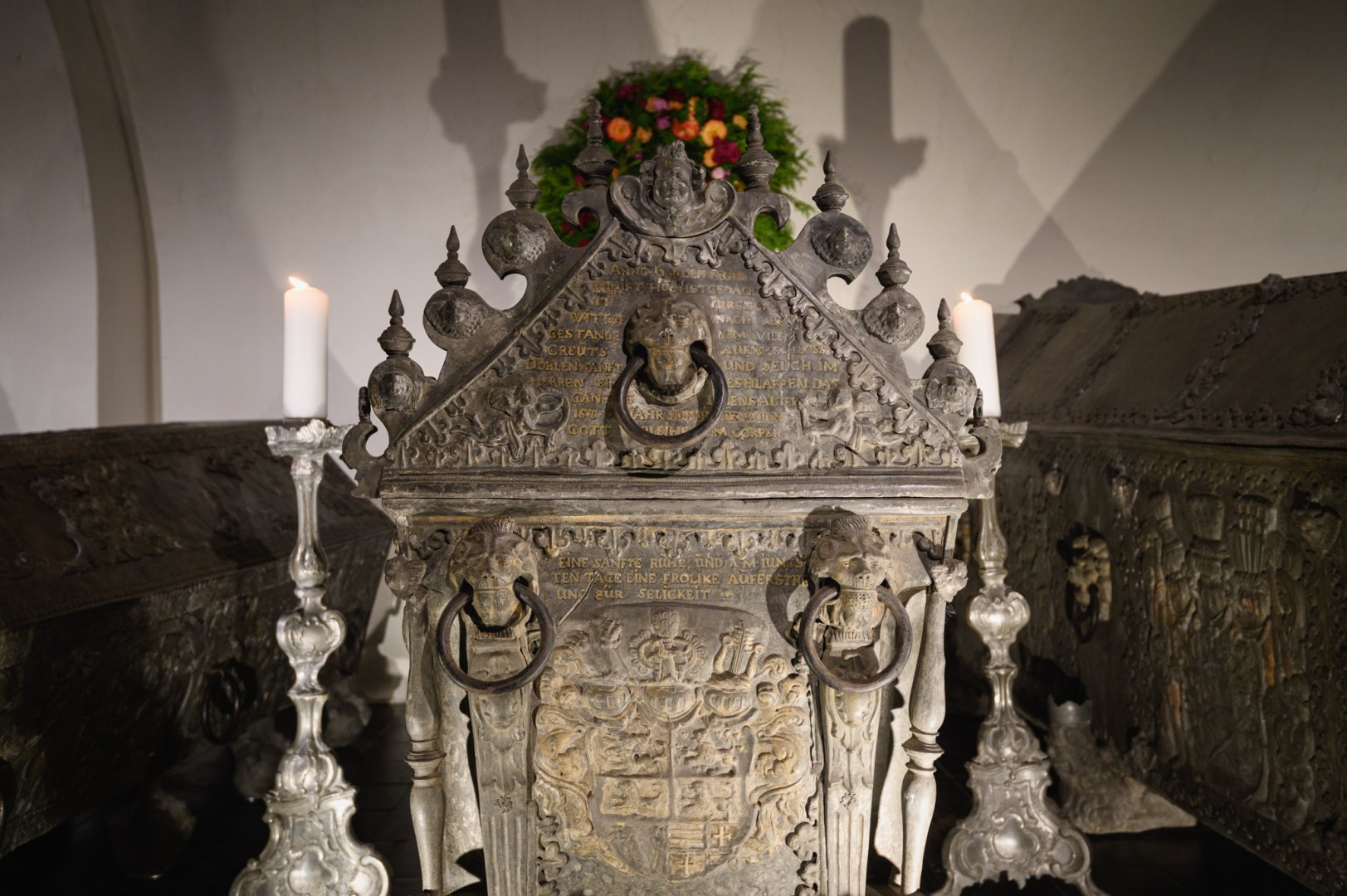
After restoration, the resplendent tin sarcophagus of Elisabeth Magdalena, Duchess of Courland, also returns to the exhibition, being one of the most prominent monuments of metal art in the exhibition of the Family Vault of the Dukes of Courland. The Duchess was the spouse of Friedrich, Duke of Courland, and took active part in the political and economic life of the Duchy after his death, and also raised Jacob, the future Duke of Courland. The sarcophagus which had been ordered during her life is adorned by abundant plastic finish, heraldic reliefs, angel figures, and lion sculptures. During restoration, the structure was stabilised, the lost tin decorative elements were renewed, the authentic polychrome finish was secured, the conservation of gilding and paintwork was performed, and also a new wooden coffin was made and the remains were arranged.
The restoration of sarcophagi was performed by the specialists of the Rundāle Palace Museum Arvis Druviņš, Jānis Līdaka, and Baiba Leitlante, and also by Laura Matilde Ikerte who drafted the inscription and reconstructed the colour scheme of the coats of arms on the sarcophagus of Elisabeth Magdalena. All work was performed under supervision of Aina Balode, Head of the Scientific Restoration Department of the Rundāle Palace Museum.
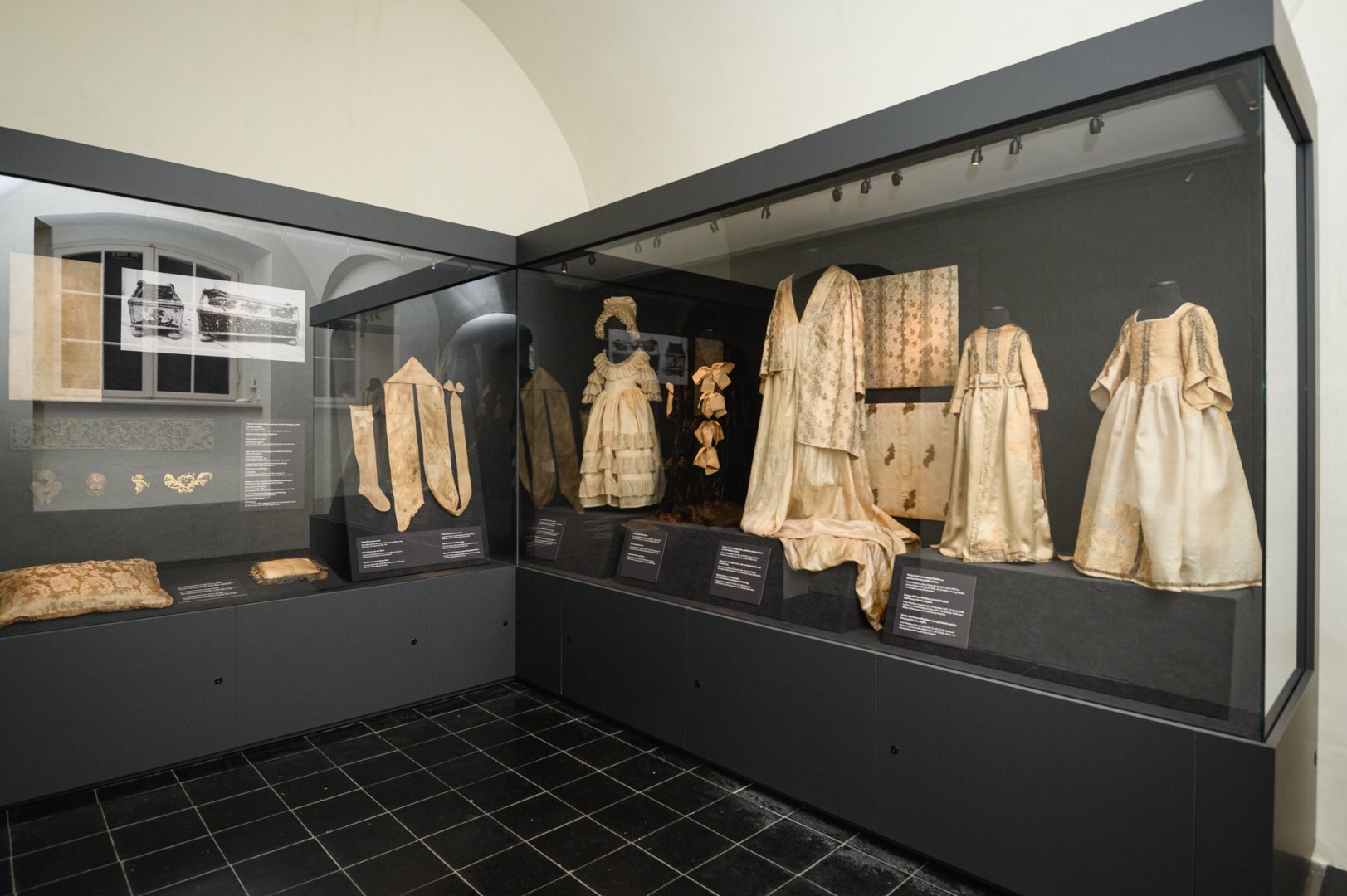
The Family Vault of the Dukes of Courland is an outstanding cultural and historical monument of Latvia – the largest burial site of a dynasty of rulers in the Baltic States and one of the few publicly accessible family vaults of this type in the world. It contains 21 metal sarcophagi and nine wooden coffins, reflecting the 200-year-long burial history of the Kettler Dynasty and the Biron Dynasty. The Rundāle Palace Museum has been taking care of preserving the family vault since the 1970s. At the end of 2025, 18 sarcophagi with the authentic inscriptions and coats of arms were included in the Latvian National Register of the UNESCO Programme “World Memory”.