
“To entertain the ladies, I suggested we do a card reading. Although I had no understanding of the practice, I was amused by the idea of using the cards in front of me to tell each lady what kind of impression her charms had left on the person they had secretly imagined.”
/Elisa von der Recke, December 3, 1791 [1]
Playing cards has long been recognised as a thrilling form of entertainment. Often associated with addiction and reckless gambling, it has even led to the loss of entire estates. In the Latvian press, cards have been referred to as early as the second half of the 18th century, indicating that their use dates back even further.[2]
The playing cards in the Rundāle Palace Museum’s (RPM) collection have either been found in the Palace or acquired through auctions. Some of these are on display in the Palace’s basement floor and in the Billiard Room on the second floor.
A brief insight into the history of playing cards in Europe
It’s not entirely clear when playing cards first appeared in Europe, nor how they were introduced. While some suggest that playing cards originated in Europe [3],
most scholars agree that their roots can be traced back to East Asia, particularly China and India, with some arguing that cards reached Europe via Spain.
Playing cards have long been known as naipes in Spain whereas in Italian, one of the oldest terms for cards is naibi. [4] These words are etymologically linked to the Hebrew and Arabic words nabi, naba and nabaa, which signify a prophecy. [5] Other sources, however, mention the Arabic word nā’ib, which means ‘deputy’ or a ‘representative of authority’ (i.e., nā’ib malik: ‘viceroy’). [6] This term appears on cards found in Egypt, dating back to the 12th century.
By the mid-14th century, playing cards was already a popular pastime in Europe, as evidenced by the many card game bans. In 1337, a decree was published at the Abbey of Saint-Victor in Marseilles, prohibiting monks from playing dice, cards or even chess. Another notable source includes the gaming ban issued by Charles IV, King of Bohemia. In Switzerland, evidence for the existence of playing cards includes the 1367 ban of ‘the devil’s prayer book’ issued in Bern.
One of the most interesting records is a 1392 invoice, issued to the treasurer of Charles VI, the King of France, for an order of painted cards. [7] The British Museum’s collection features a copy of a 1377 manuscript (dated as 1472), written by a German monk named Johann. The source states that playing cards arrived in Johann’s town in 1377, though the author doesn’t know who invented them. [8] Similarly, several German cities (Nuremberg, Augsburg, Ulm) house 15th-century sources with lists of card makers and even card painters. [9]
The oldest playing card decks contained two types of cards. Trionfi – or trump cards – featured 21 or 22 emblematic figures and symbols, such as the king and the queen, the pope (and the popess), death, the wheel of fortune, lovers, the sun and the moon. [10] The other type were the so-called numeral cards, which resemble contemporary playing cards. The full deck contained 52 or 56 cards, featuring three or four types of court cards (typically, a king or a lord, a queen or a lady, a knave or a valet), as well as numbers from one to ten. Since at least the 15th century, these cards were used to play tarocchi or tarot (French: tarot; German: Tarock). It wasn’t until the 19th century that tarot cards – mainly the emblematic figure cards – became associated with divination and prophecy. [11]
Wood carving or xylography played an important role in the making of playing cards, as it’s one of the simplest forms of graphic art. In addition, the playing cards were either hand-painted or decorated using a template or a stencil. The latter, naturally, eased the production process of the repetitive suit symbols. Interestingly, playing cards existed in Europe even before paper production was introduced and were made of leather sheets, wooden boards, ivory or metal plates and even dried leaves. [12]
Over time, the images portrayed on the court cards became more grotesque and stylised, with an emphasis on the head and the shoulders. Originally, the character was depicted in full. However, over time, only the upper part of the body was featured as a mirror image. This influenced how the cards were held, as they no longer needed to be turned around. Arguably, it was the French who first assigned the court cards with famous historical or literary names, such as David, Hector, Alexander, Cesar, Rachel, Pallas or Athena, Judith, etc.[13] Since the mid-16th century [14] certain names became firmly established: David, Alexander, Cesar and Charlemagne for kings; Rachel, Regina, Pallas and Judith for queens; Hector, Lancelot, Roland and Holger for knaves.
Evidence suggests that the numeral cards were always divided into four types. However, the symbols on the cards evolved over time and varied across different countries. The earliest playing cards contained cups and chalices, coins, swords and batons or clubs. These symbols are still in use in Spain, while in France hearts, spades, clubs and diamonds have been in use since the second quarter of the 15th century. [15] This suit of symbols, known as French-suited playing cards, is favoured all across Europe to this day, including in Latvia.
Around the 15th and 16th centuries, France became the most influential card manufacturer in Europe. [16] French-suited playing cards of the 18th and 19th centuries are characterised by a distinct style, likely a result of a 1701 law that specified designs for playing cards in each of the nine regions of France where they were produced. [17] Hence, set characters appeared, preserving their visual similarity for a long time, with the Paris pattern becoming the most popular.
Beyond France, French-suited playing cards first reached England and then the USA and Russia. [18] 19th-century England was one of the largest exporters of playing cards to the Russian market.[19] French-suited cards may have also reached Russia via Belgium and Germany, as French card makers of Rouen settled there in the 16th century due to various prohibitions. [20] Since the late 18th century, the French style dominated in the earliest Russian playing cards, sometimes mixed with the German style (Berliner Bild). [21]
Playing cards from the RPM’s collection
During the restoration of Rundāle Palace in the second half of the 20th century, a variety of old artefacts were found both inside the Palace and within its grounds. Some of these finds were acquired by the museum to form a separate collection – The Rundāle Palace Compendium. These objects range from 18th-century gypsum decorations, tile fragments and timber instruments, to early 20th-century sweet wrappers, buttons and pieces of cloth. The only thing they share is their location of discovery. The Rundāle Palace Compendium includes 20 different decks of cards and their fragments, spanning from the 18th to the 20th century. The majority of these cards date to the 18th and 19th centuries. These were found on the first floor (rooms 77, 95, 98, 124 and 132), as well as the ground floor (rooms 58 and 62) of the Palace.
The oldest playing cards were found under the floor of Room 77, also known as the Small Gallery. Since this is the only room on the first floor where the decor dates back to the first stage of the Palace’s construction in the 1730s, it would follow that the cards discovered here date back to the 1730s as well. However, the underfloor discoveries also include objects from the 20th century.
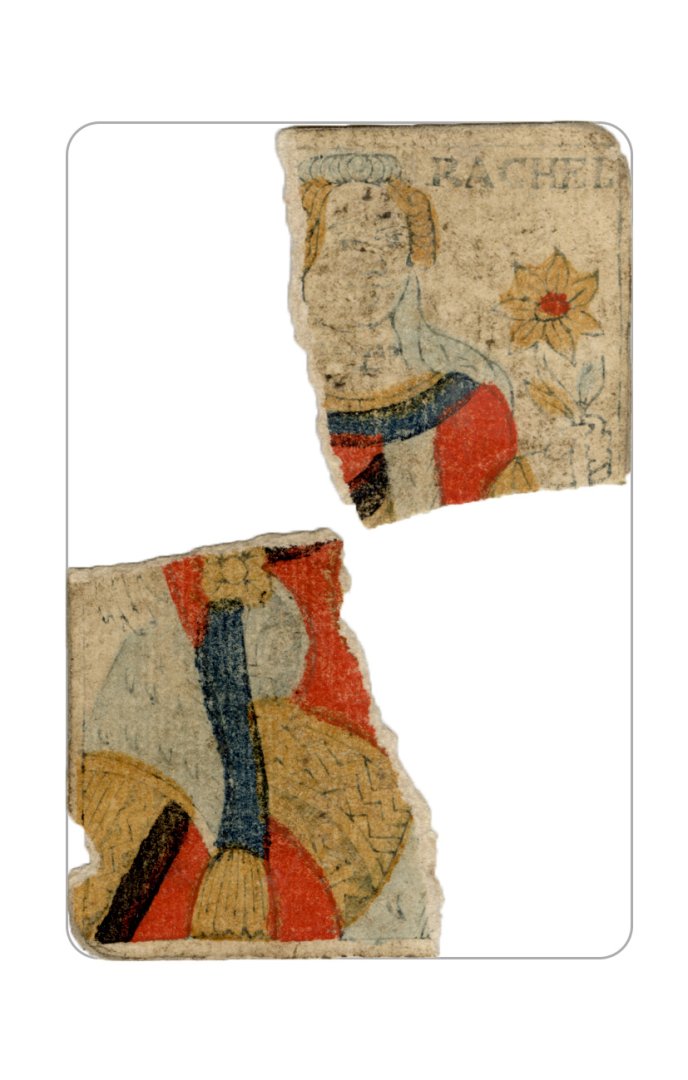
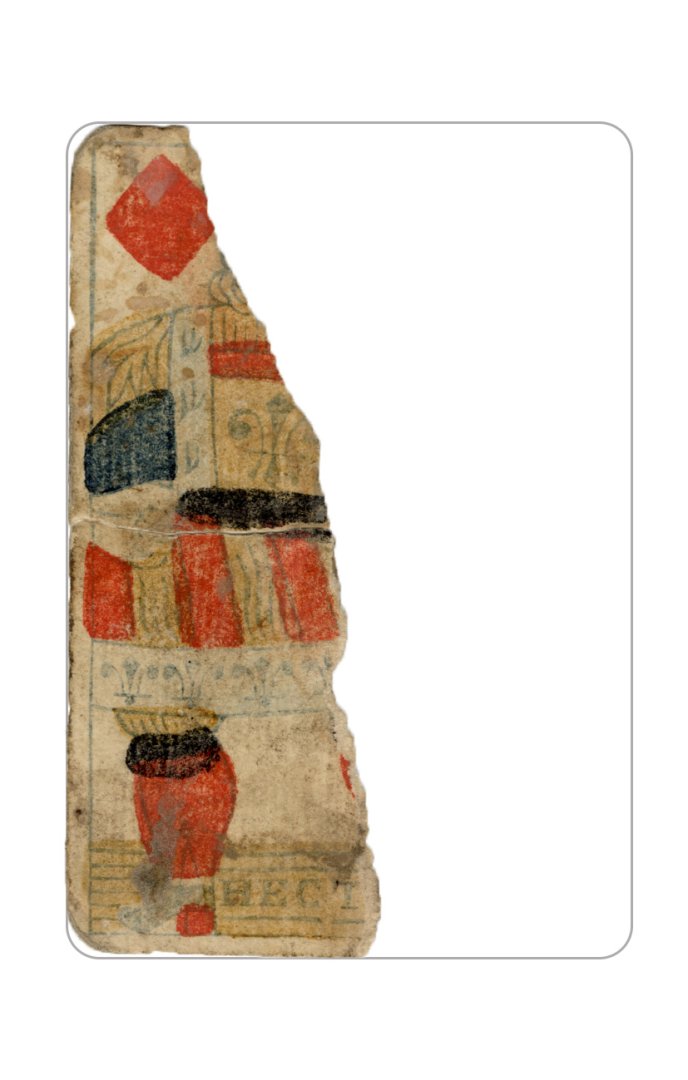
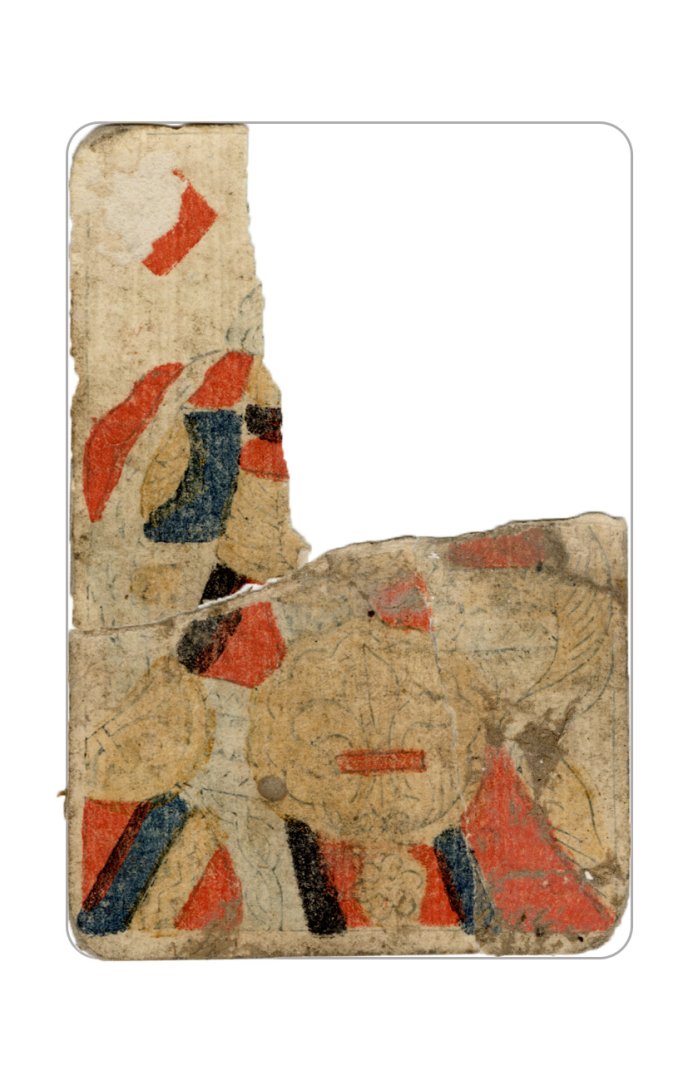
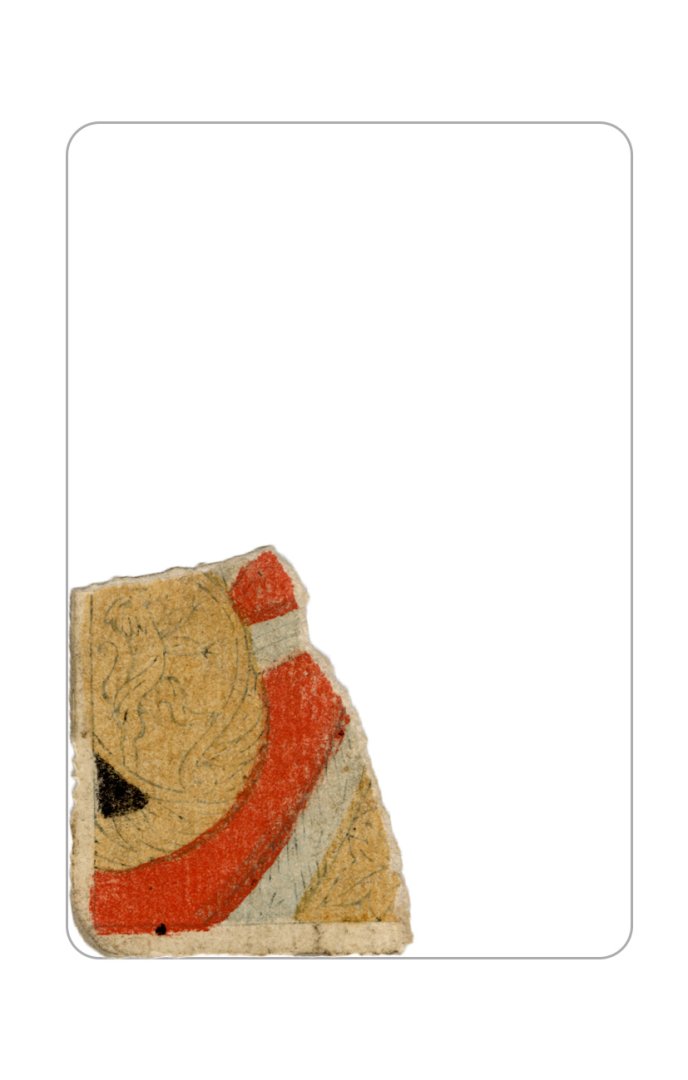
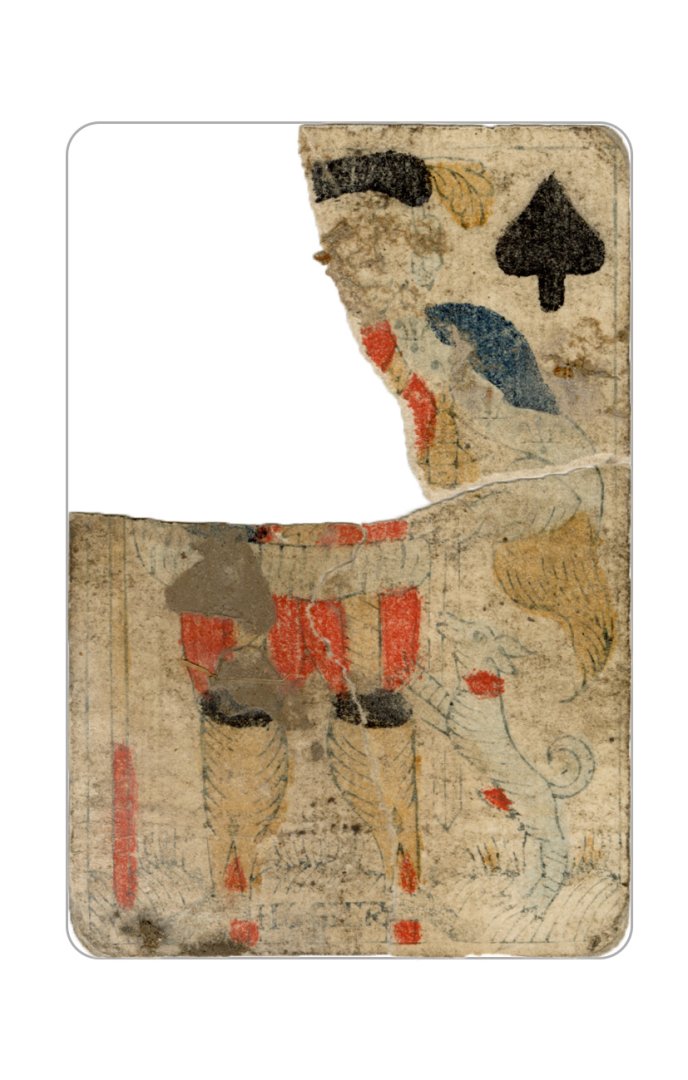
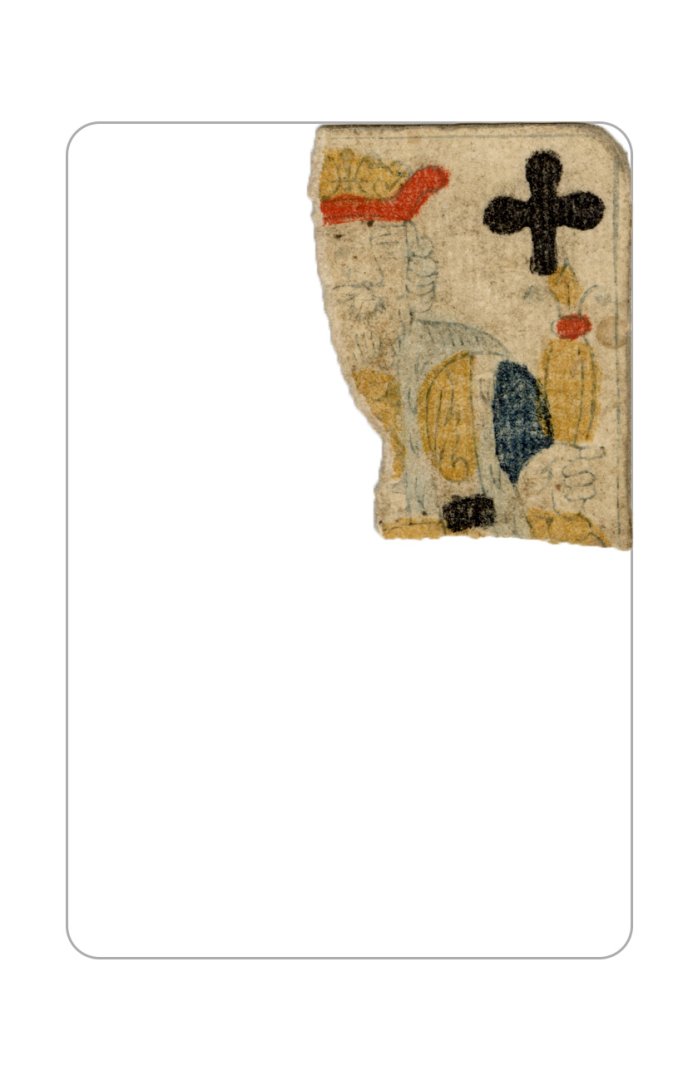
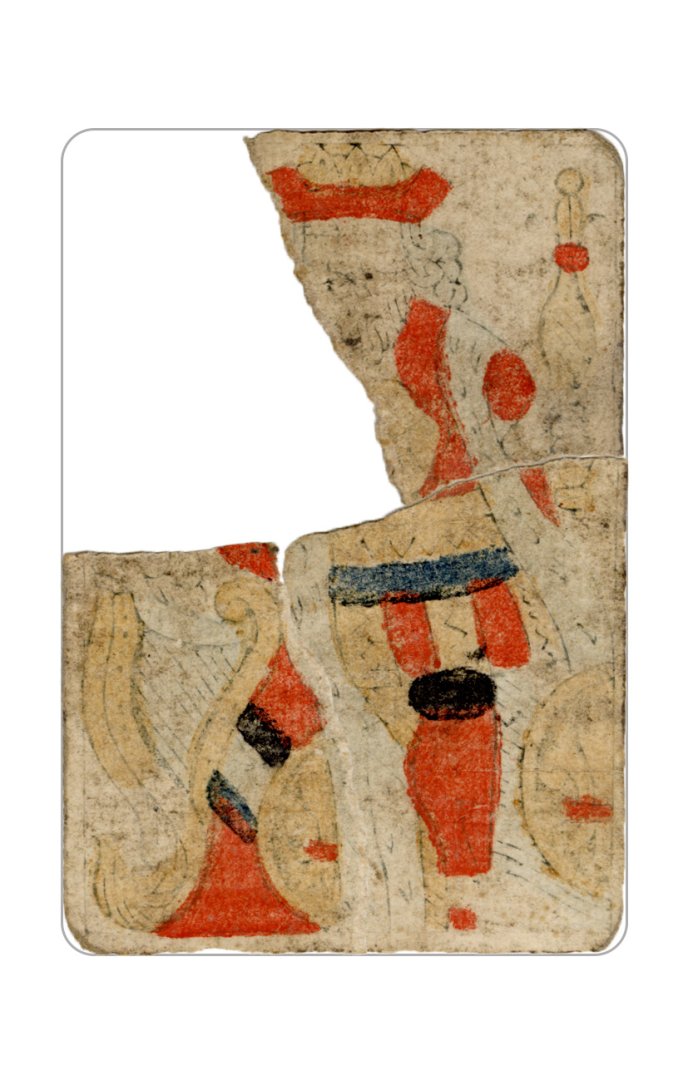
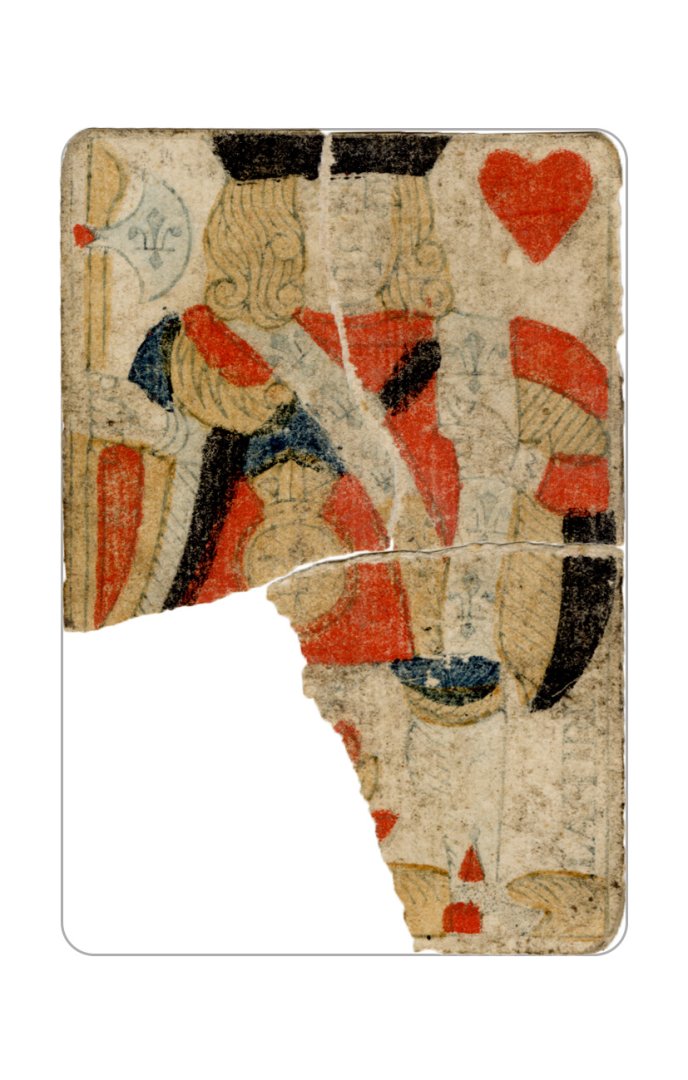
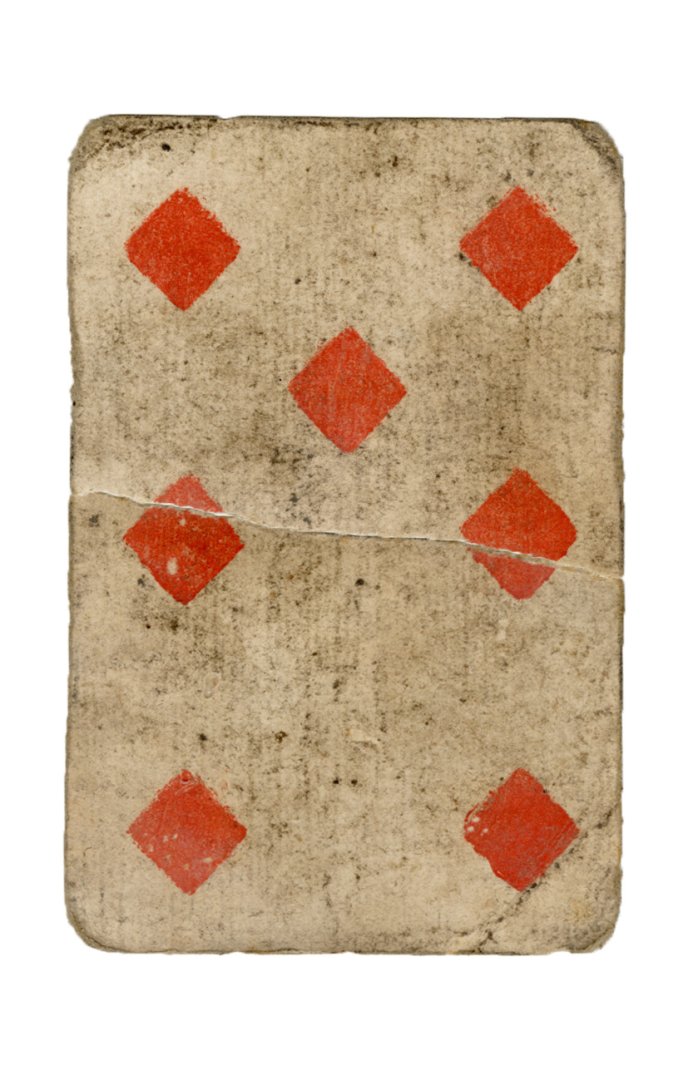
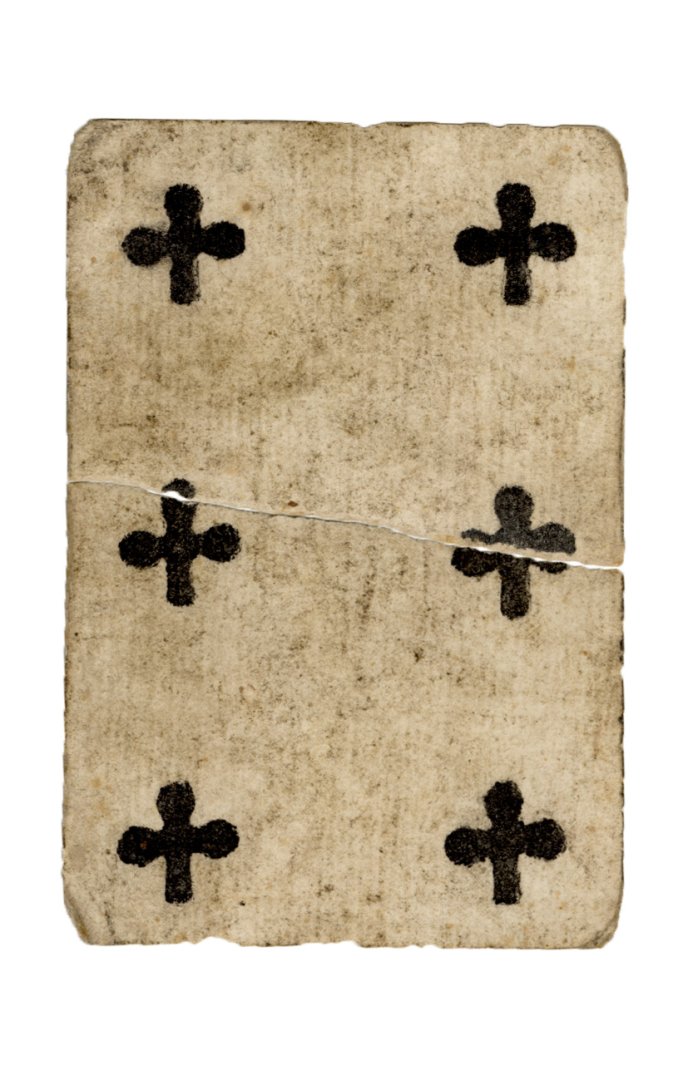
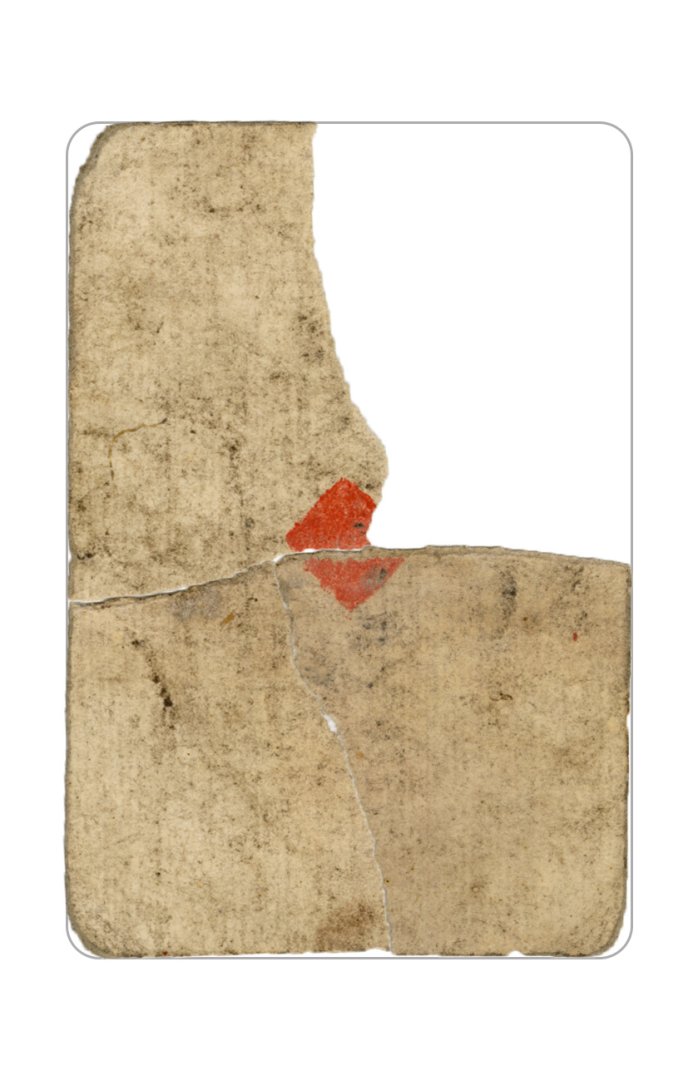
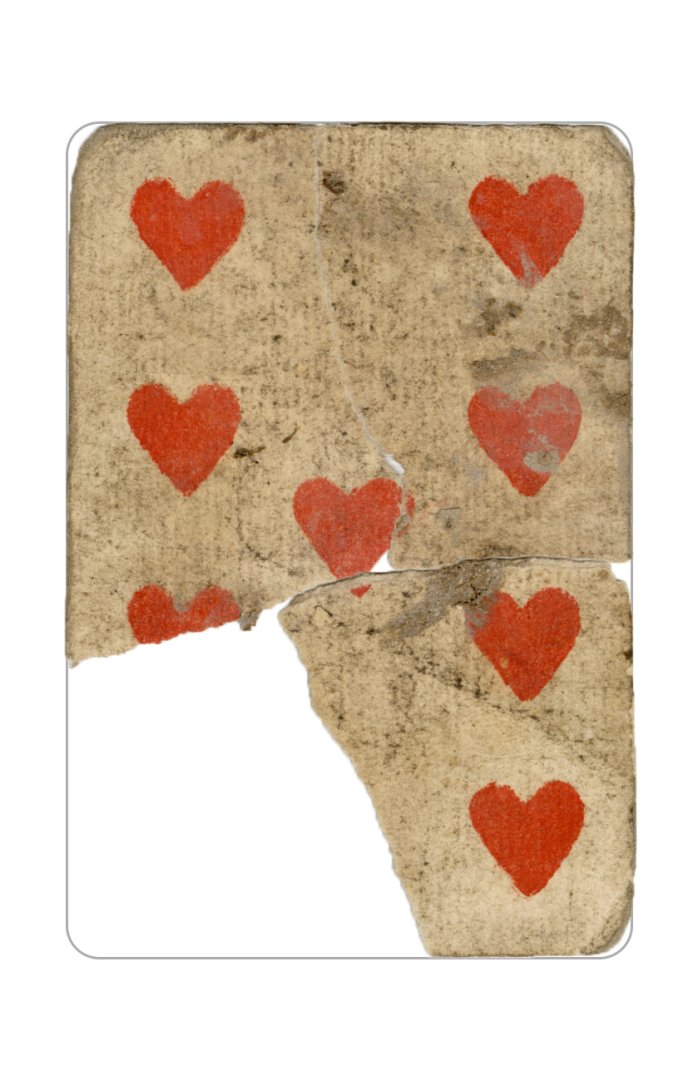
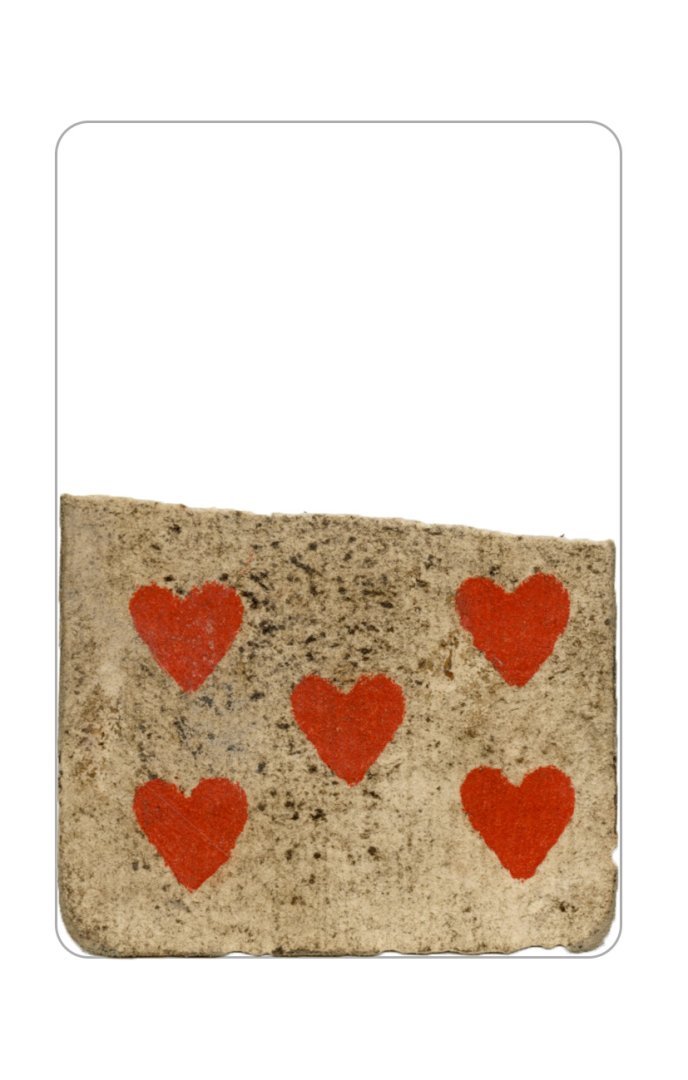
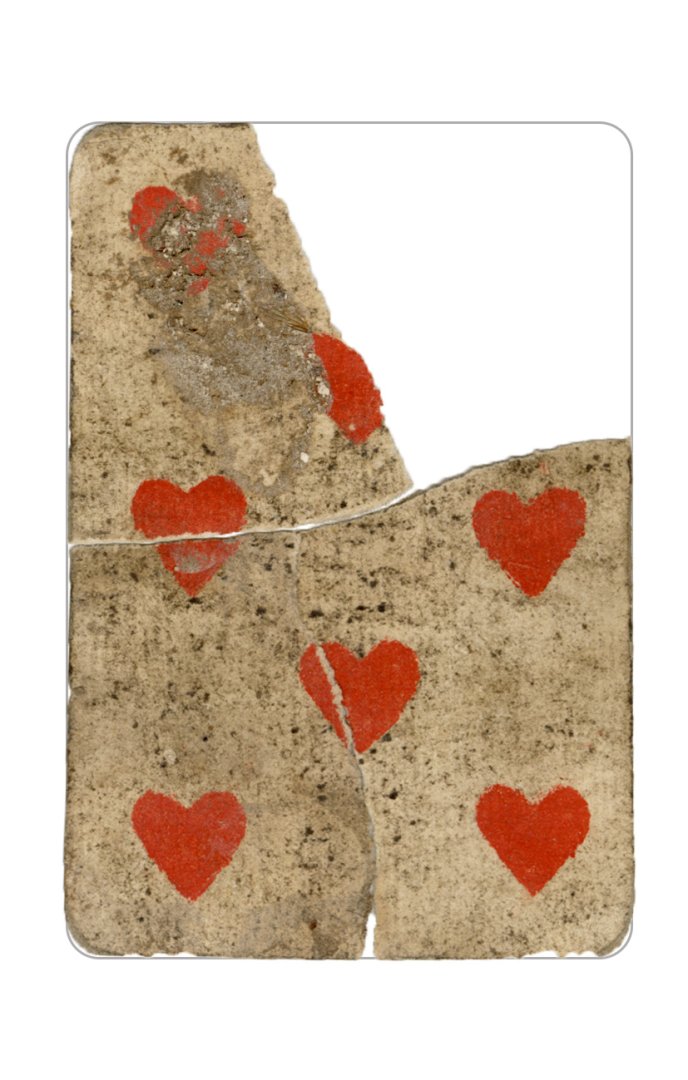
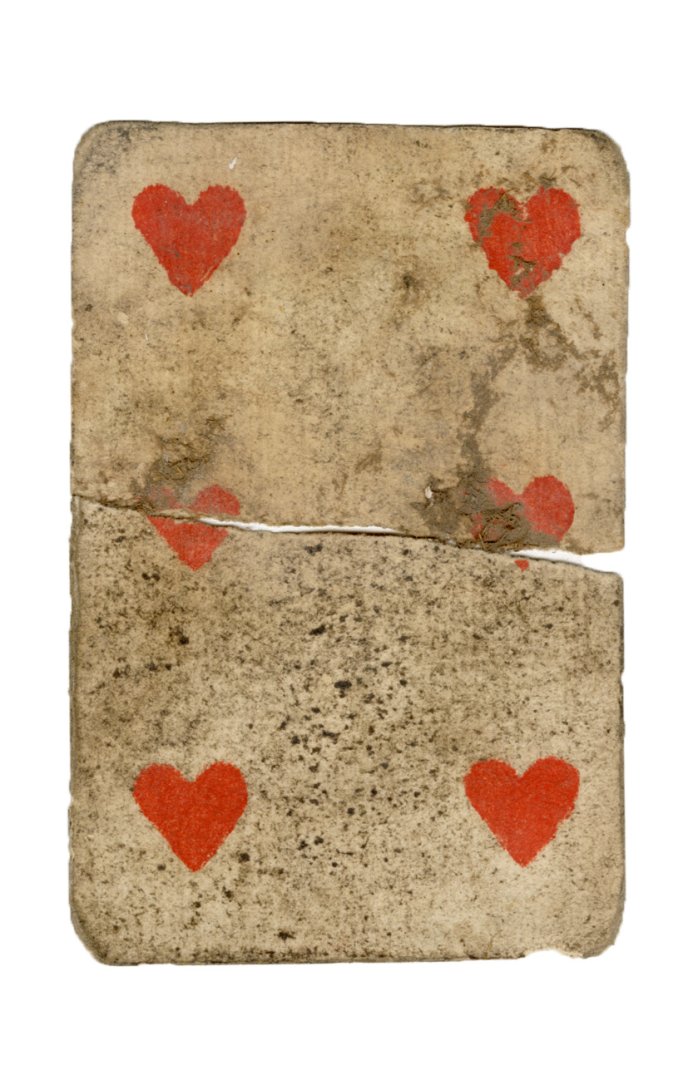
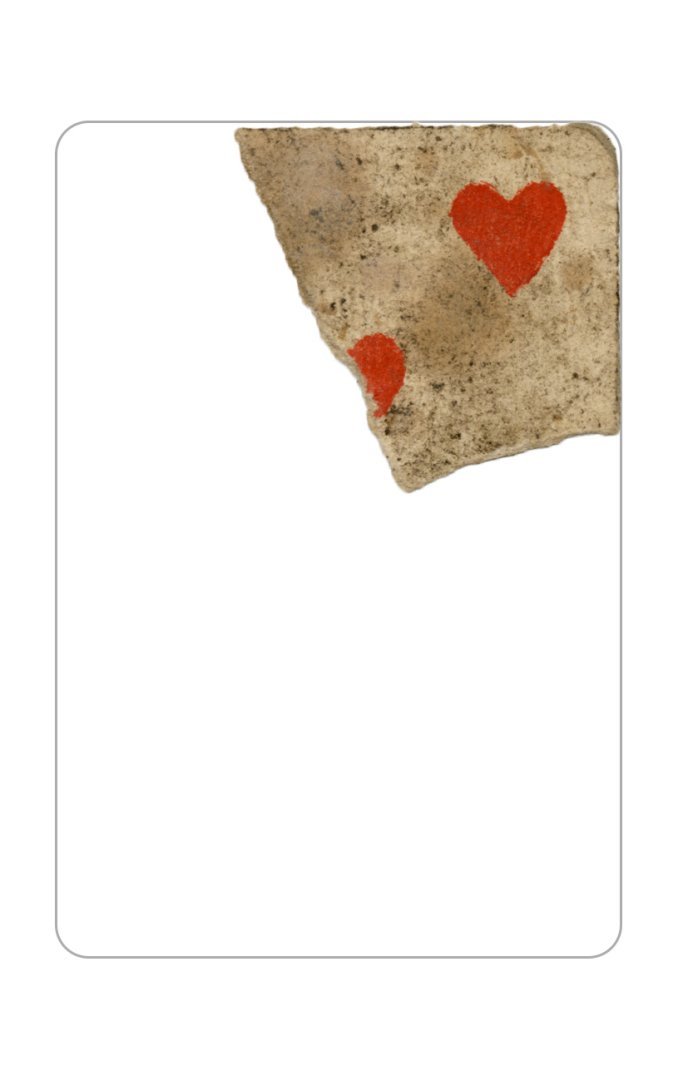
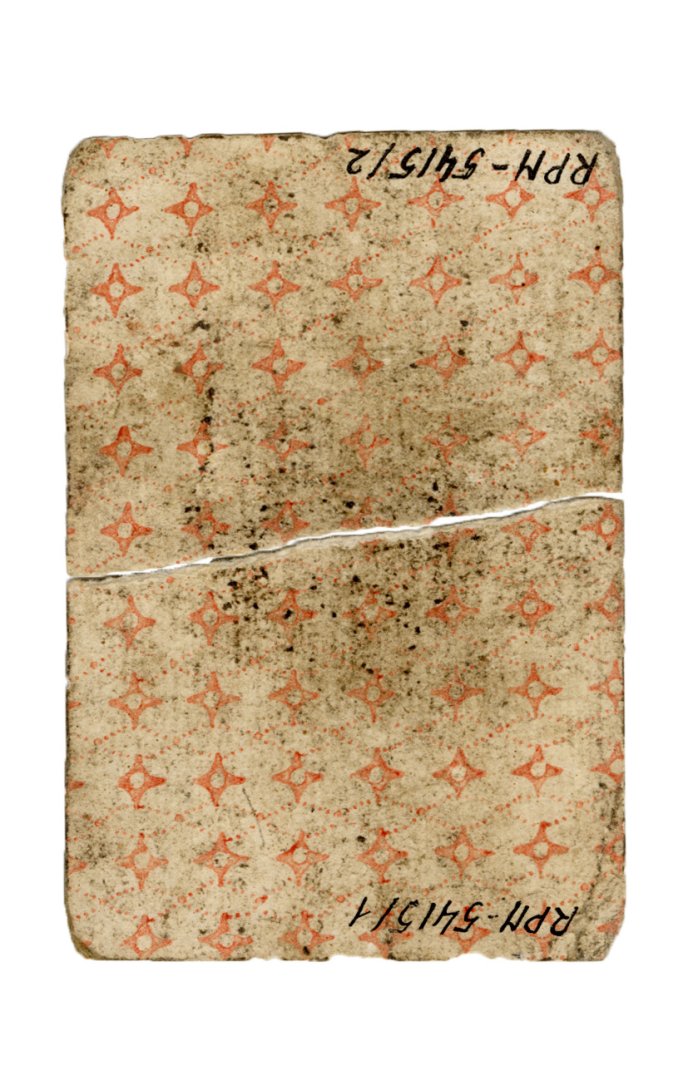
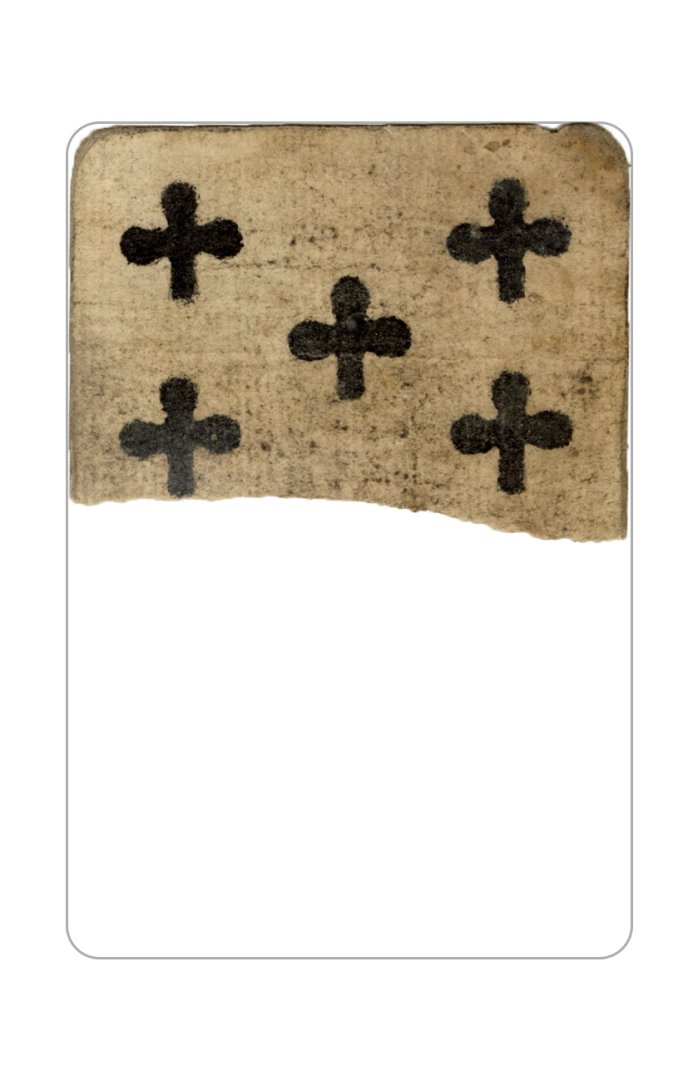
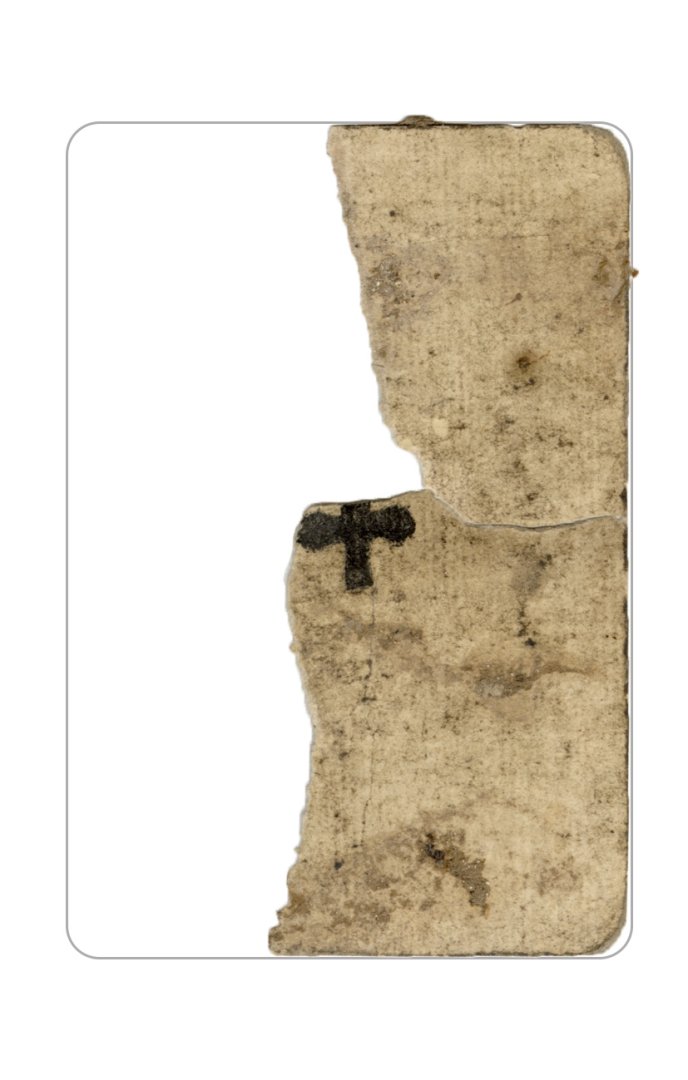
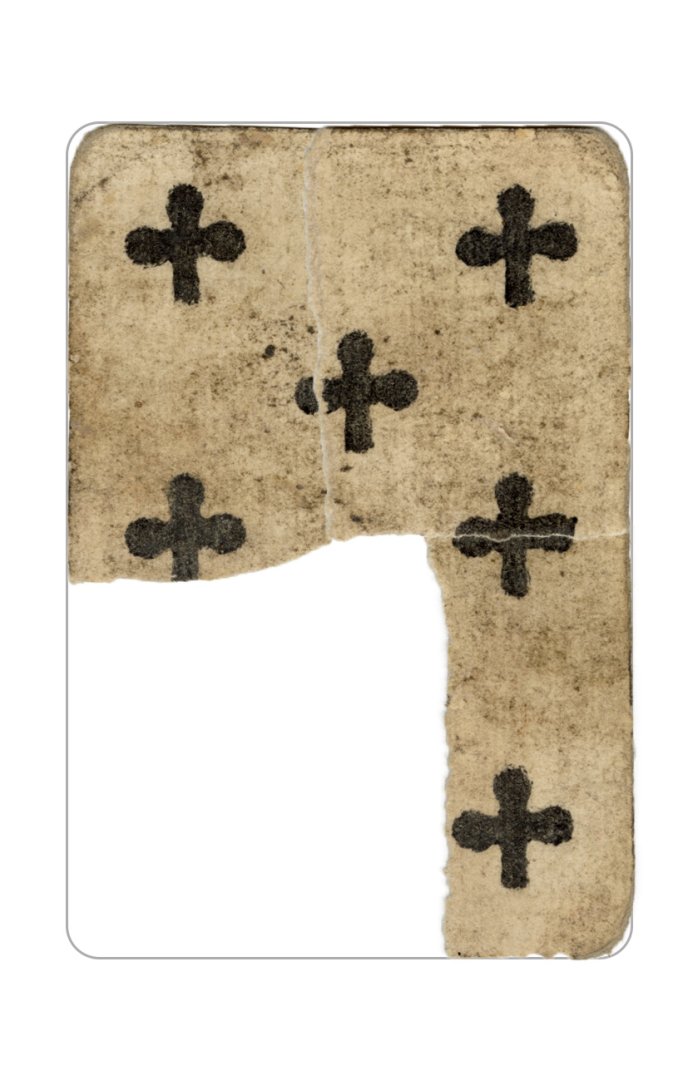
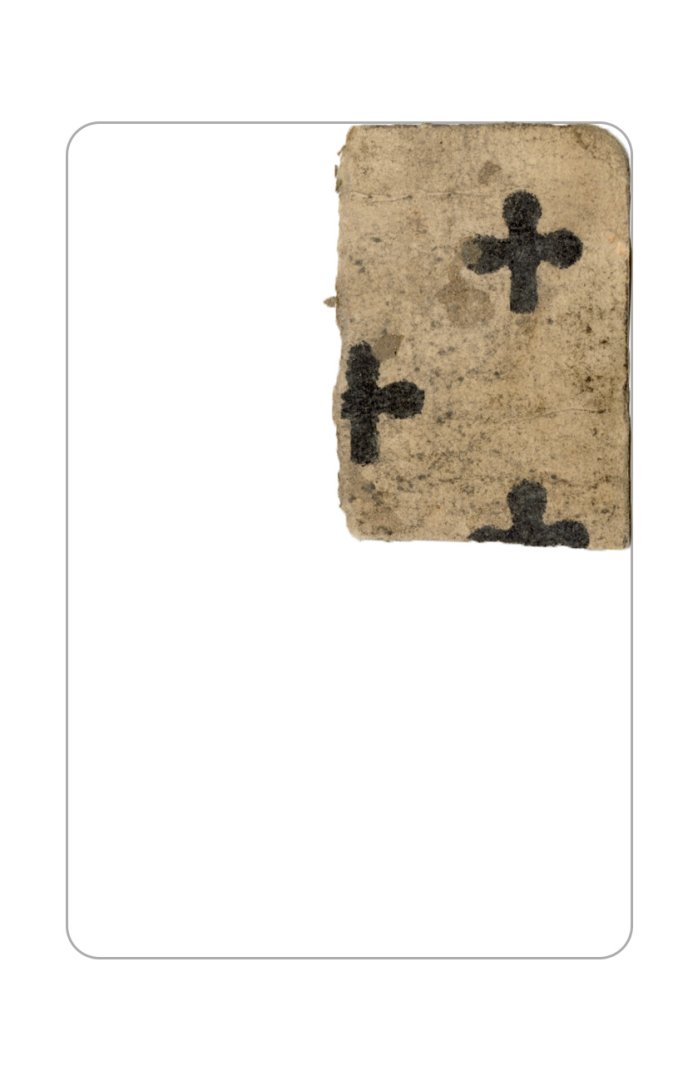
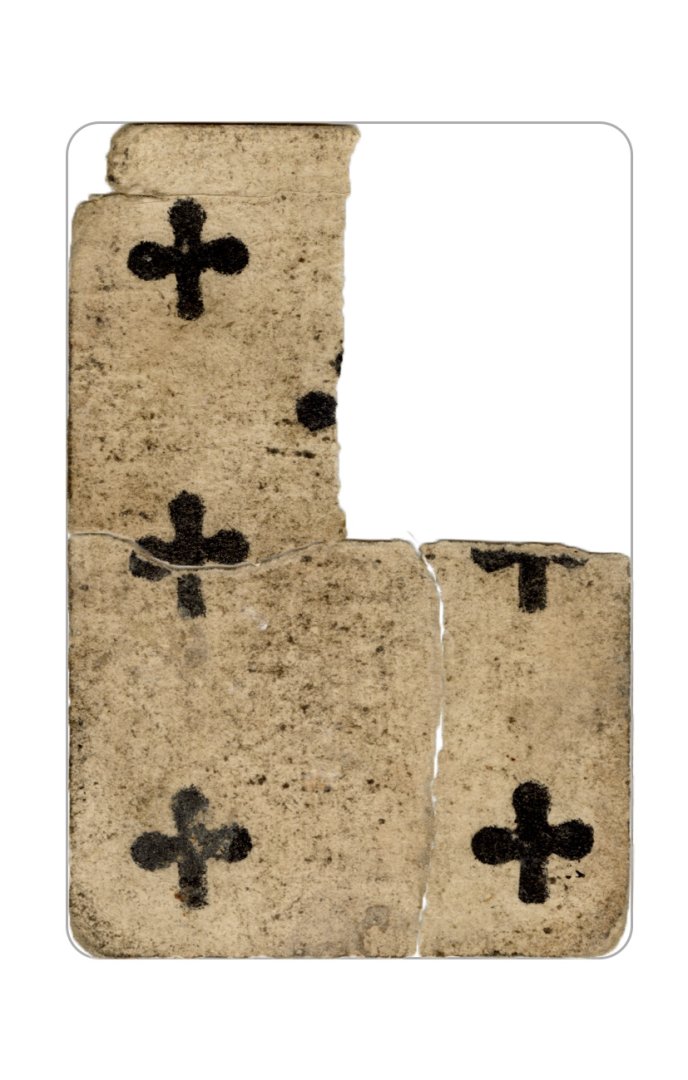
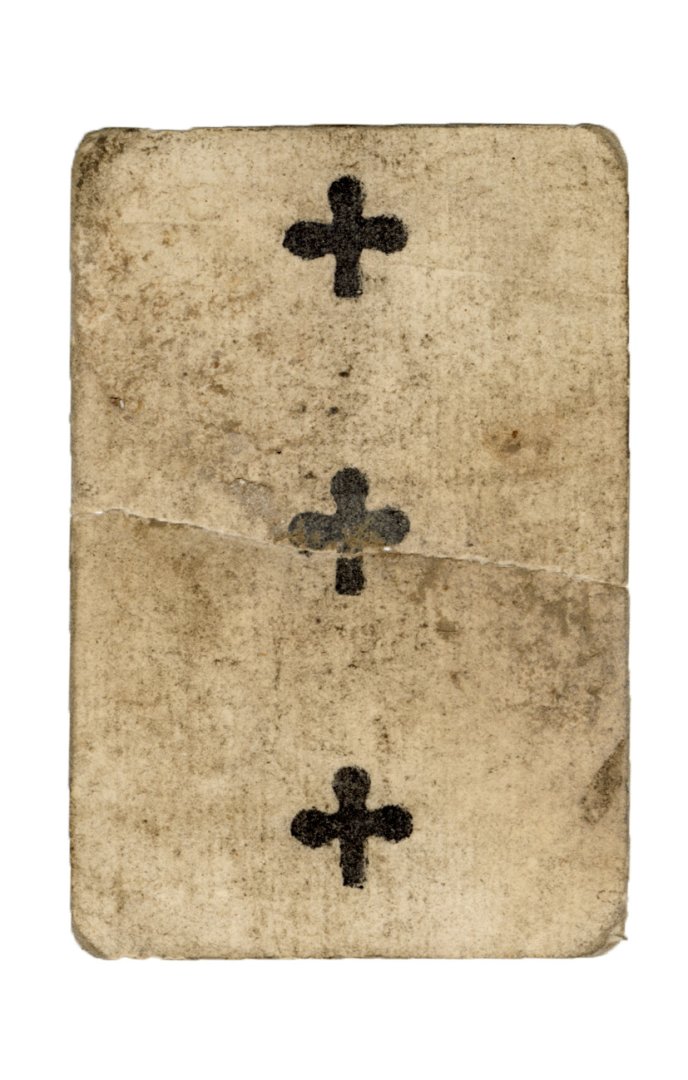
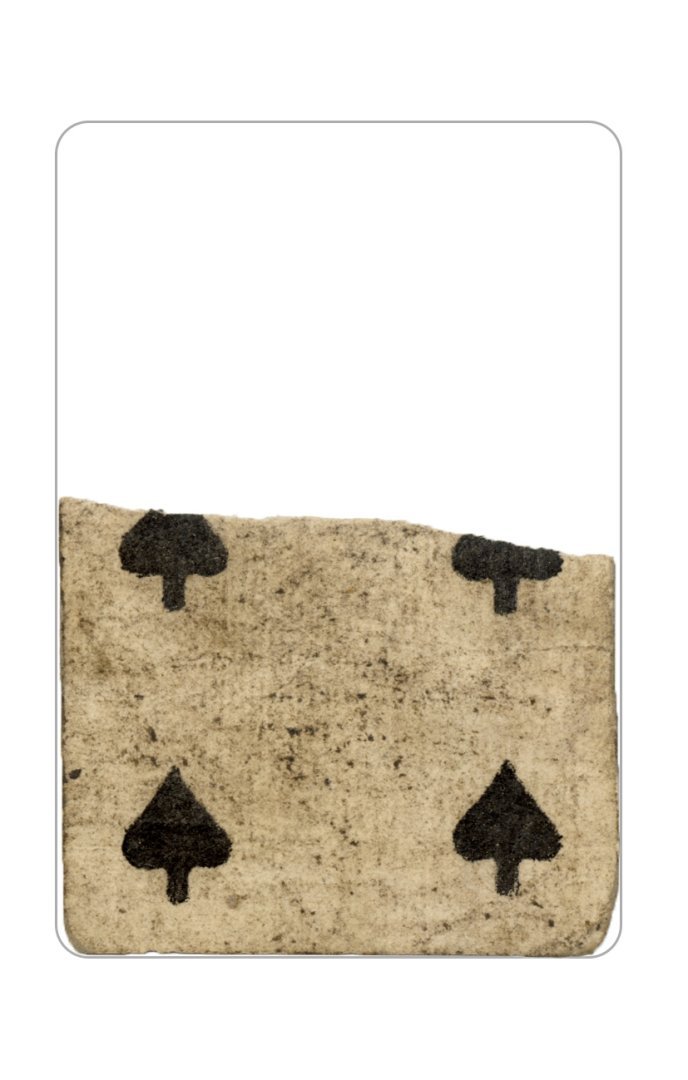
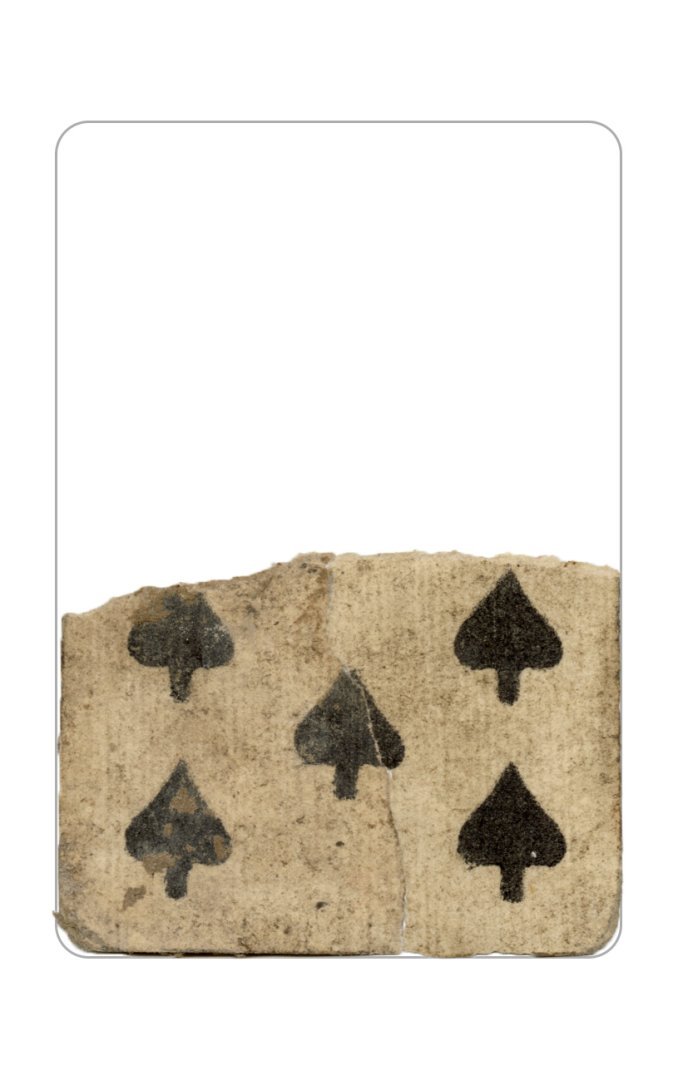
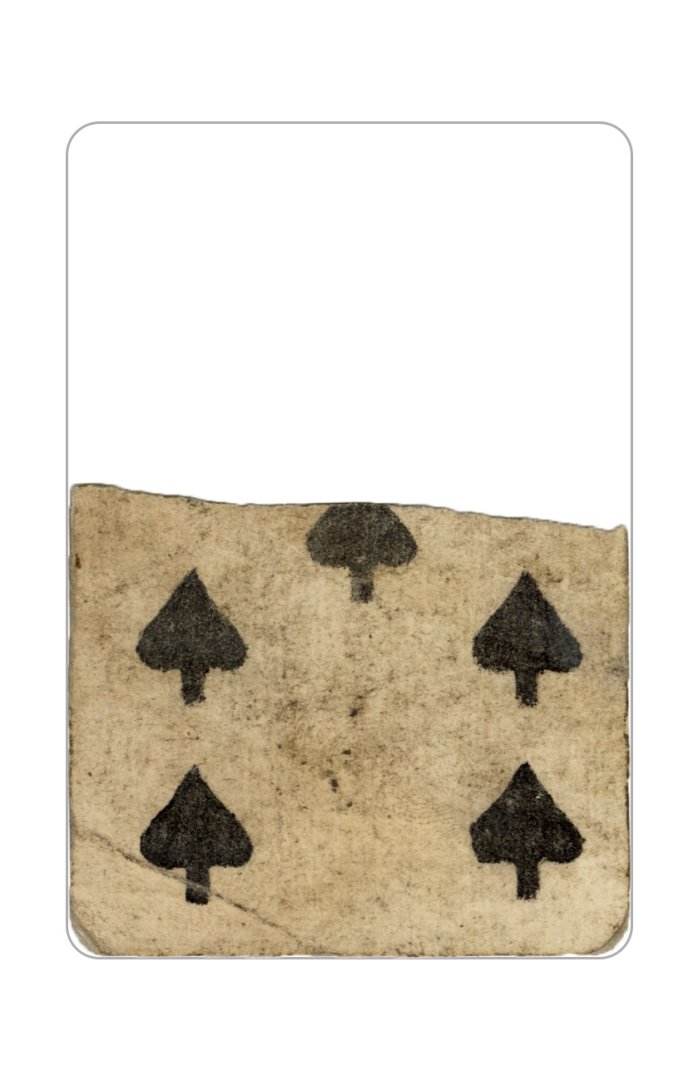
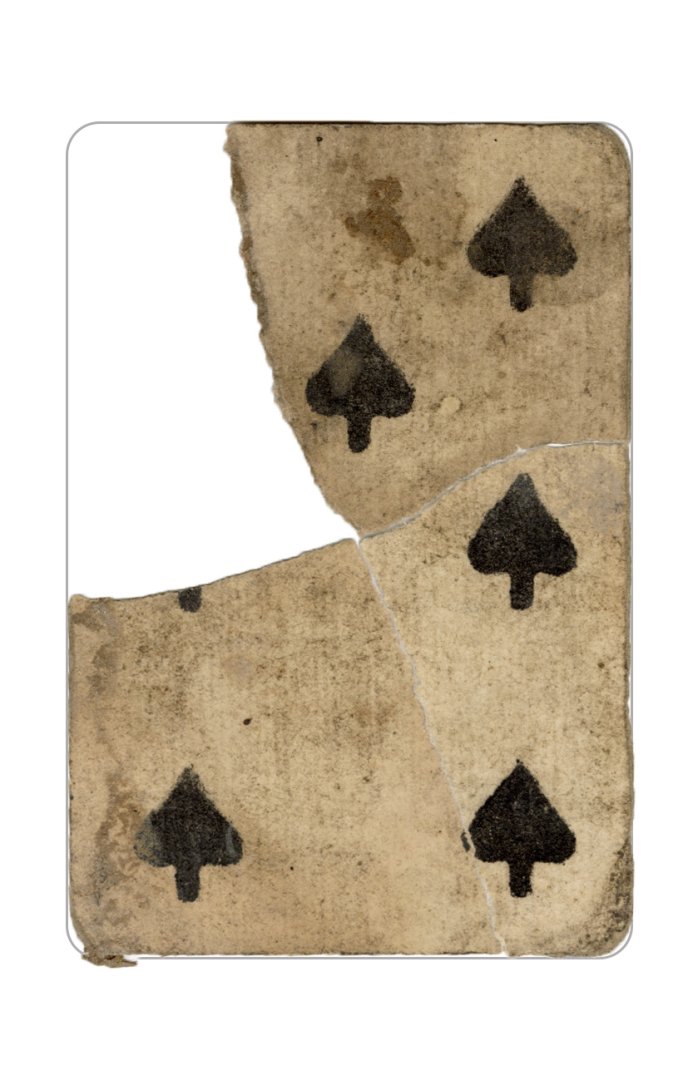
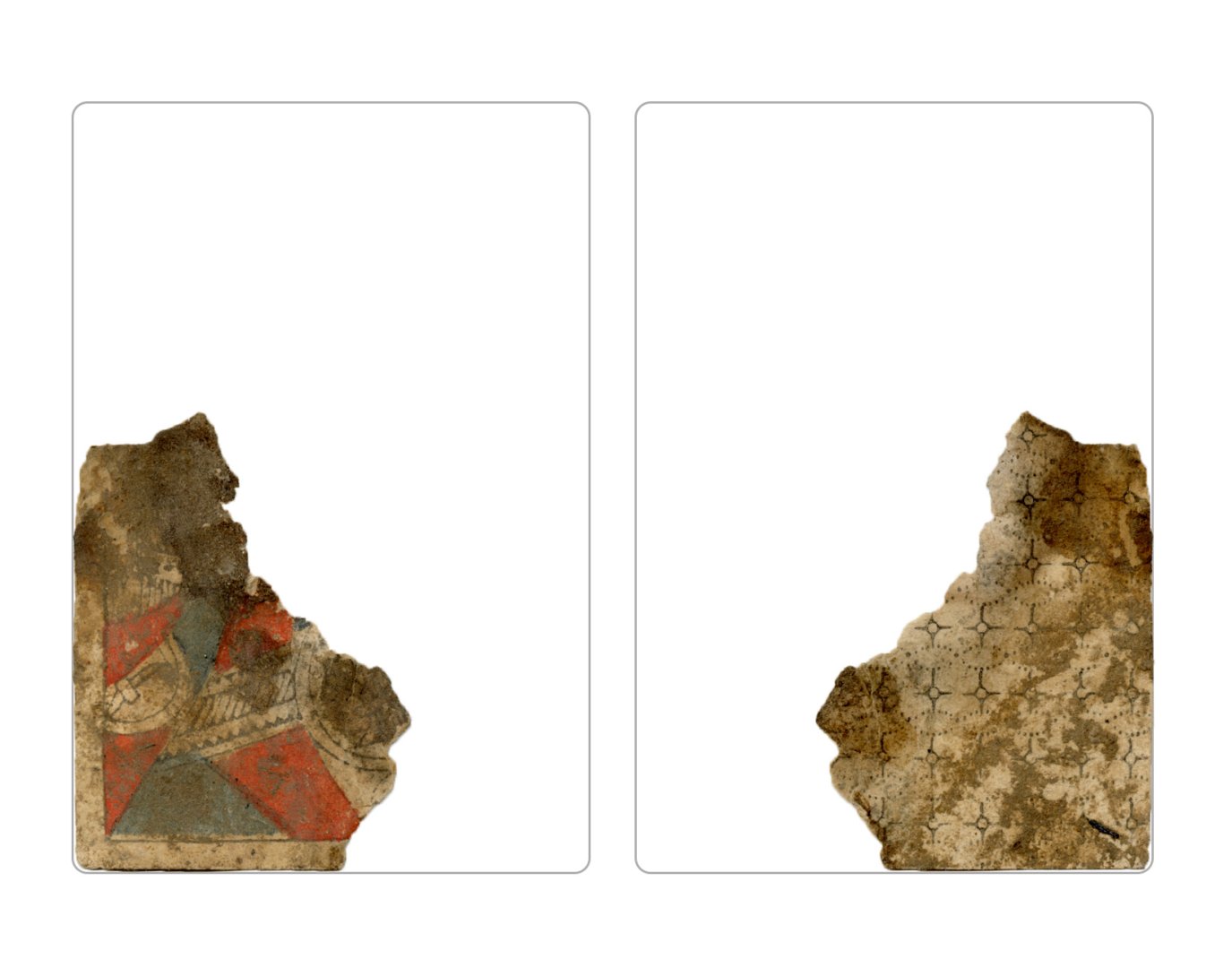
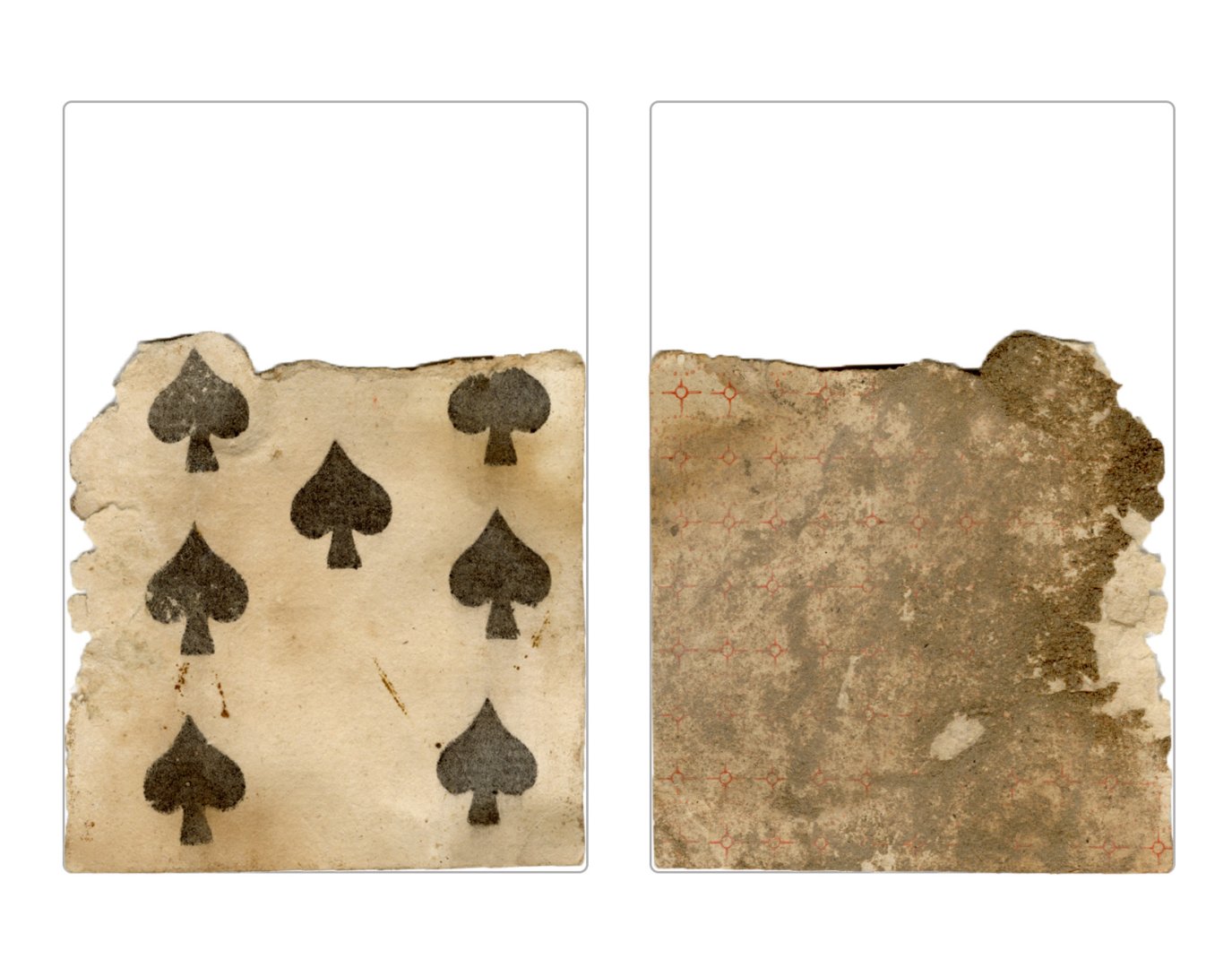
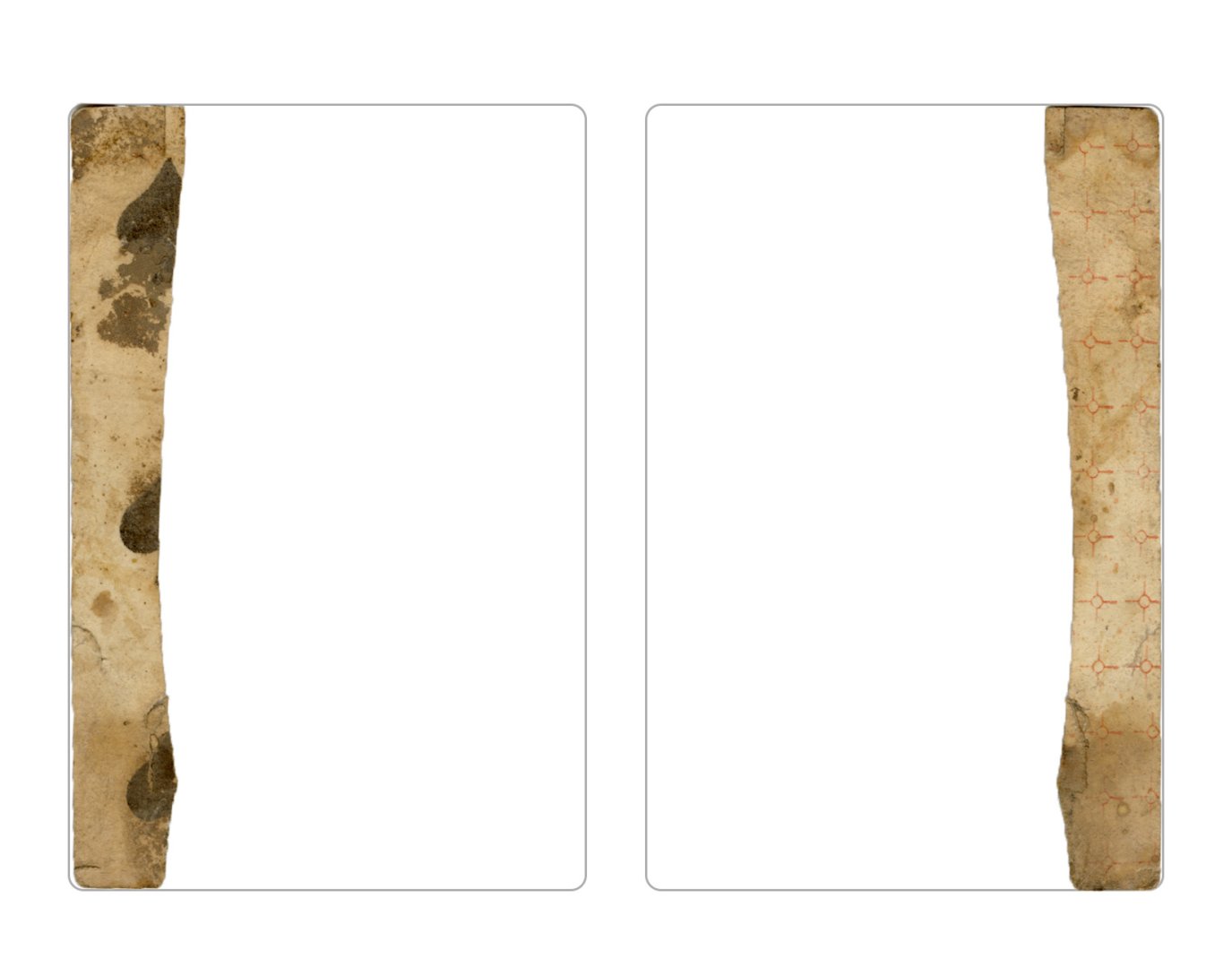
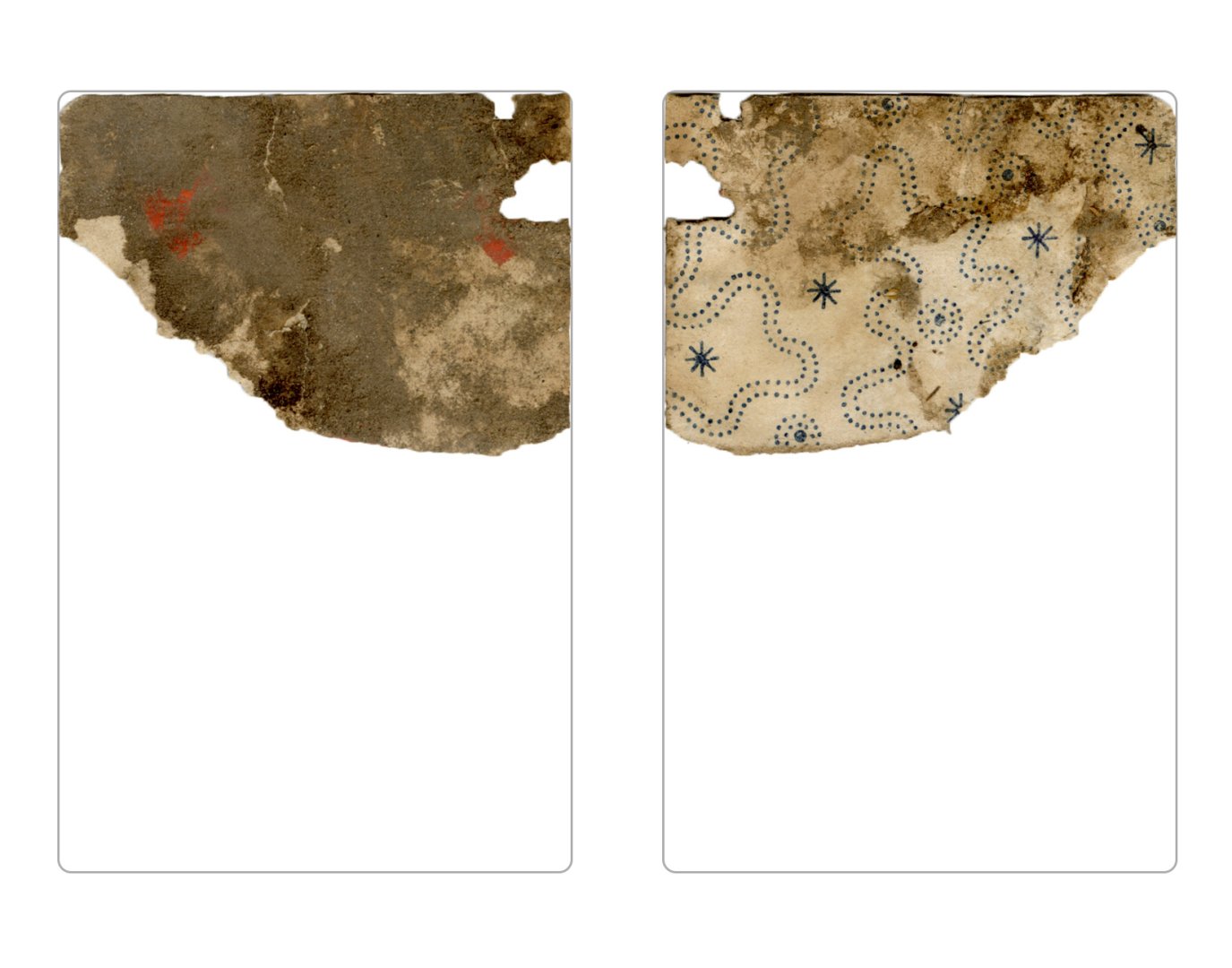
The cards and their fragments all belong to the same deck. The back of the deck features a simple geometrical pattern in red, where rows of red, rhombus-shaped symbols intertwine with fine dotted lines. This pattern, however, appears in multiple countries, and therefore can serve little in the way of authenticating these cards. The British Museum’s collection includes Dutch lottery cards with a very similar pattern. However, these are dated much later – 1820.[22] Furthermore, Colombia University’s digital library contains three types of French-suited card decks with the same pattern, except in blue or black, dated as 1750 [23], 1780 [24] and 1790. [25]
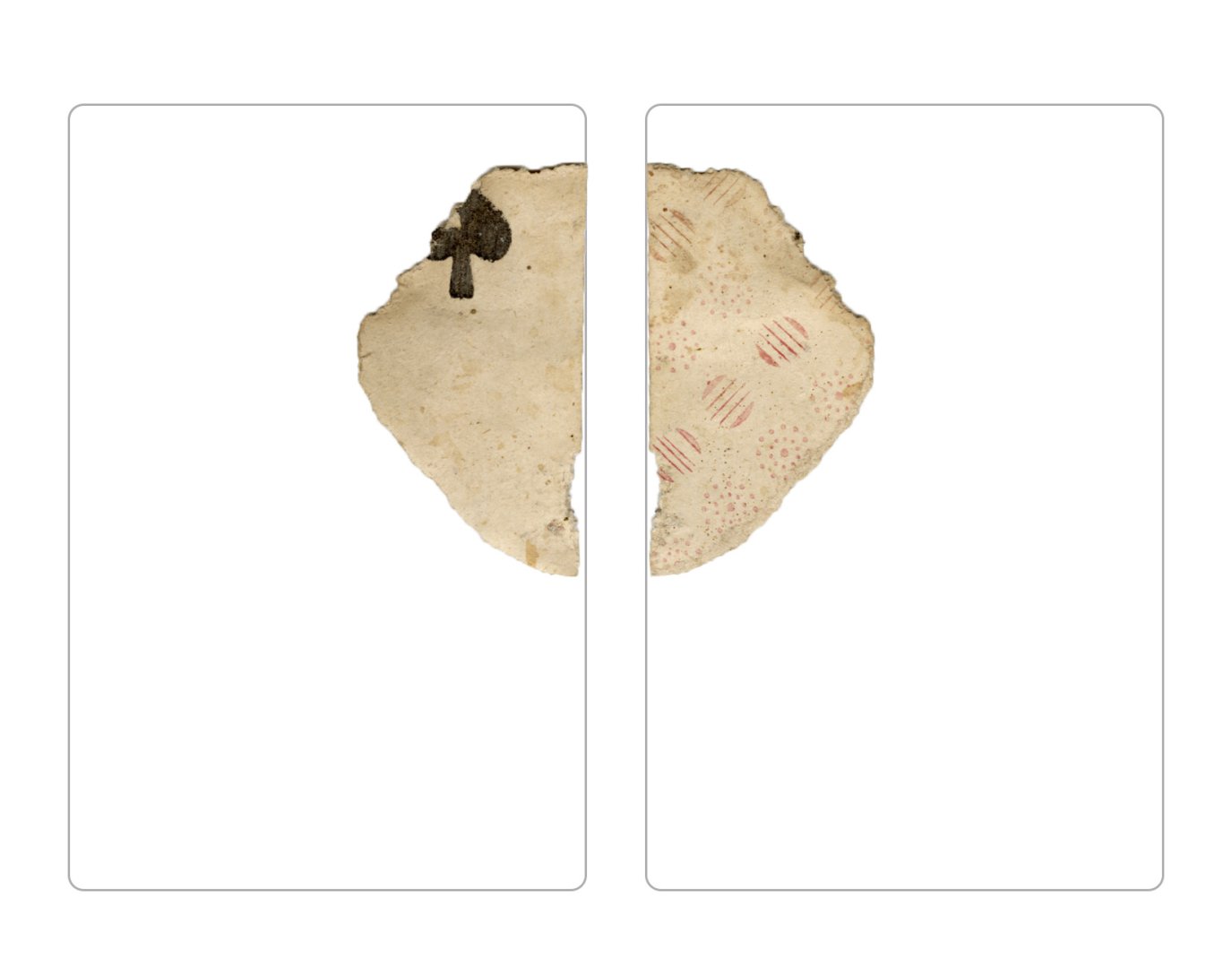
When cross-referencing and dating playing cards, the most important factor is the face side of the cards, which contains numbers and characters. Card fragments in the possession of the RPM contain Rachel or queen of diamonds, Cesar or king of diamonds, Hector or jack of diamonds and David or king of spades, Ogier the Dane or jack of spades, Alexander or king of clubs, La Hire (Joan of Arc’s military commander), as well as several numeral cards. David and La Hire form part of the exhibition on the Palace’s basement floor. There are also two fragments, one of which could be Charlemagne or the king of hearts, and the other belongs to one of the queens. Curiously, these cards have been torn up, although it is not known why.
These fragments were designed in the typical 18th-century French style, featuring grotesque, robust shapes and distinct colours (red, black, yellow and light blue). The colours were applied with stencils on a light xylographic drawing. Even though the catalogue gives Russia as the probable country of their provenance, they were more likely imported from France or Belgium. The most direct evidence for this are the historical names, since these don’t feature in English, German or Russian card designs.
Two cards that are currently on display in the Billiard Room were discovered intact, each from a different deck. The queen of clubs or Regina (inscribed with the anagram Argine) contains a single character, whereas the queen of hearts or Judith contains a mirror image. Such images appeared later, suggesting that this card may be newer than the others, dating no earlier than the mid-18th century. [26]


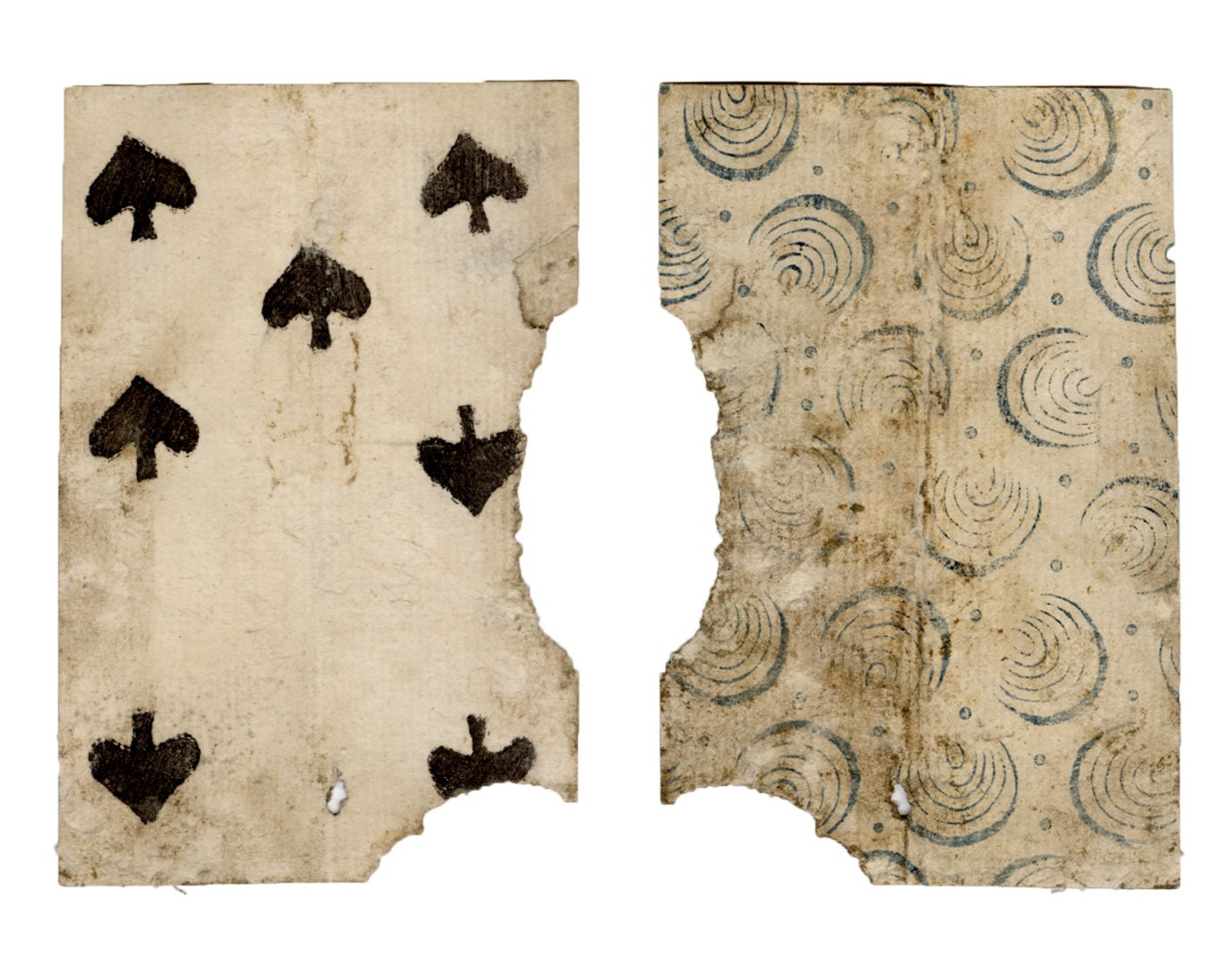
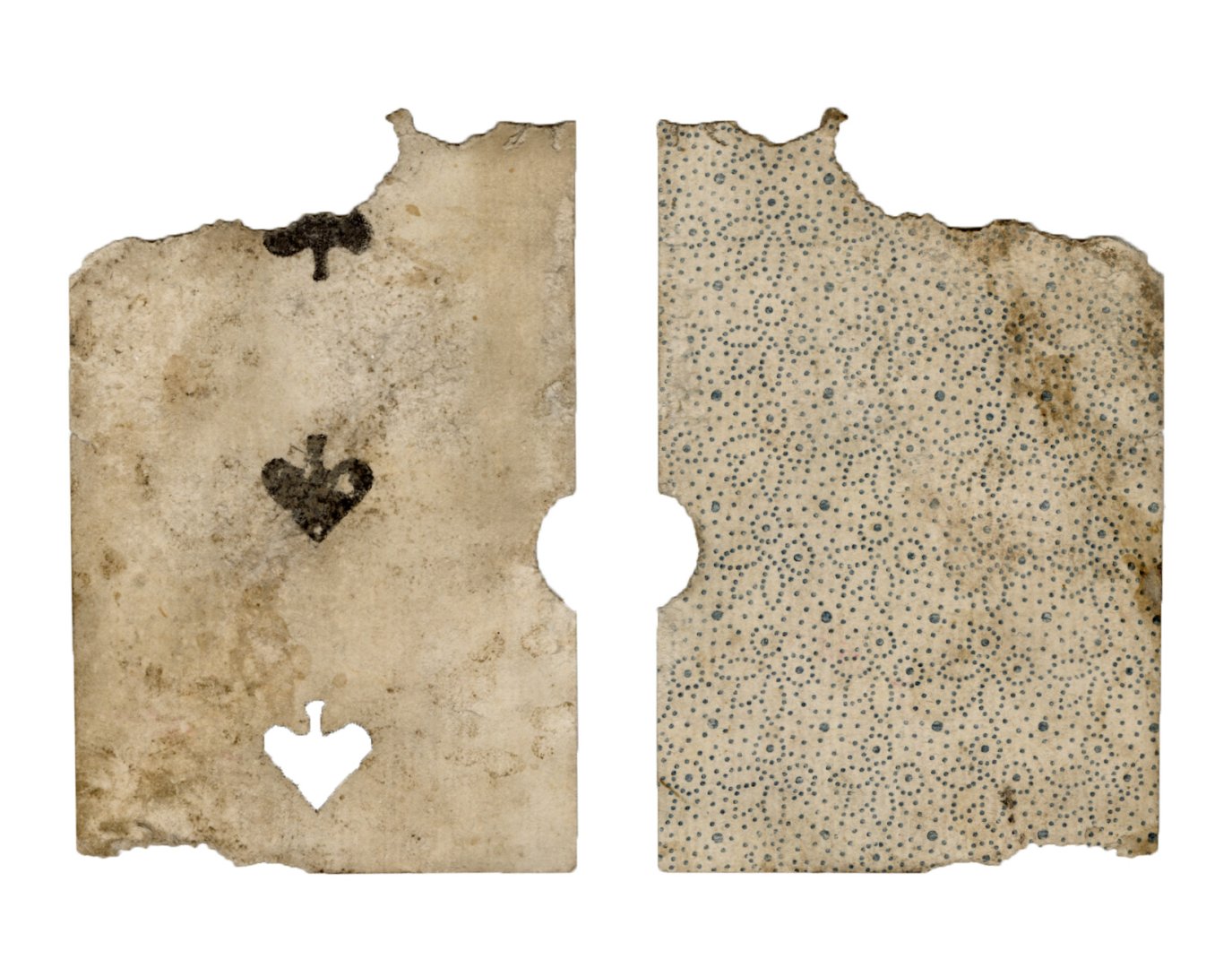
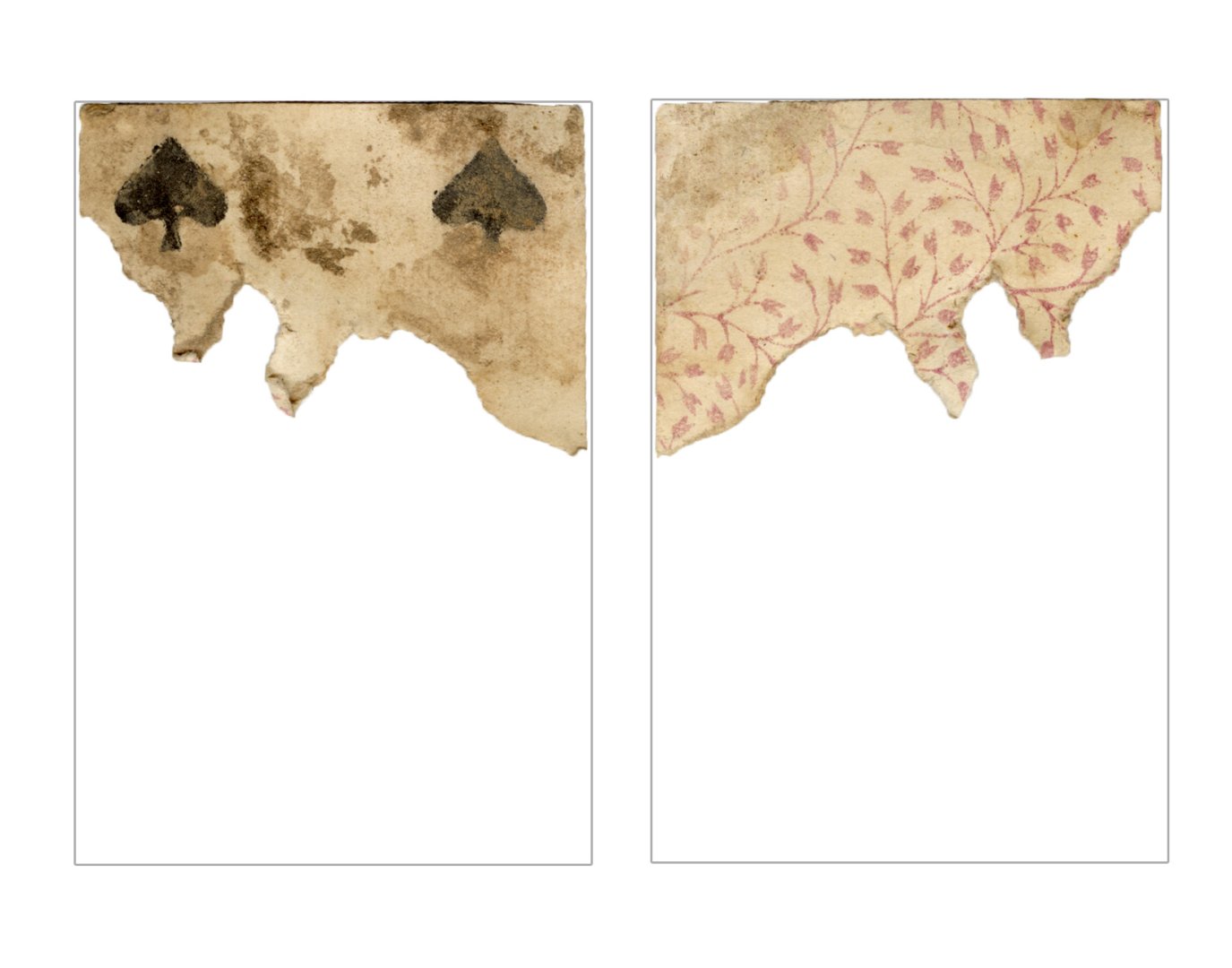
A substantial number of card fragments, all part of a stylistically united group, were discovered in Room 132, which currently serves as the Room for the Palace History Studies. The face side of the cards once contained a mirror image with markedly geometric contours. The same four colours have been used in the design of the cards, with their edges featuring inscriptions characteristic of French cards. In this set, two kings of diamonds have been identified, along with a king of hearts, four queens of hearts, a queen of spades and a jack. However, the pattern on the back side differs between the cards. It contains dotted lines and delicate plant motifs, which are characteristic of cards produced in the 18th century, as well as the first third of the 19th century.
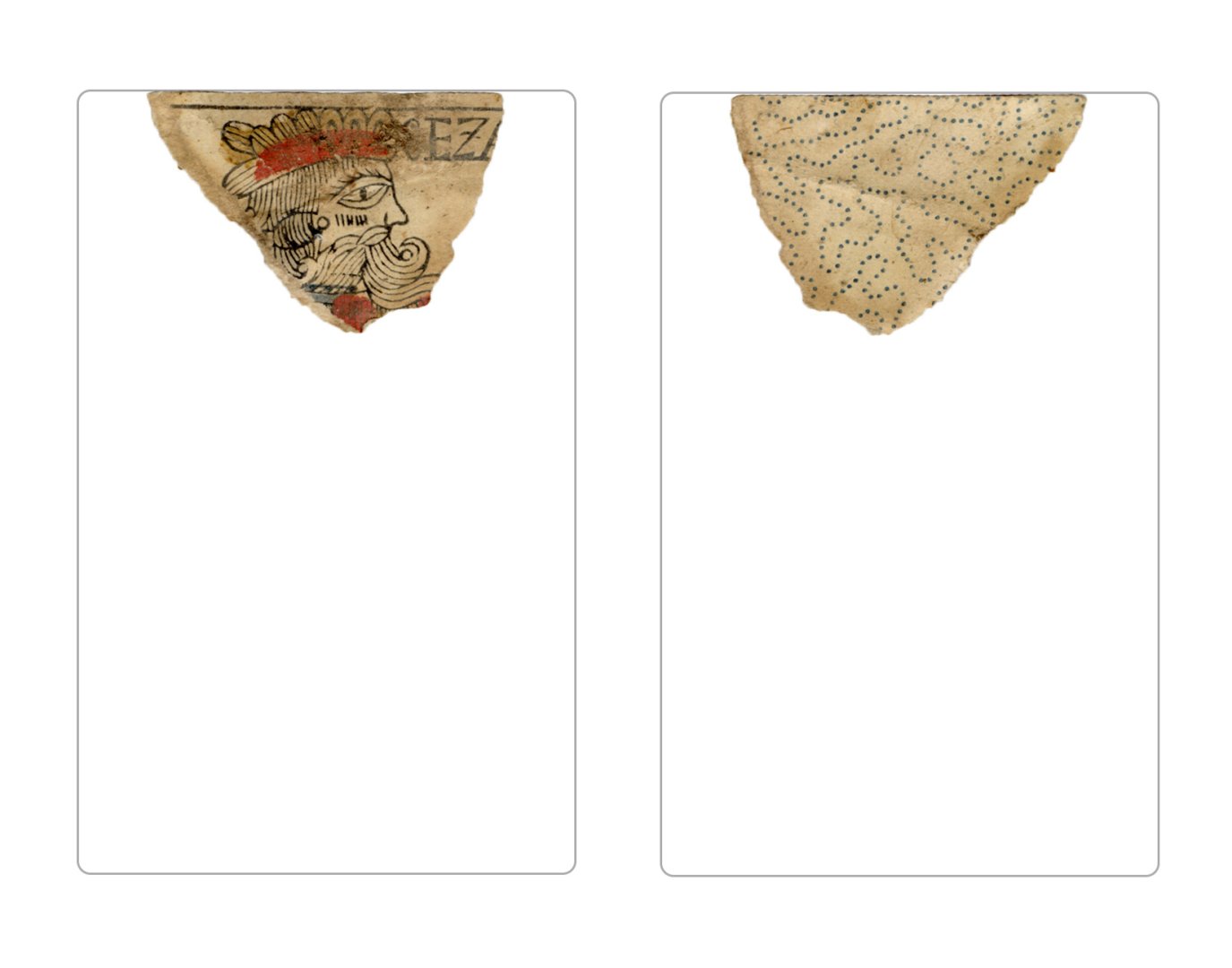
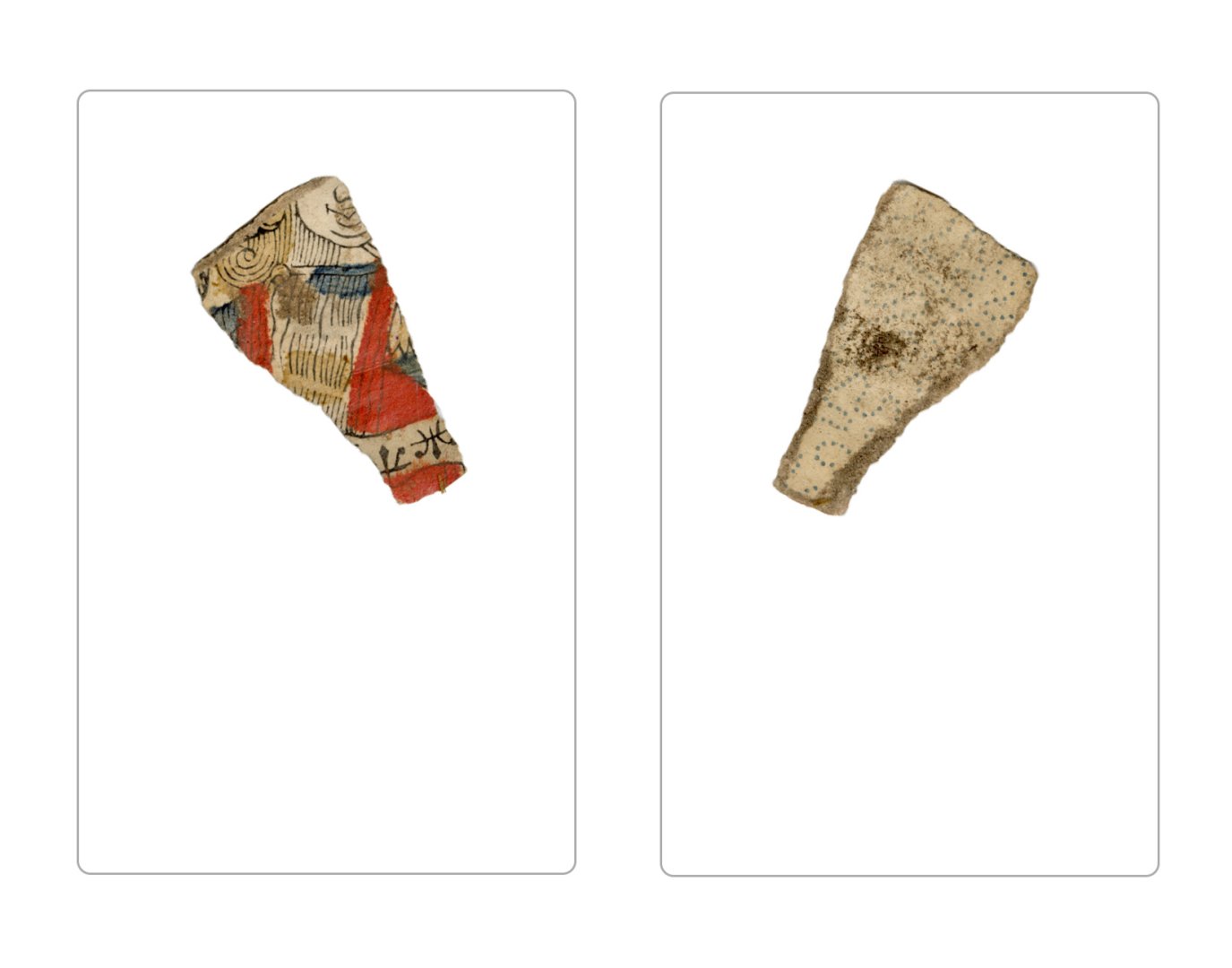
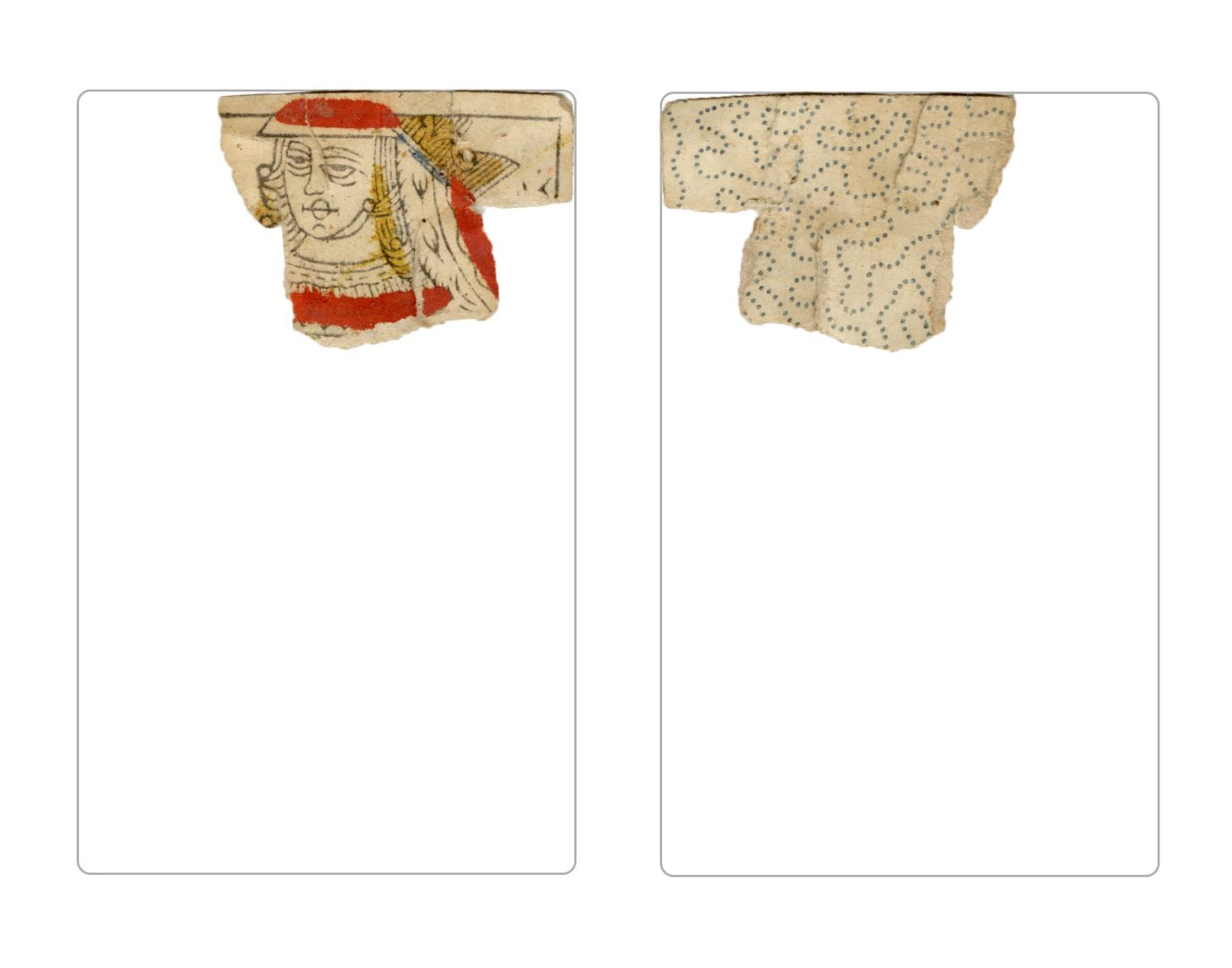
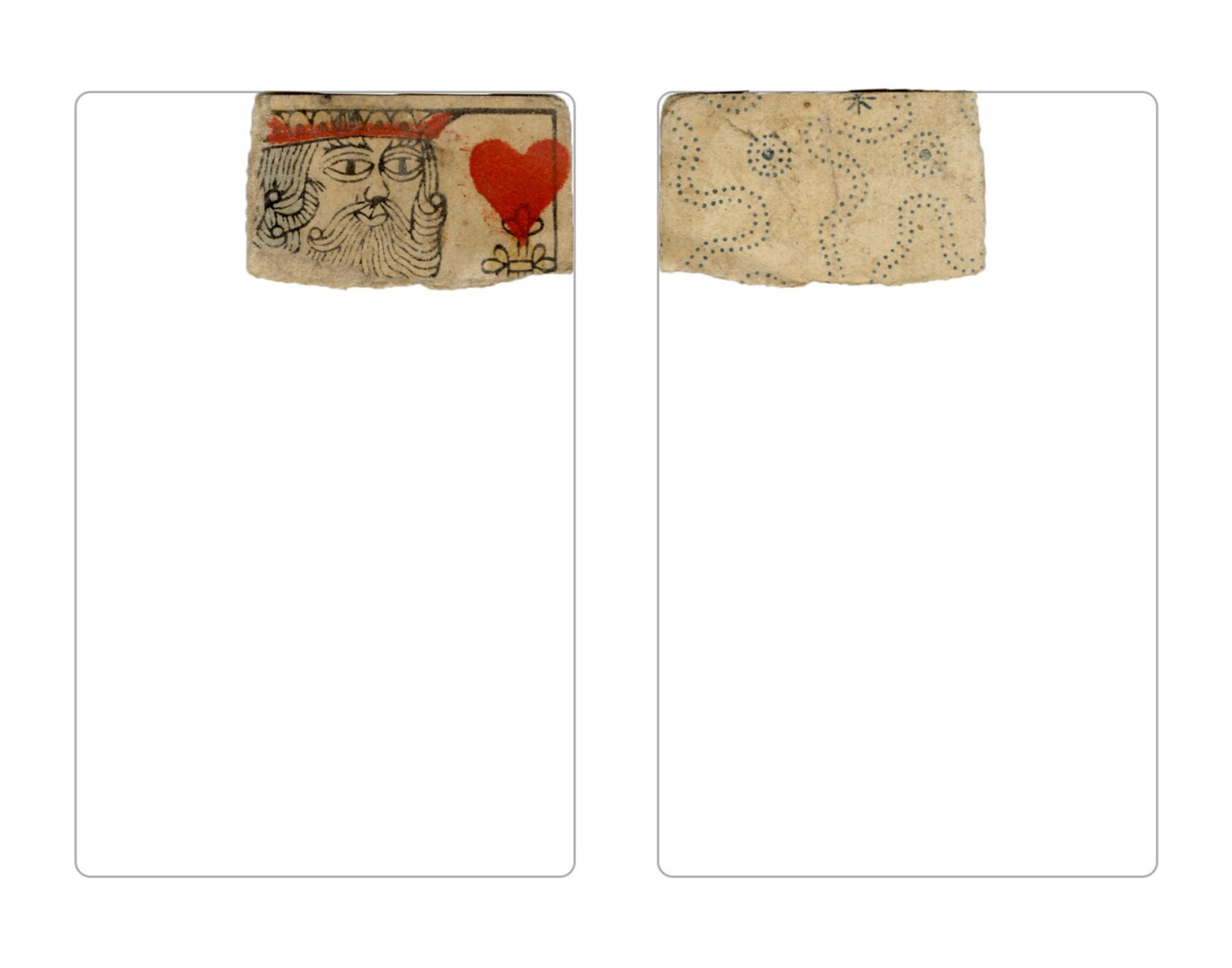
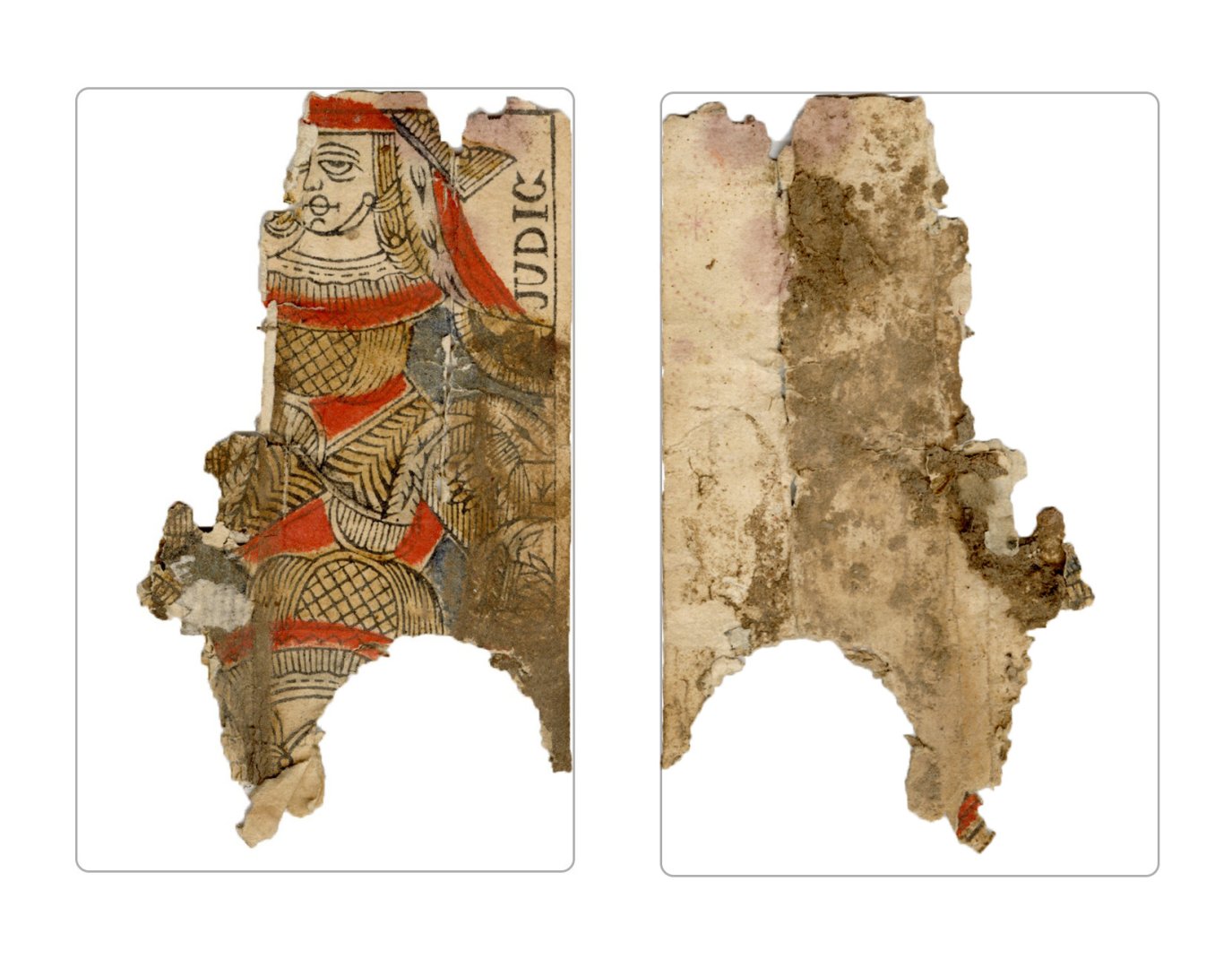
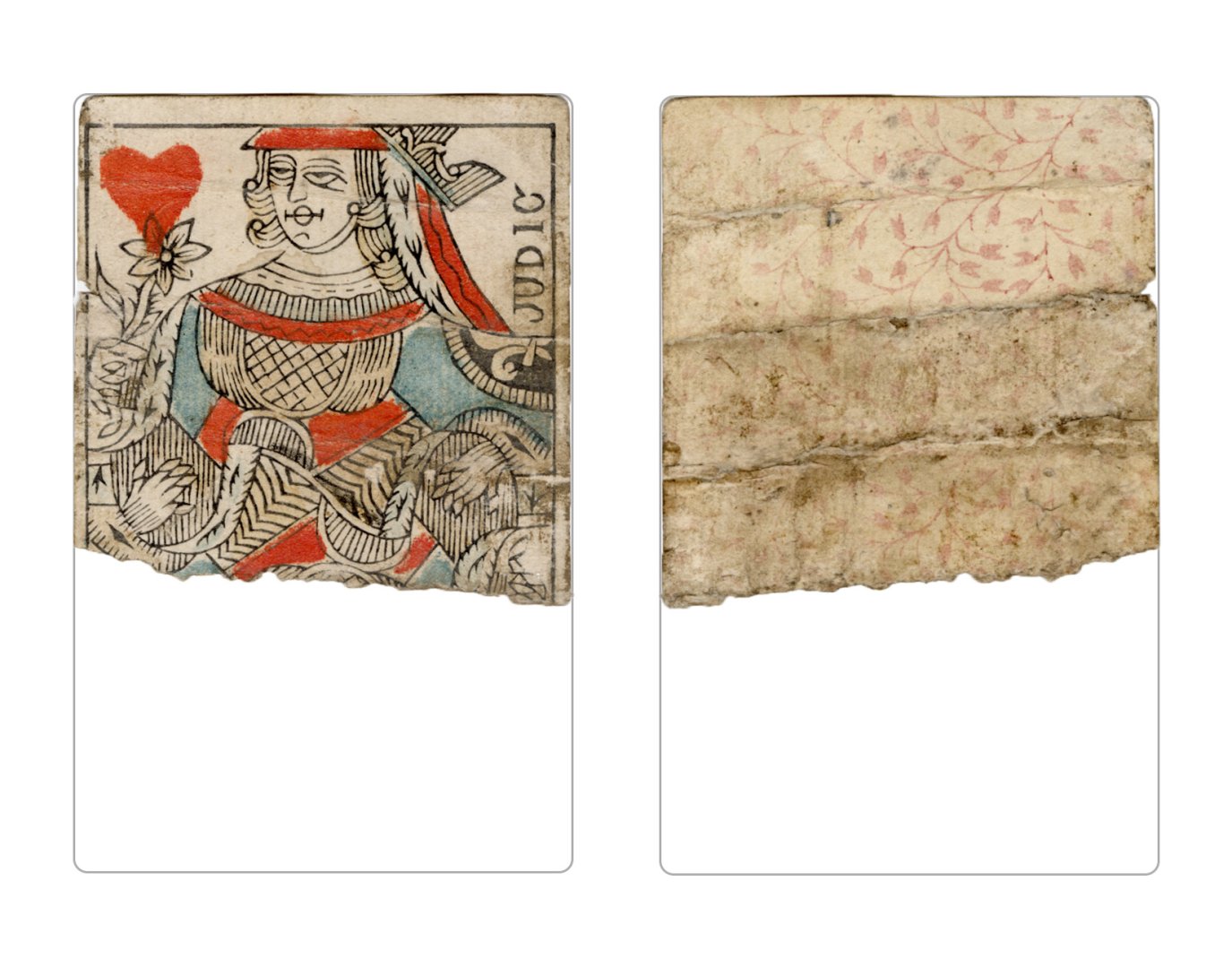
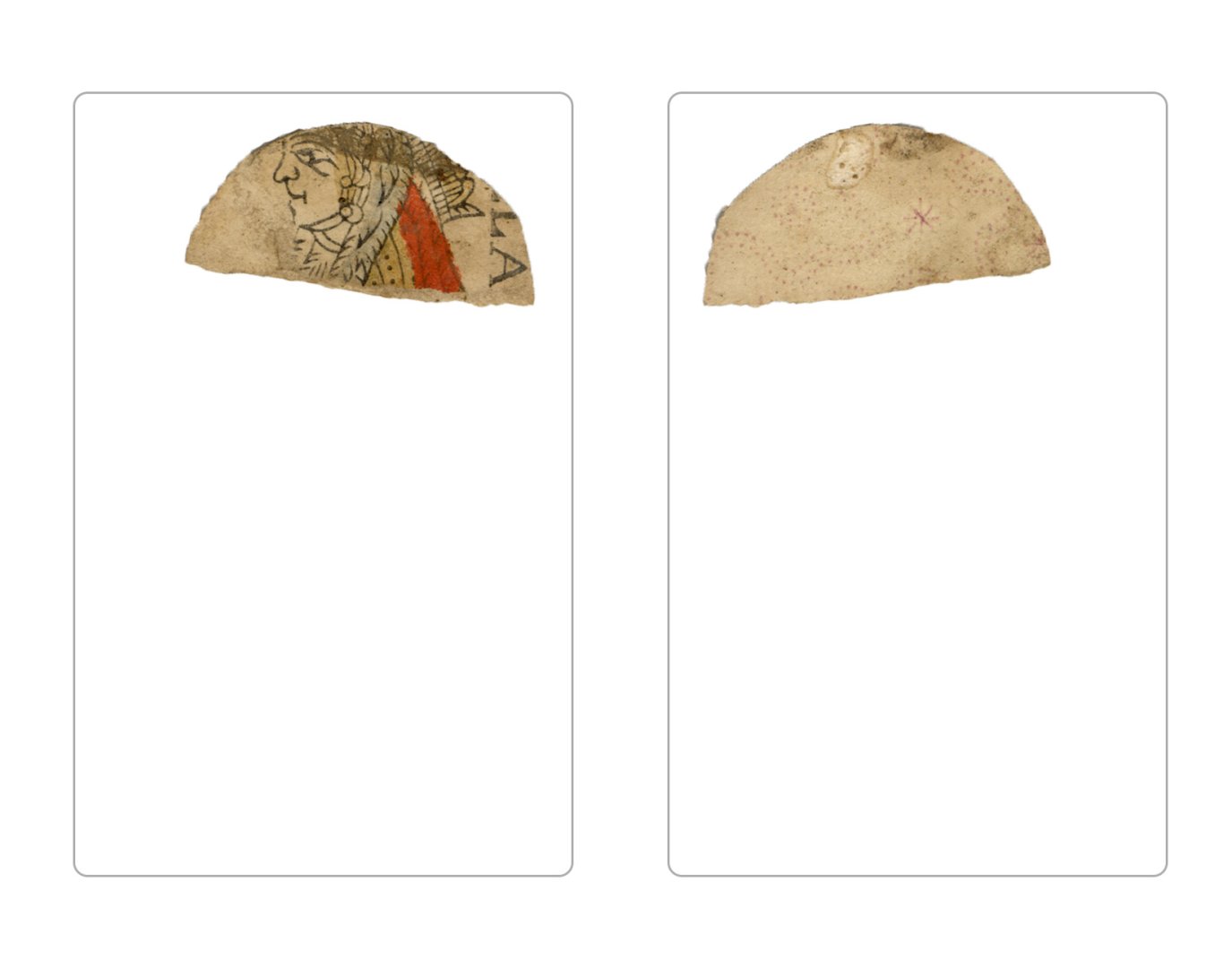
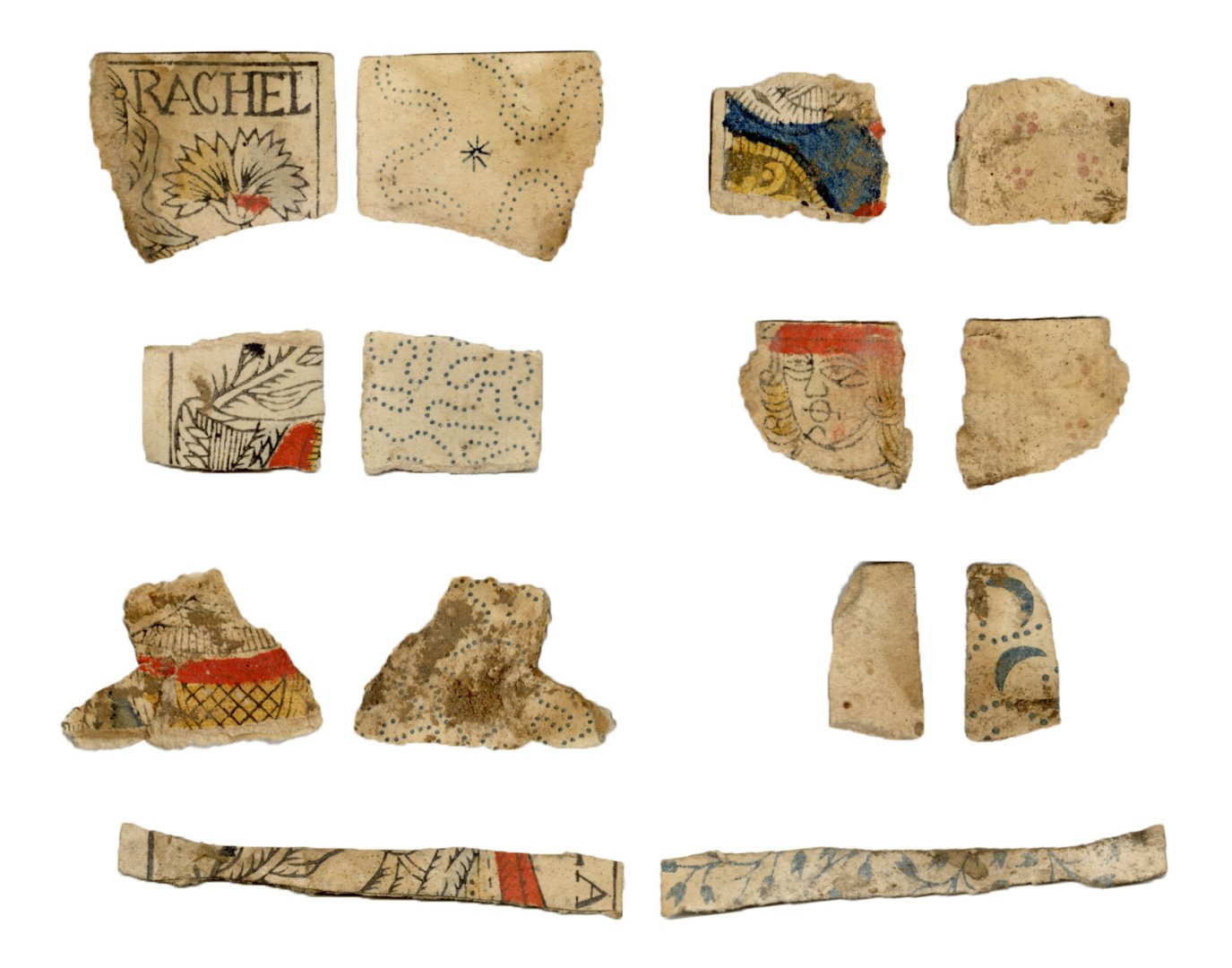
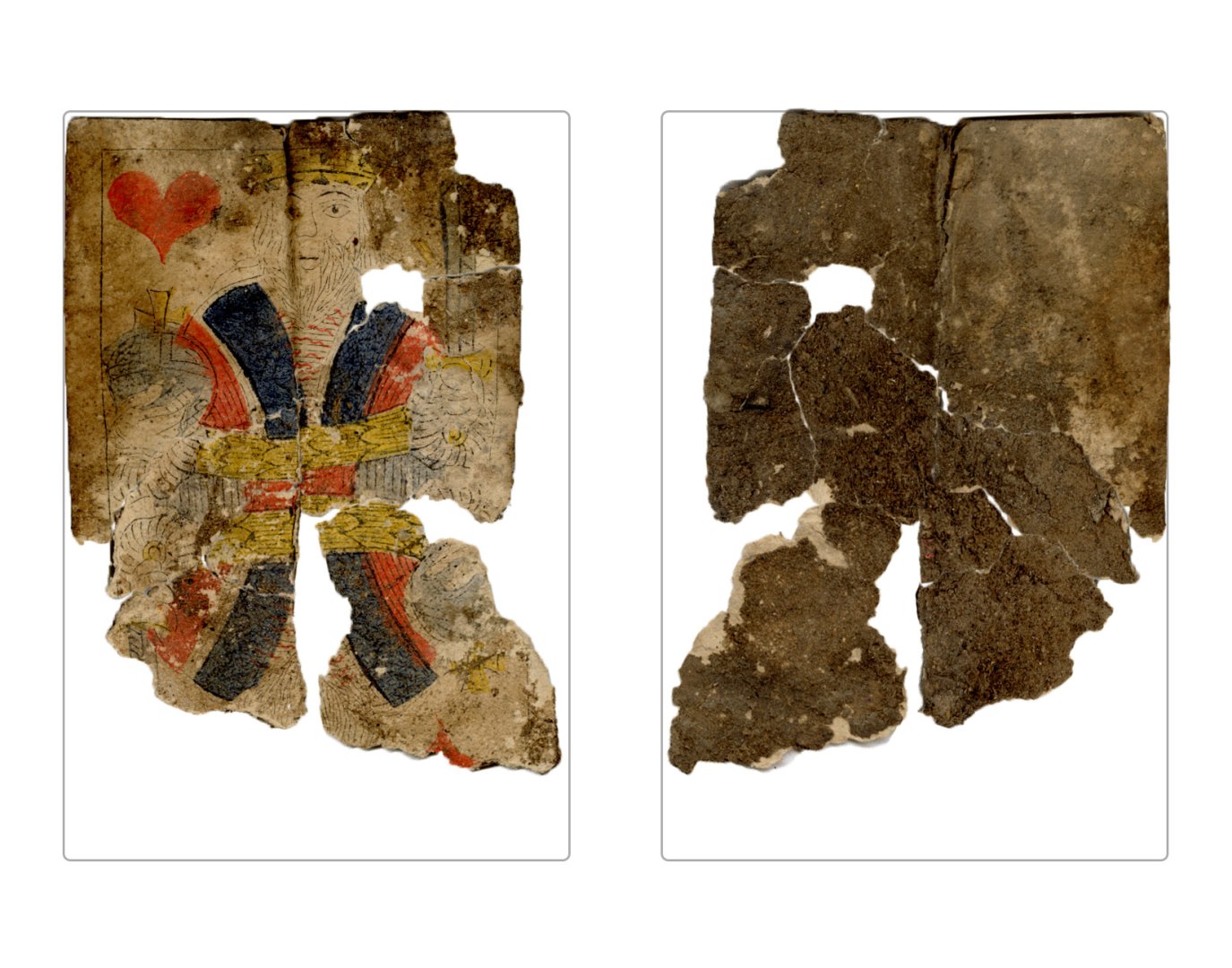
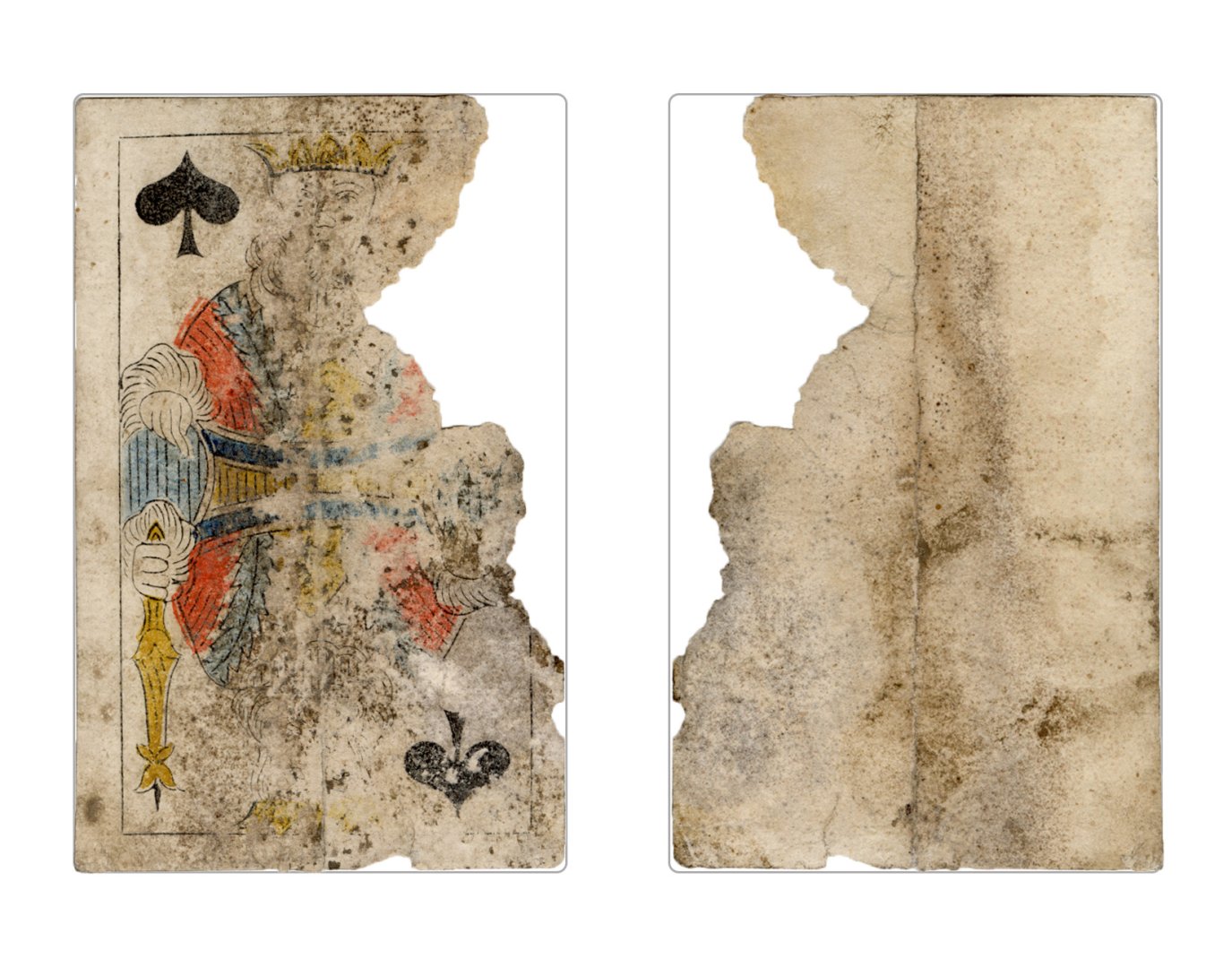
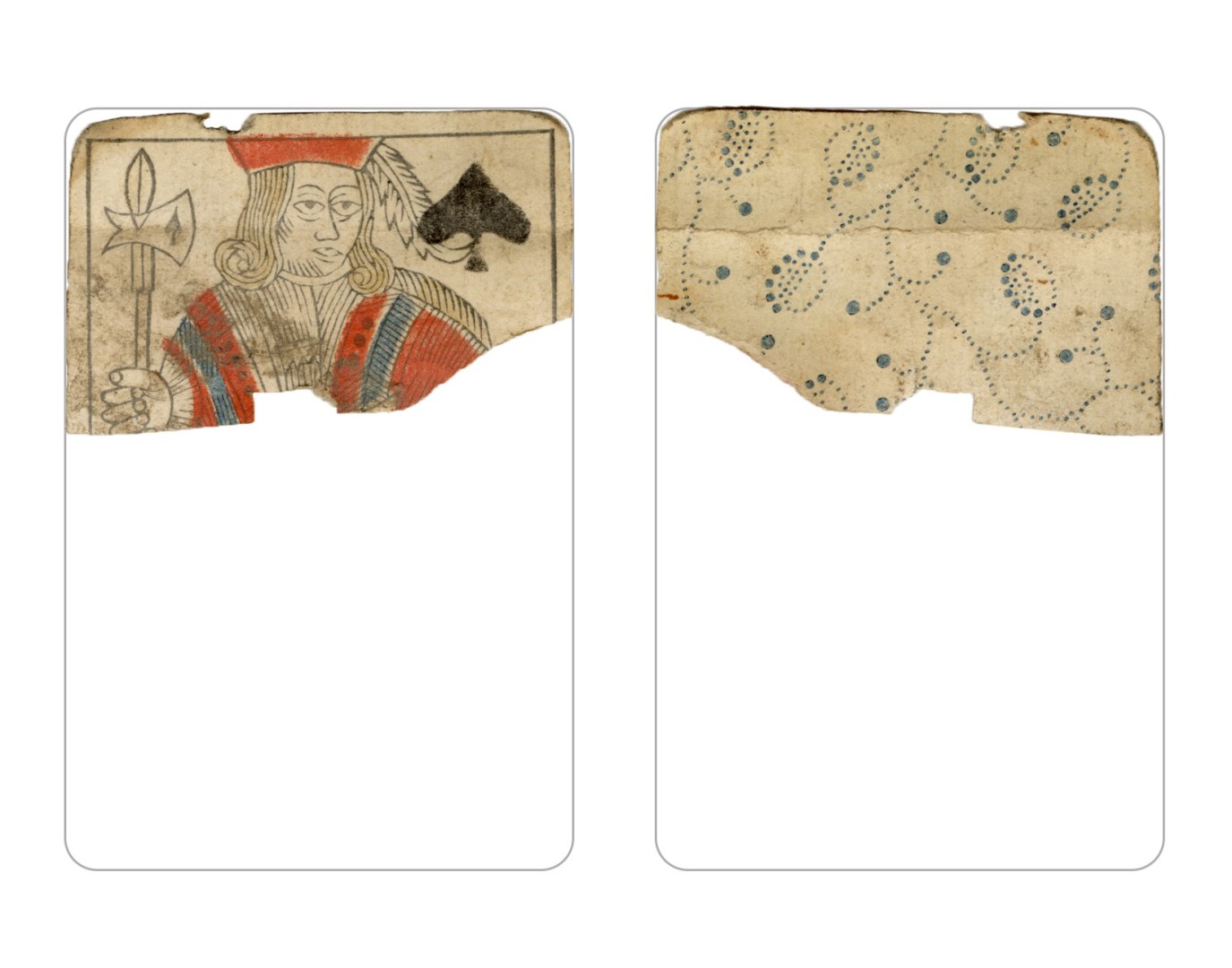
The underfloor of Room 132 also guarded fragments of a card from a different period, made in a distinct style. By piecing them together, a king of hearts partially emerges. To learn more about the deck this card once belonged to, it can be cross-referenced with similar discoveries. The mirrored king of spades, found in another room, visually resembles the king of hearts. Likewise, a stylistically similar jack of diamonds has been found at the Palace, now on display in the Billiard Room. When scanning digital databases for similar types of playing cards, the same deck emerged at the Bibliothèque nationale de France. [27] It was made in 1830 at the Imperial Playing Card Factory in Saint Petersburg. Furthermore, several examples found at Rundāle Palace feature the same backside pattern.
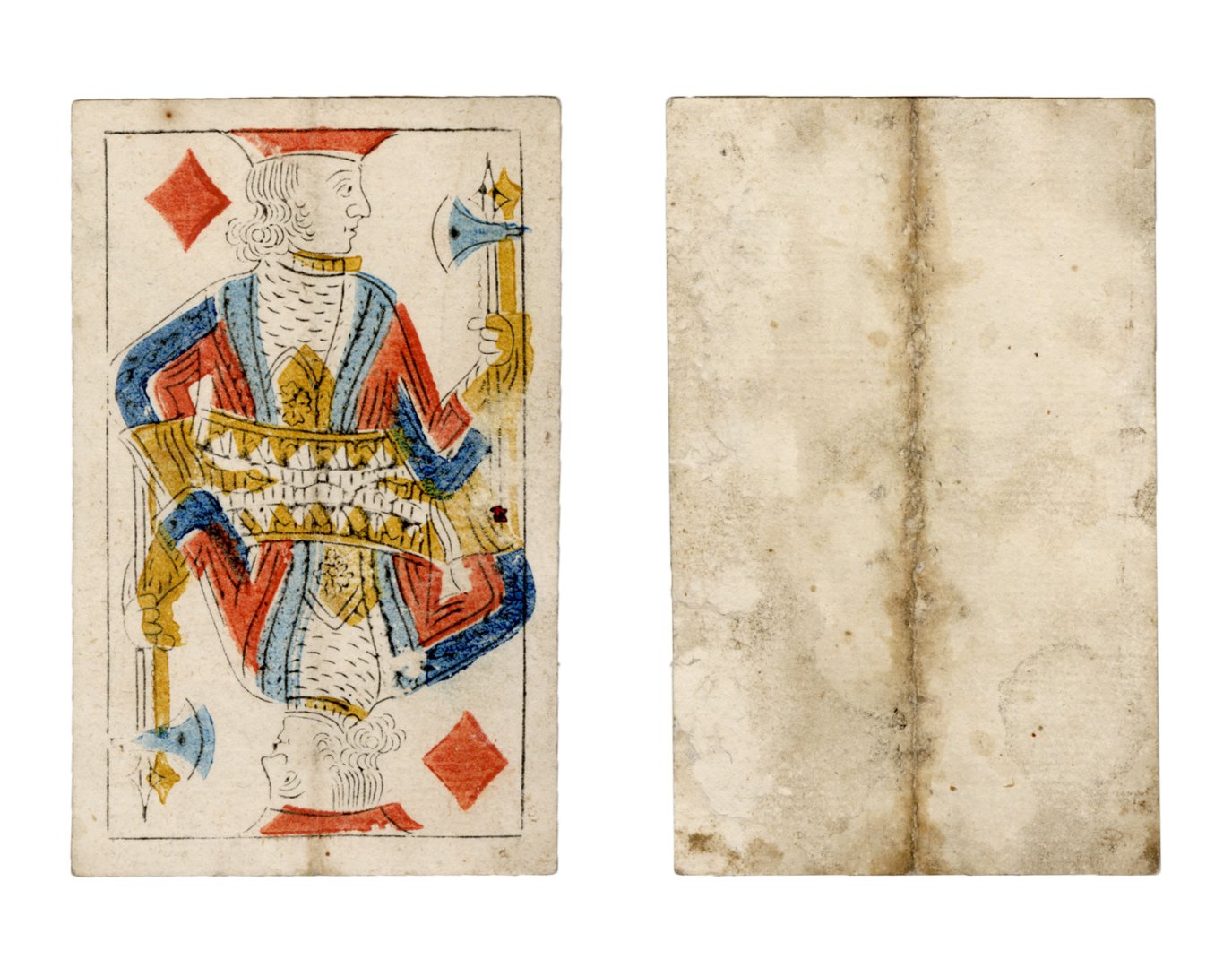
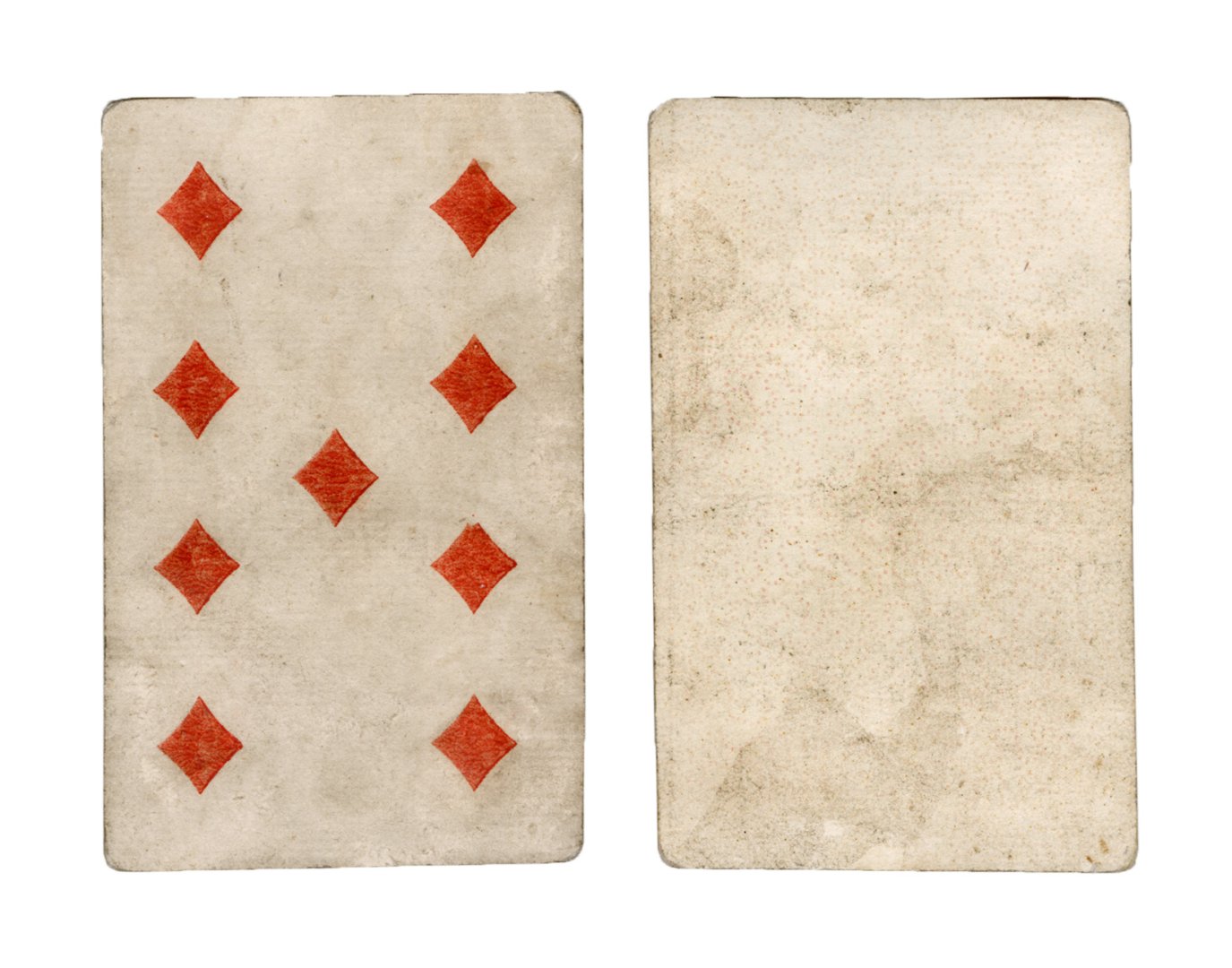
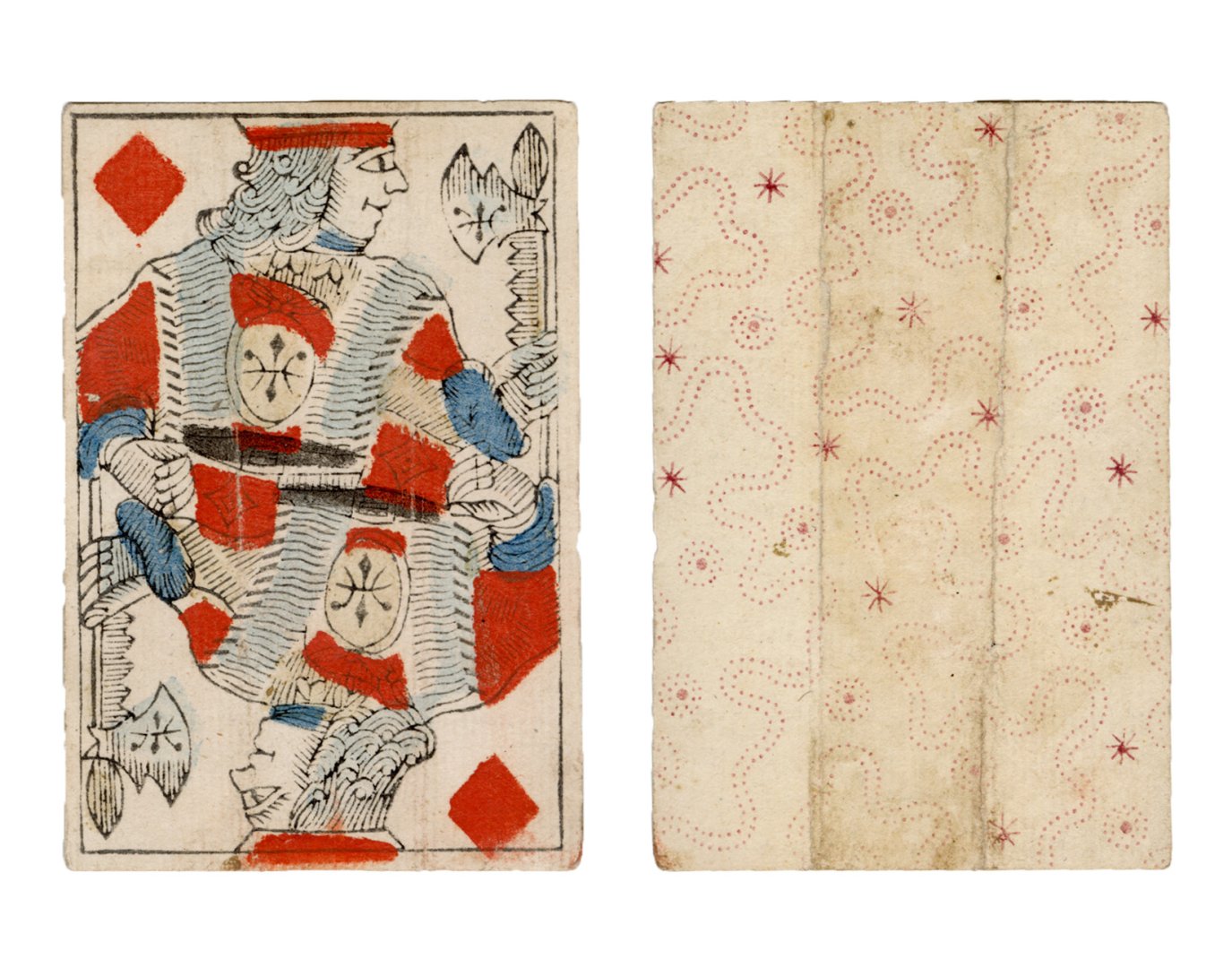
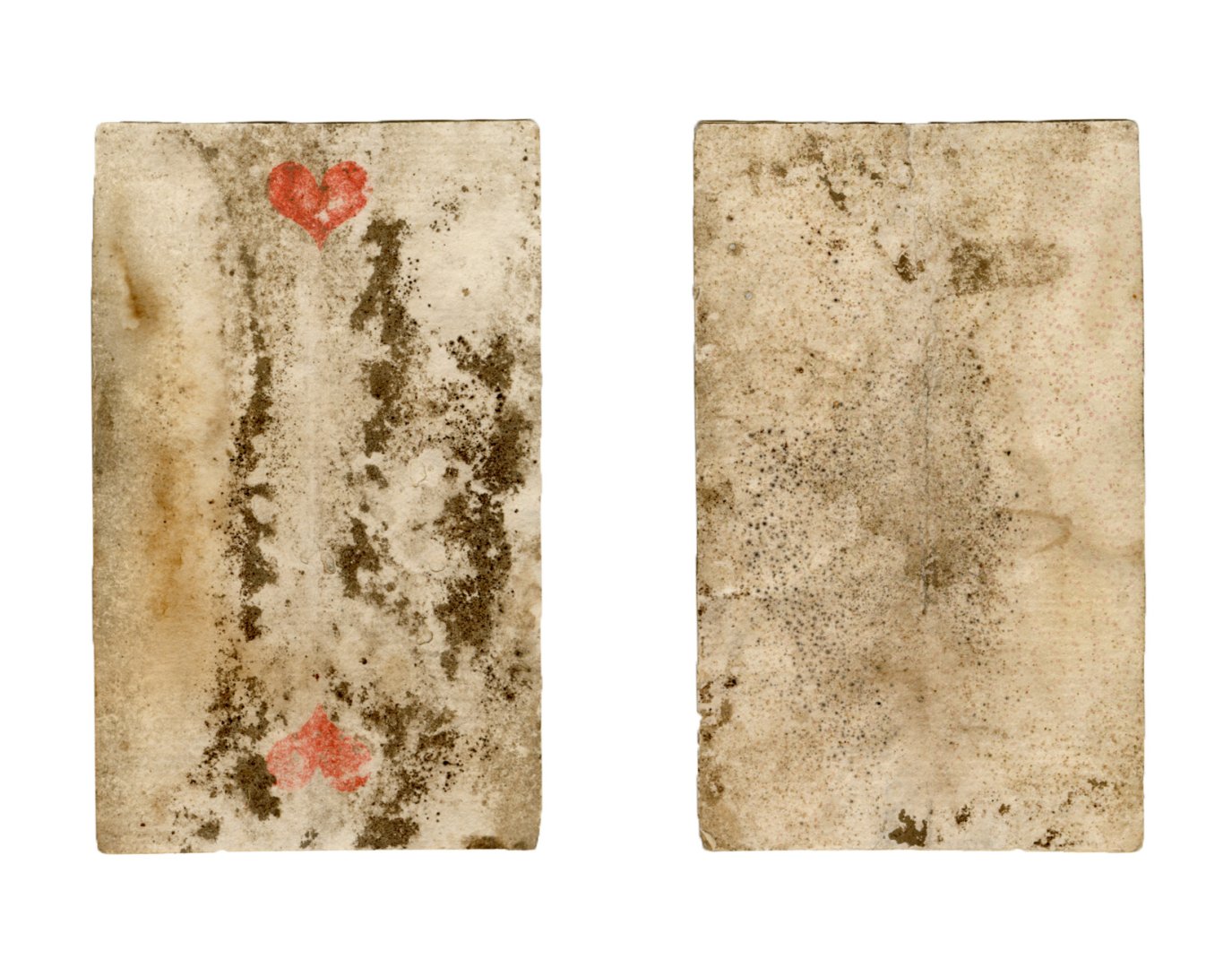
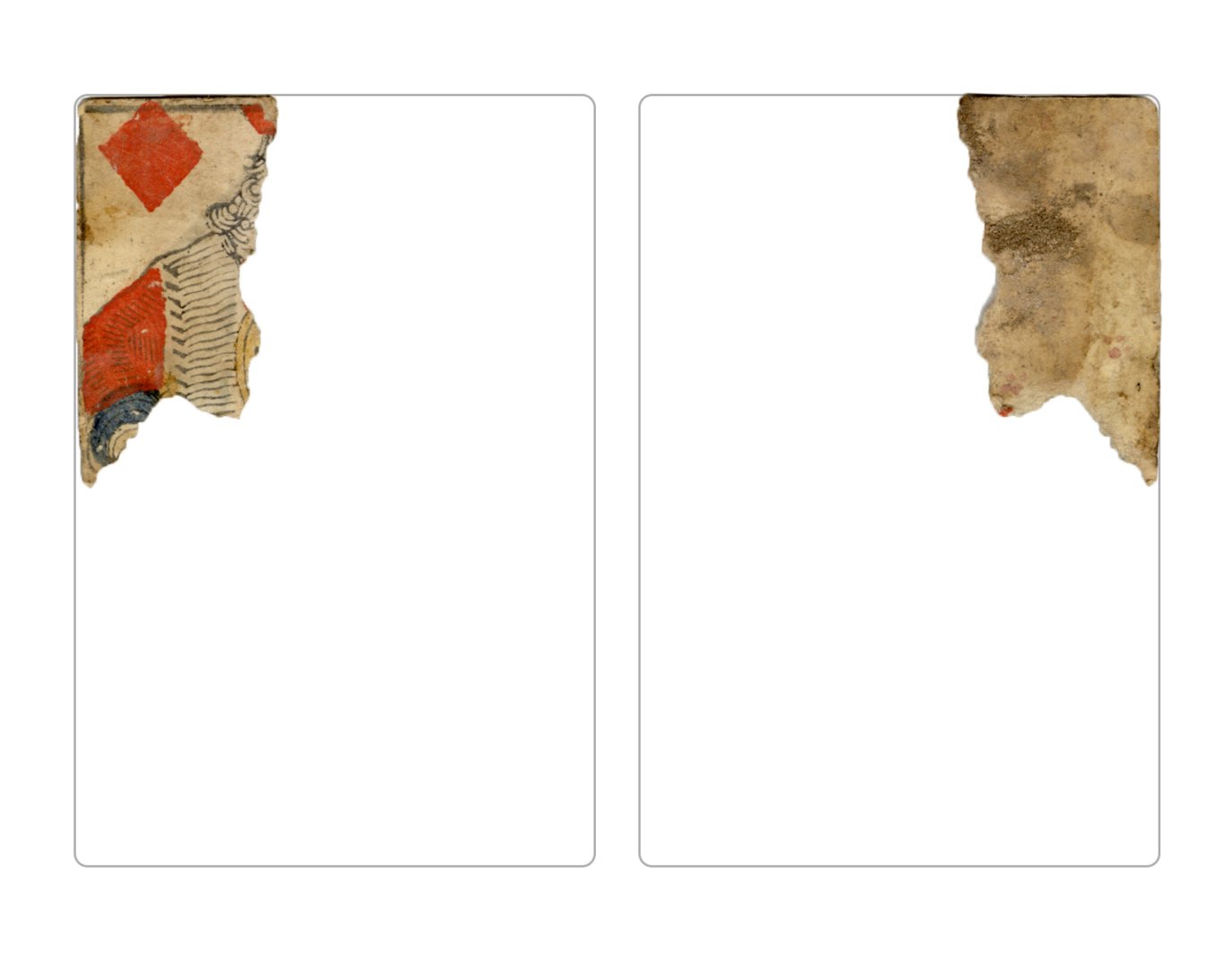
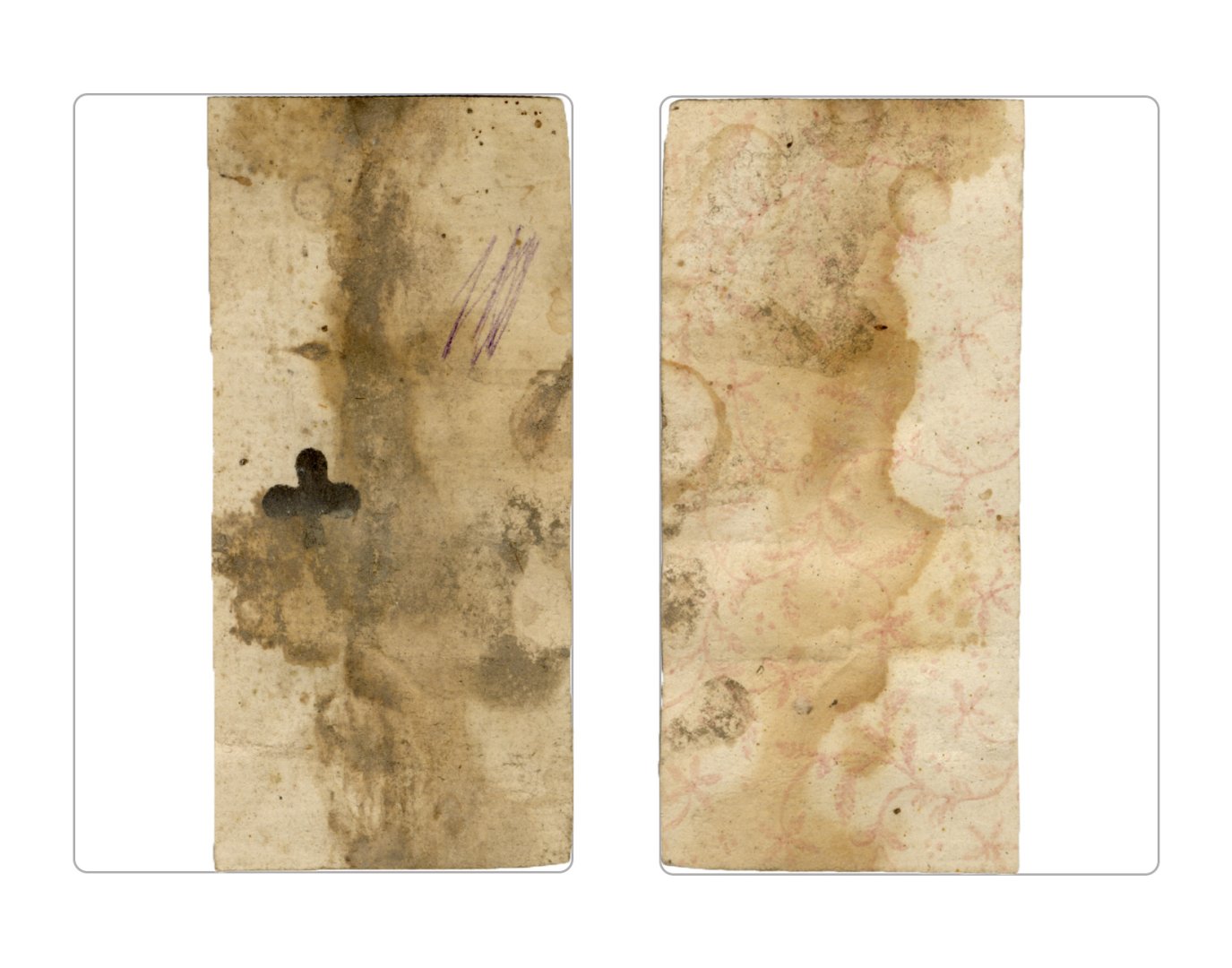
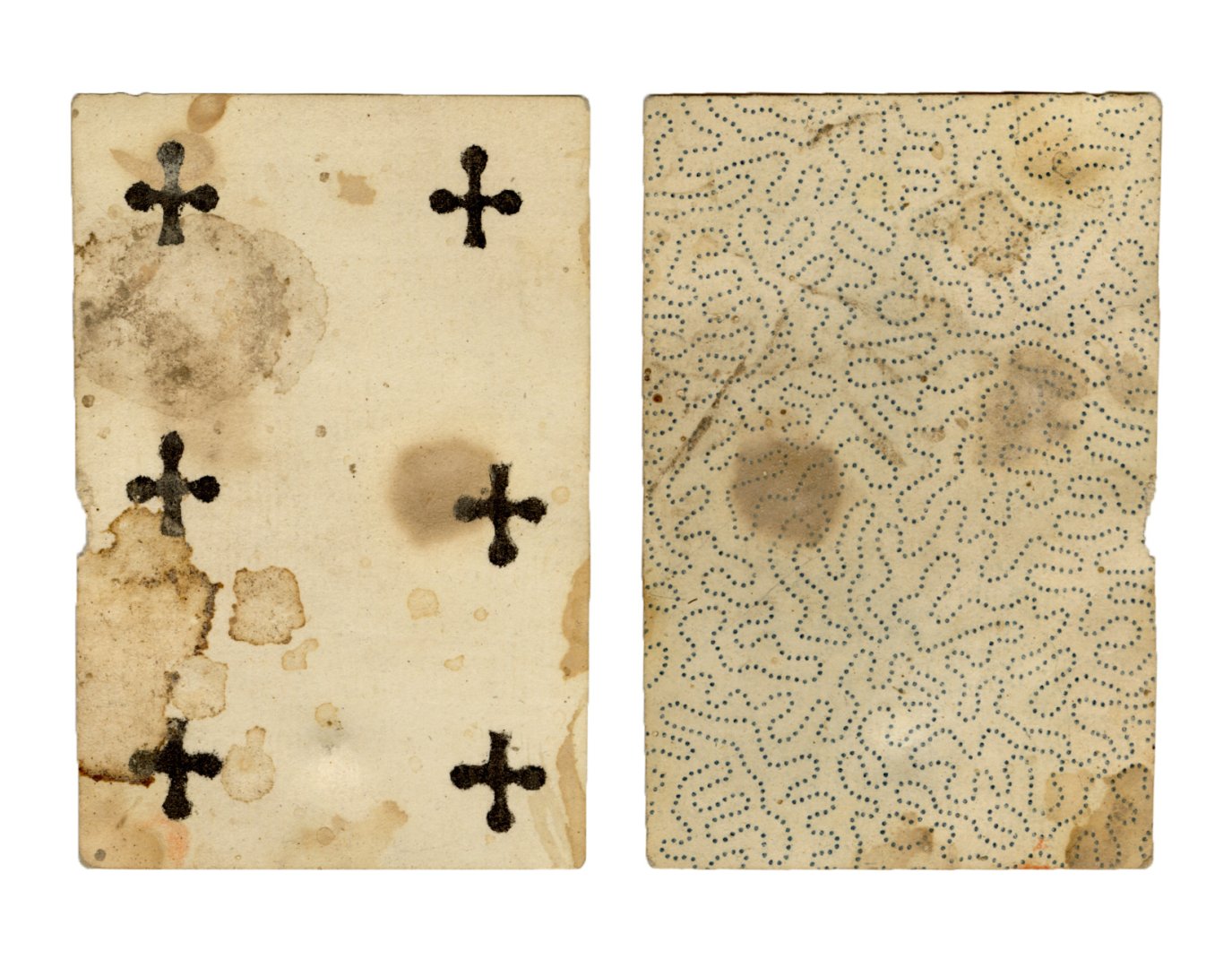
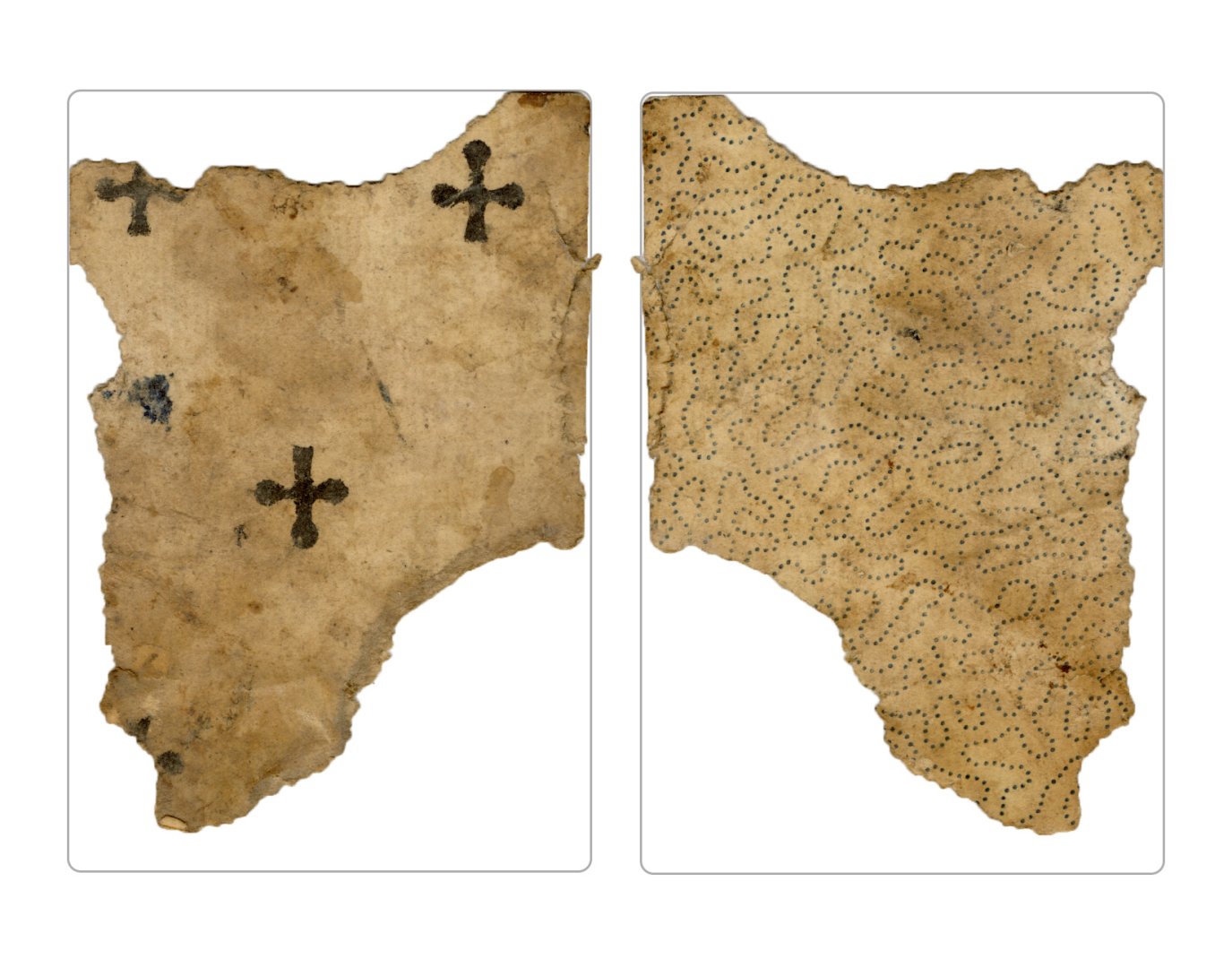
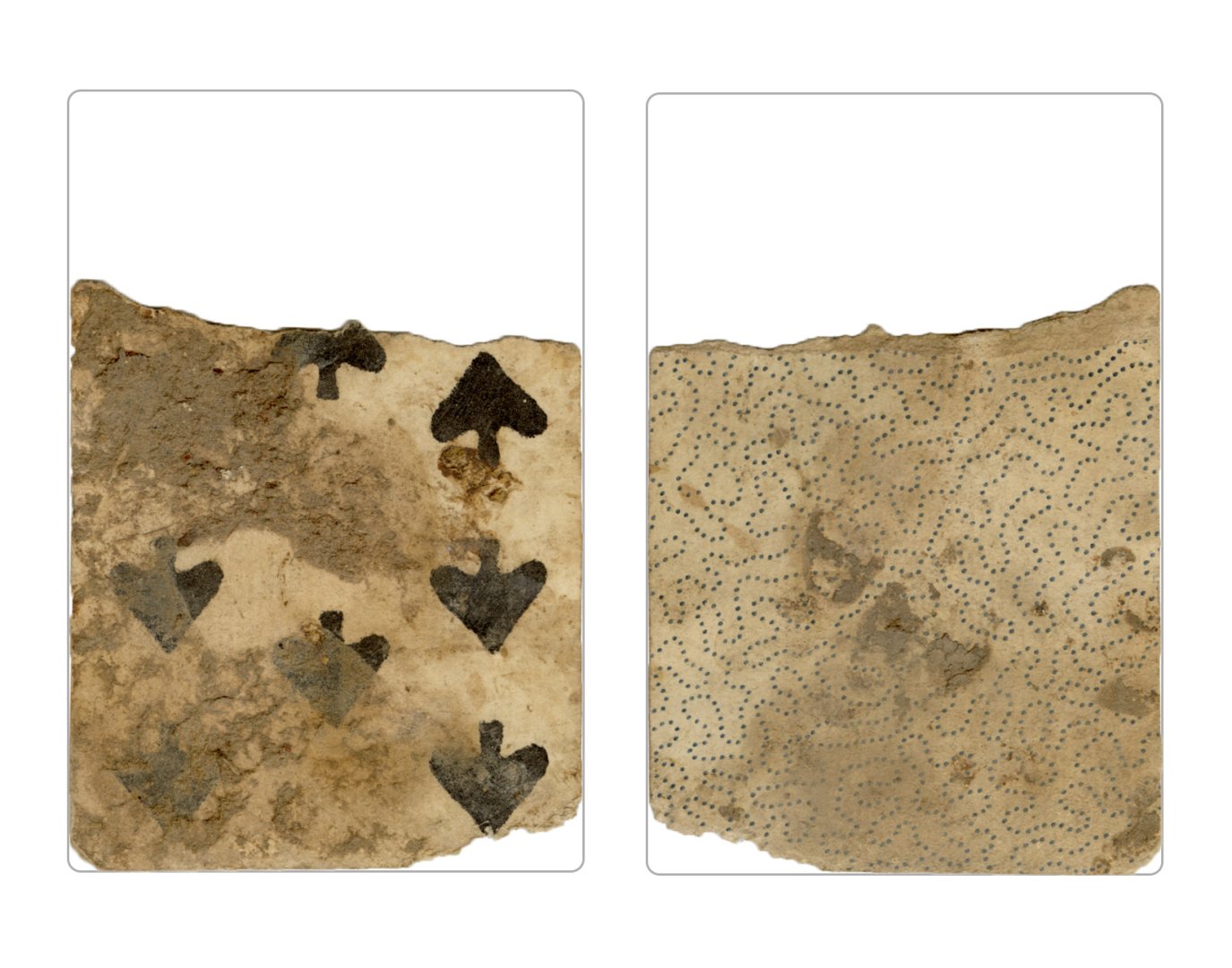
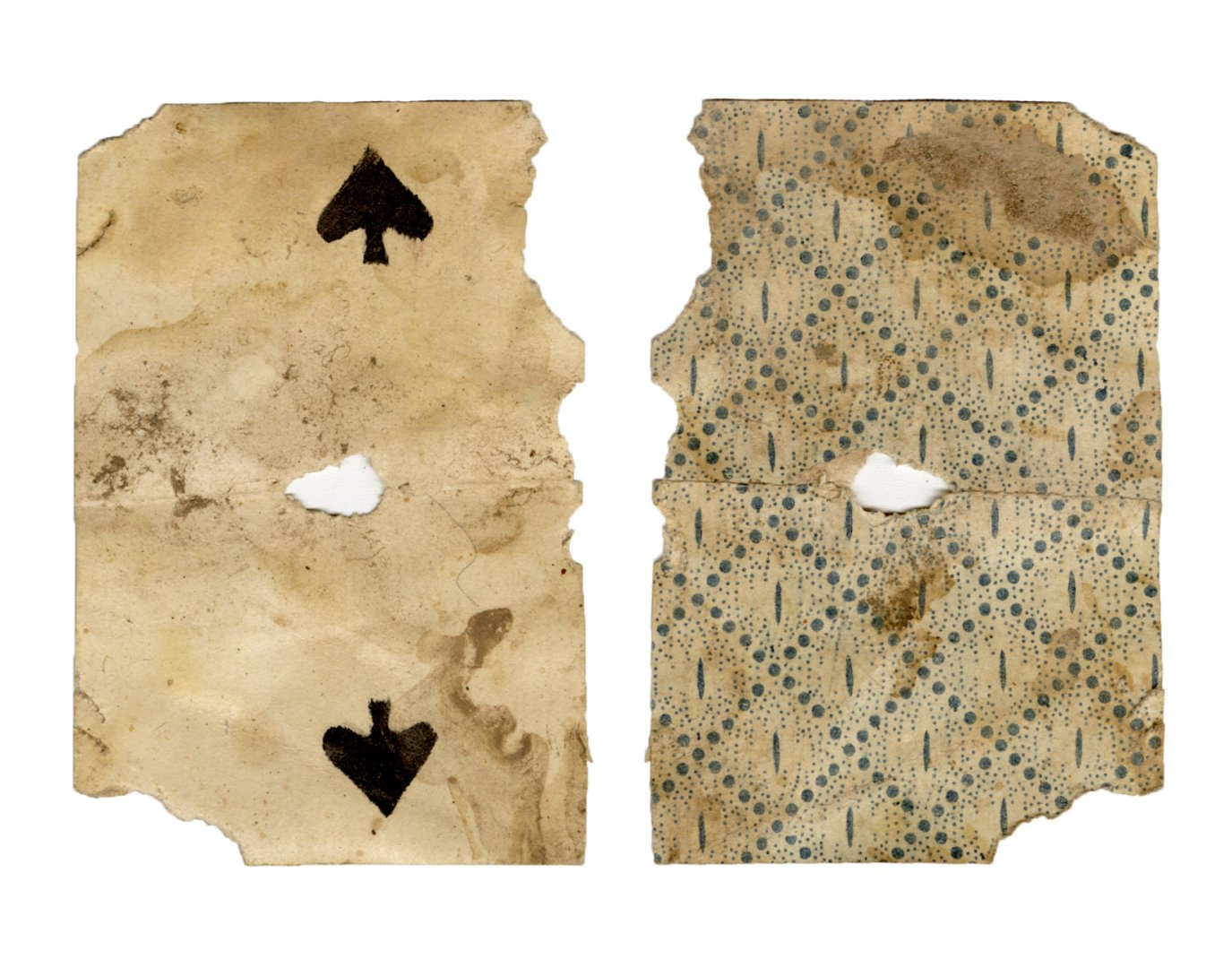
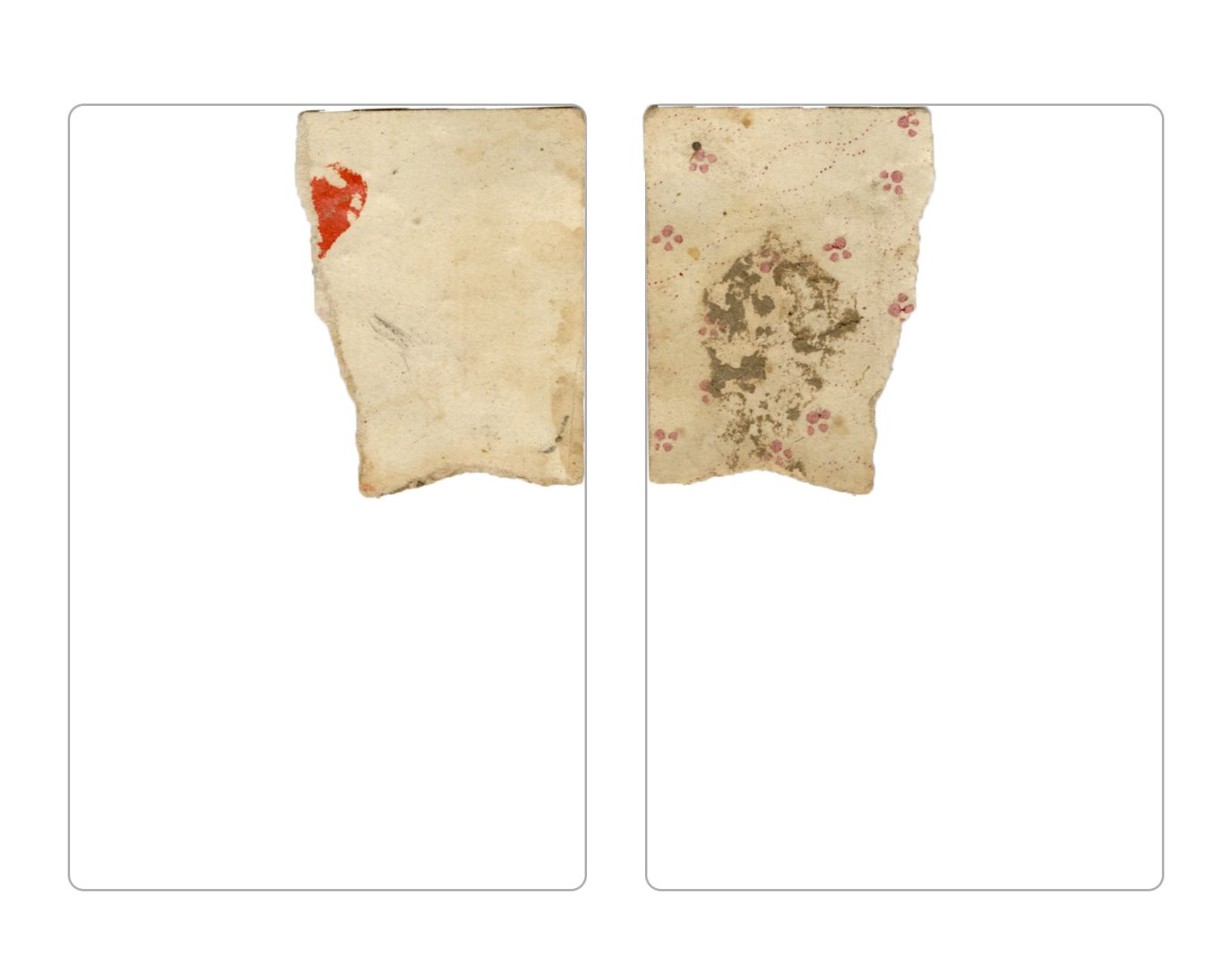
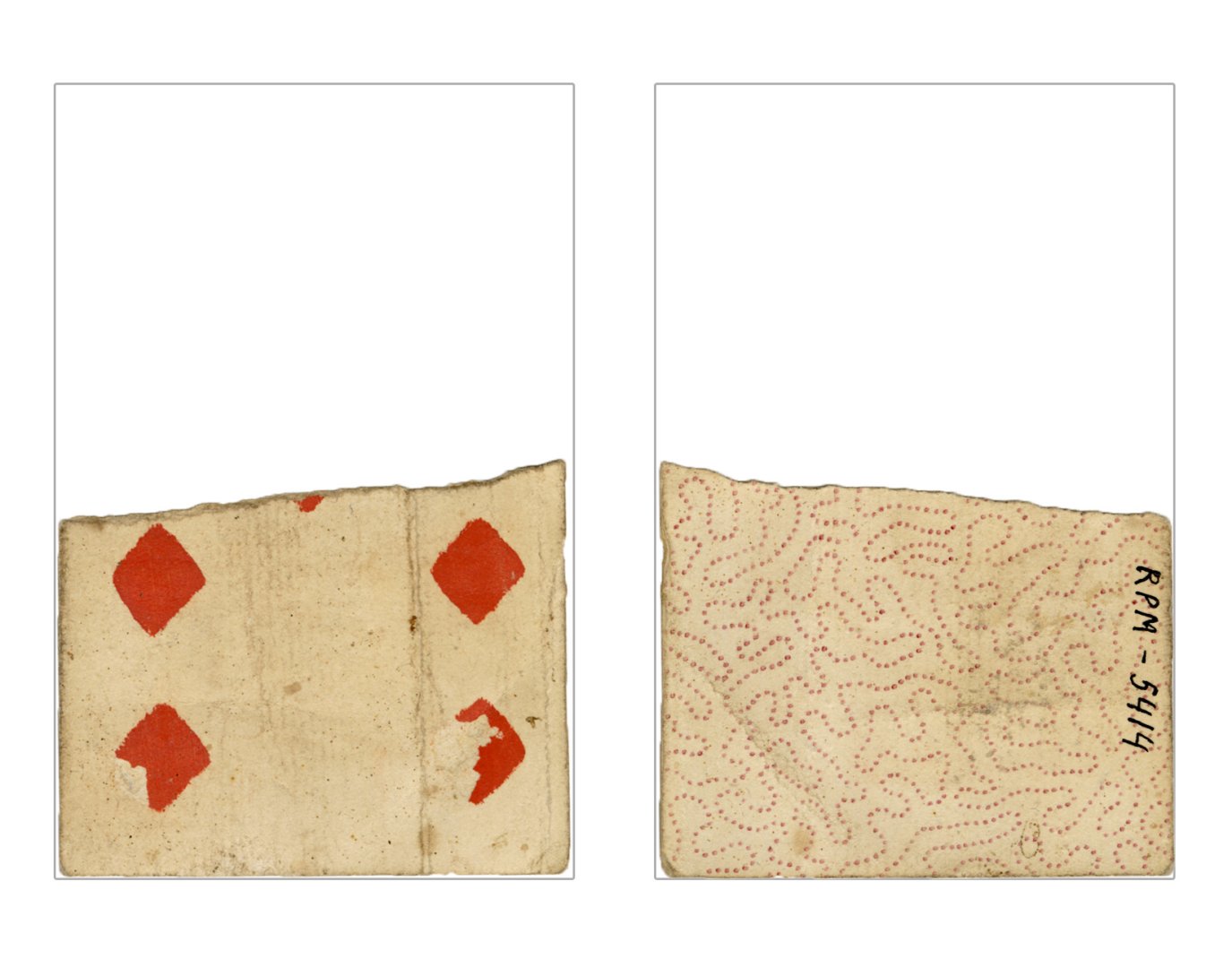
Numeral cards were found on the first, as well as the ground floor (Room 58 and Room 62). Compared to the court cards, these are more difficult to authenticate. There are no distinct stylistic differences in the way the symbols on the cards are depicted, except for the level of detail. Often, older cards will betray thicker traces of stencils, smudges of paint and other irregularities. This is evident on the cards found in rooms 58 and 62. The symbol of clubs on the cards from Room 58 is much thicker and more robust, whereas cards found in Room 62 feature symbols that appear more delicate. However, this can also be deceptive, since resources varied across different card factories, leading to subsequent variations in the quality of their product.
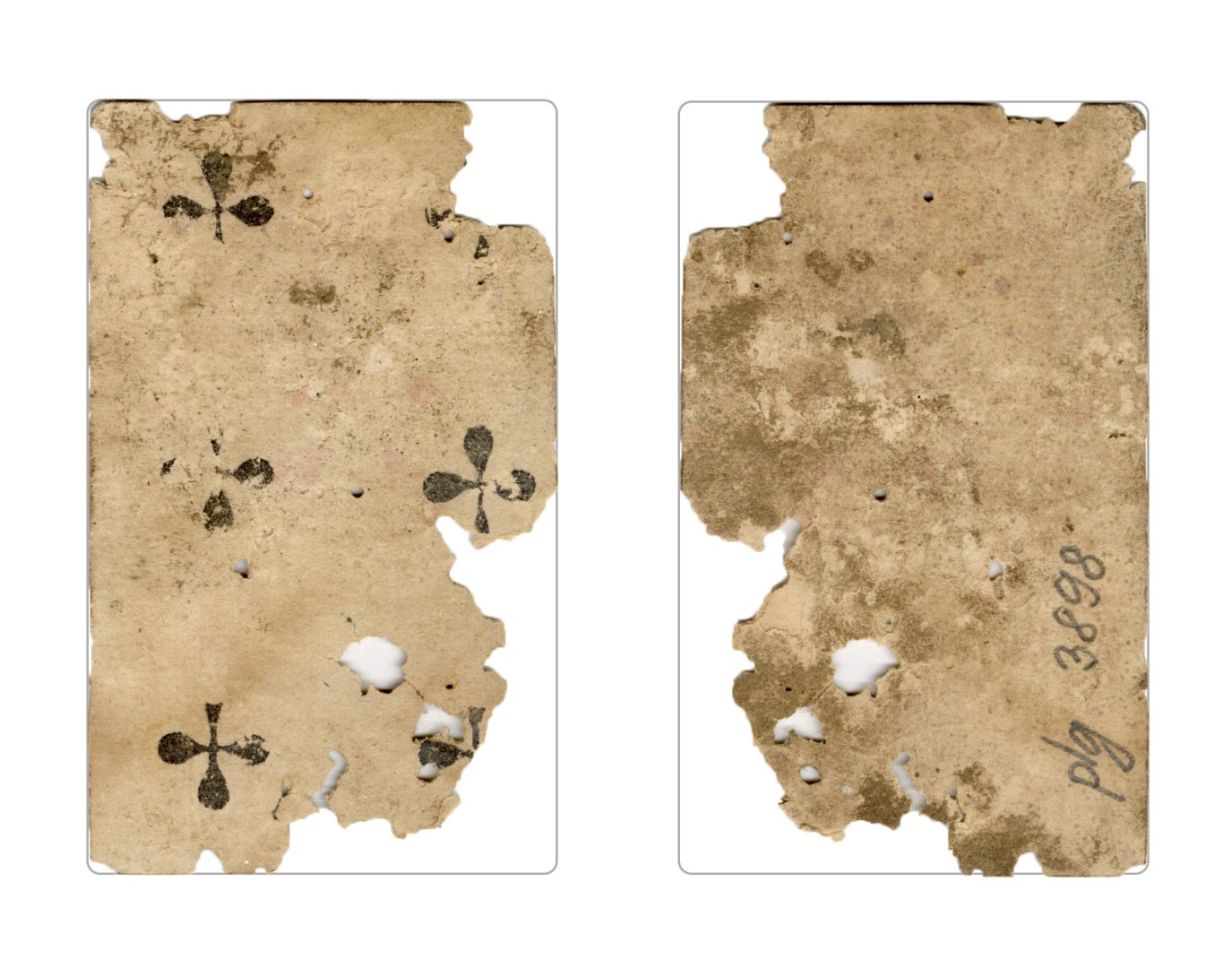
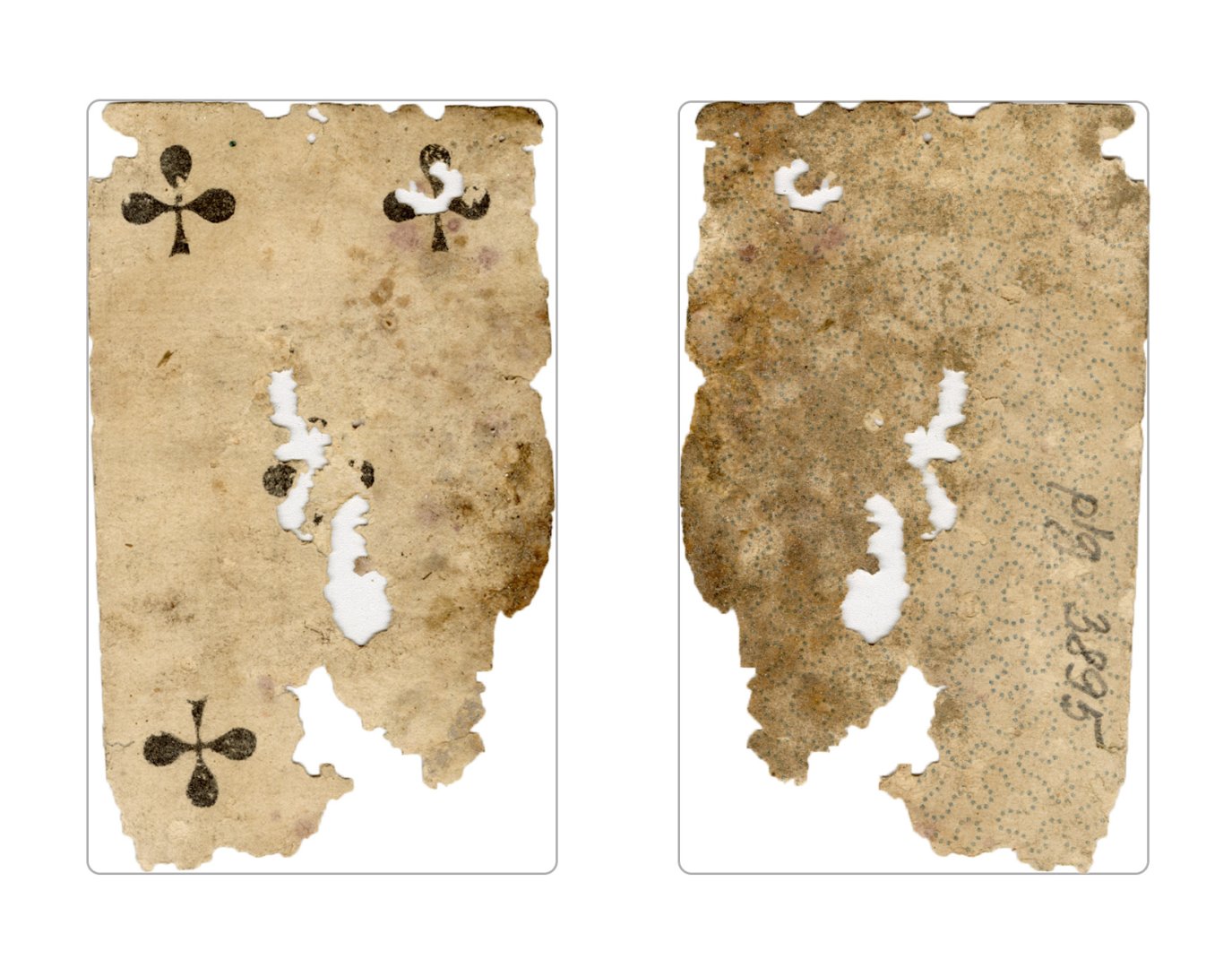
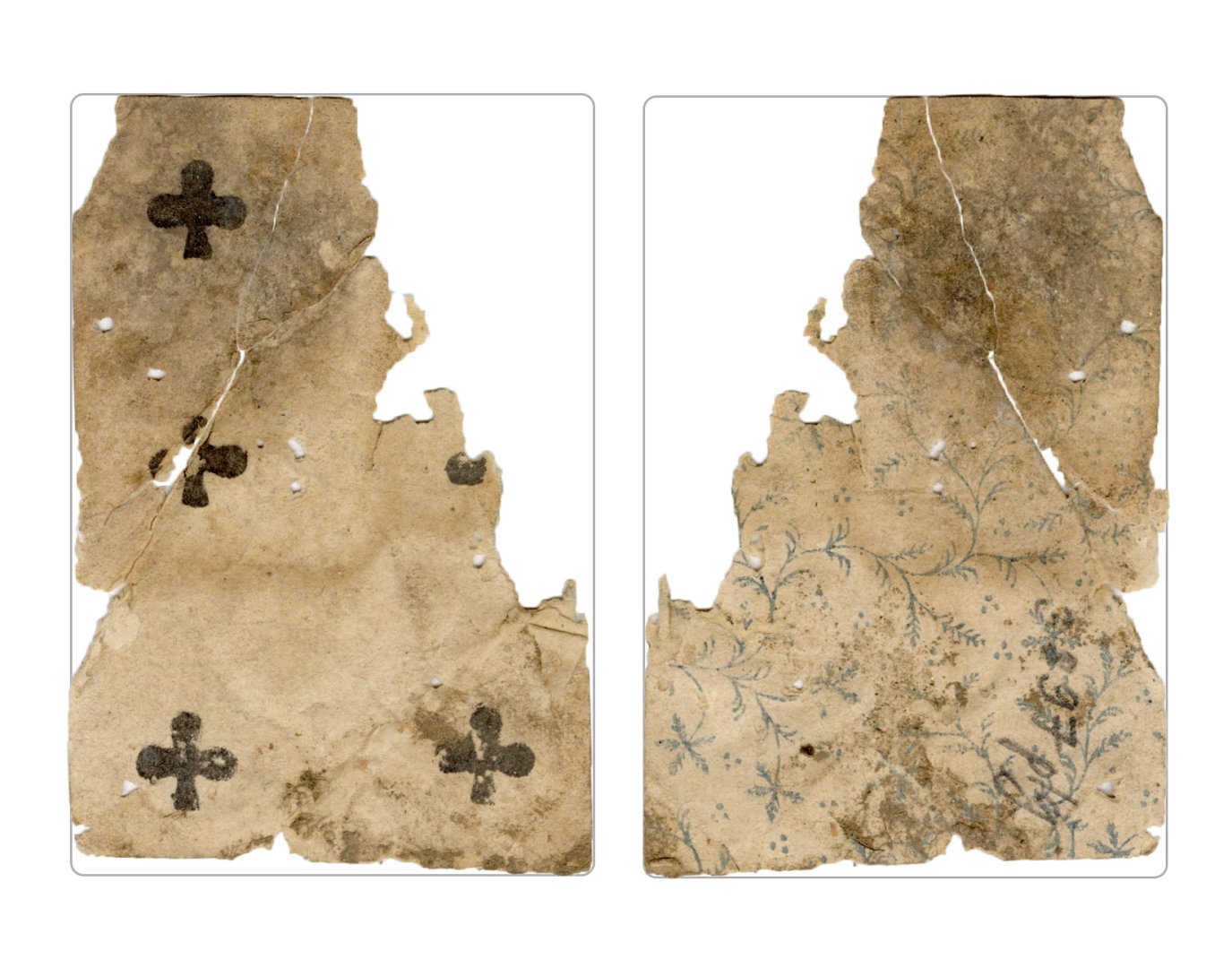
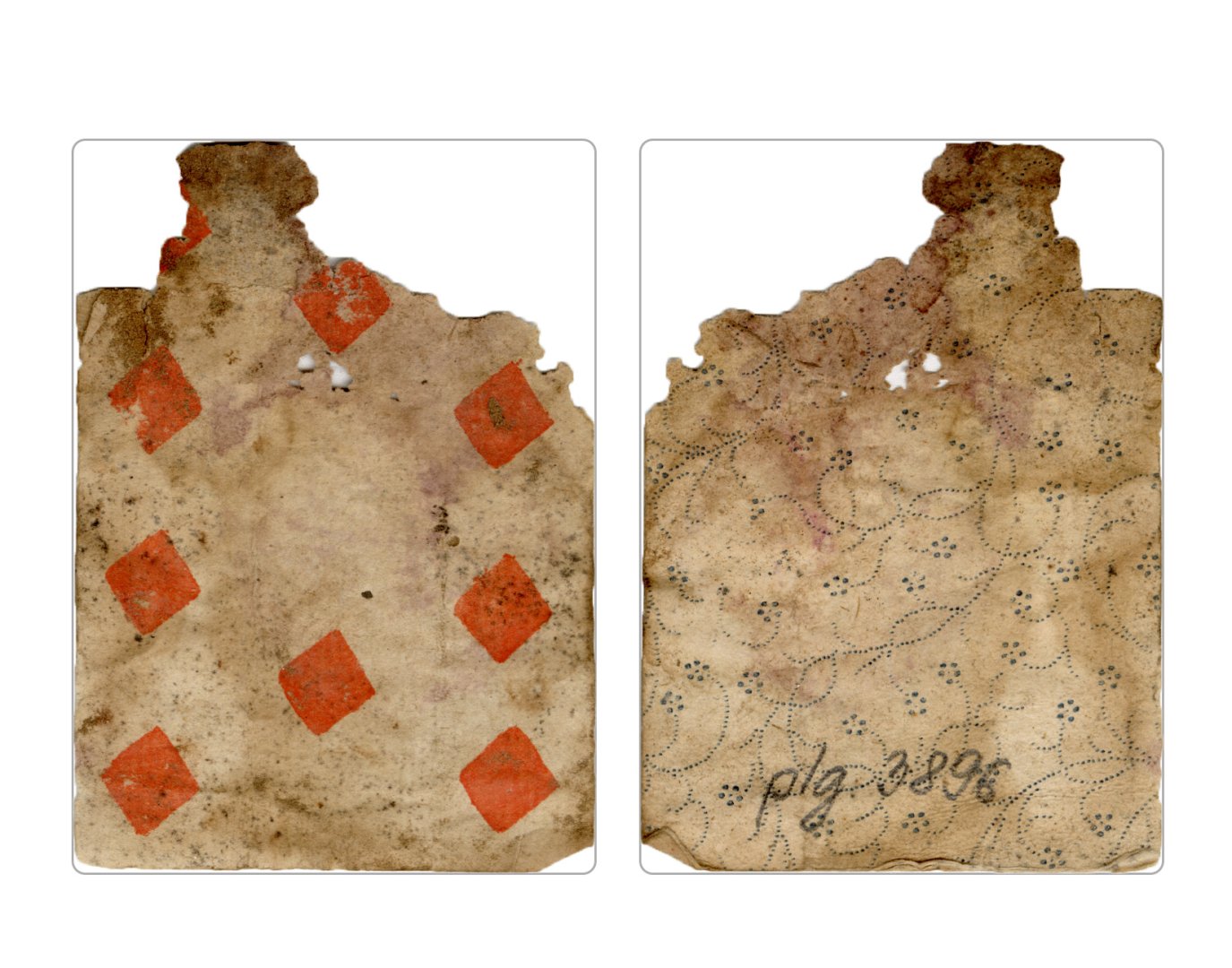
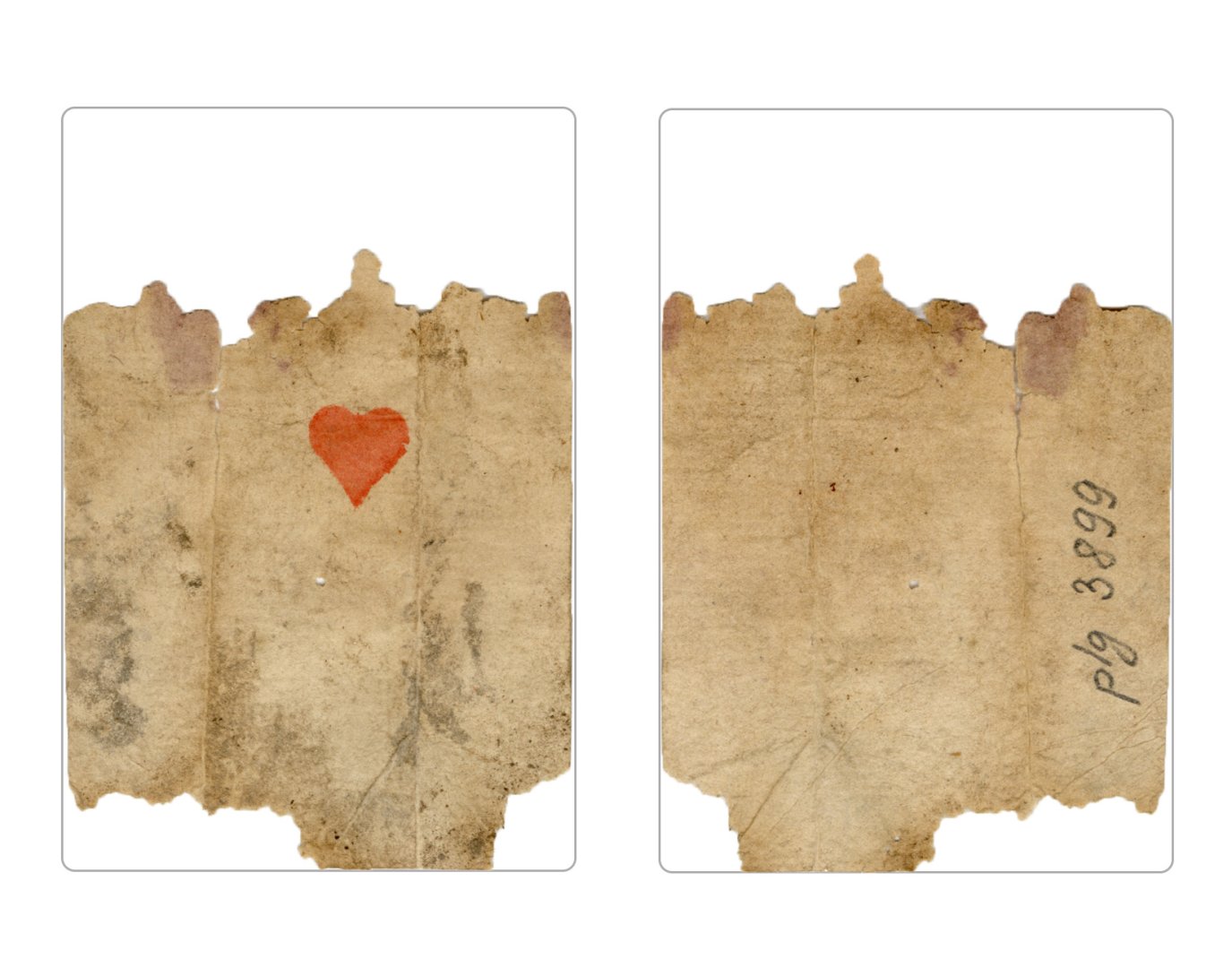
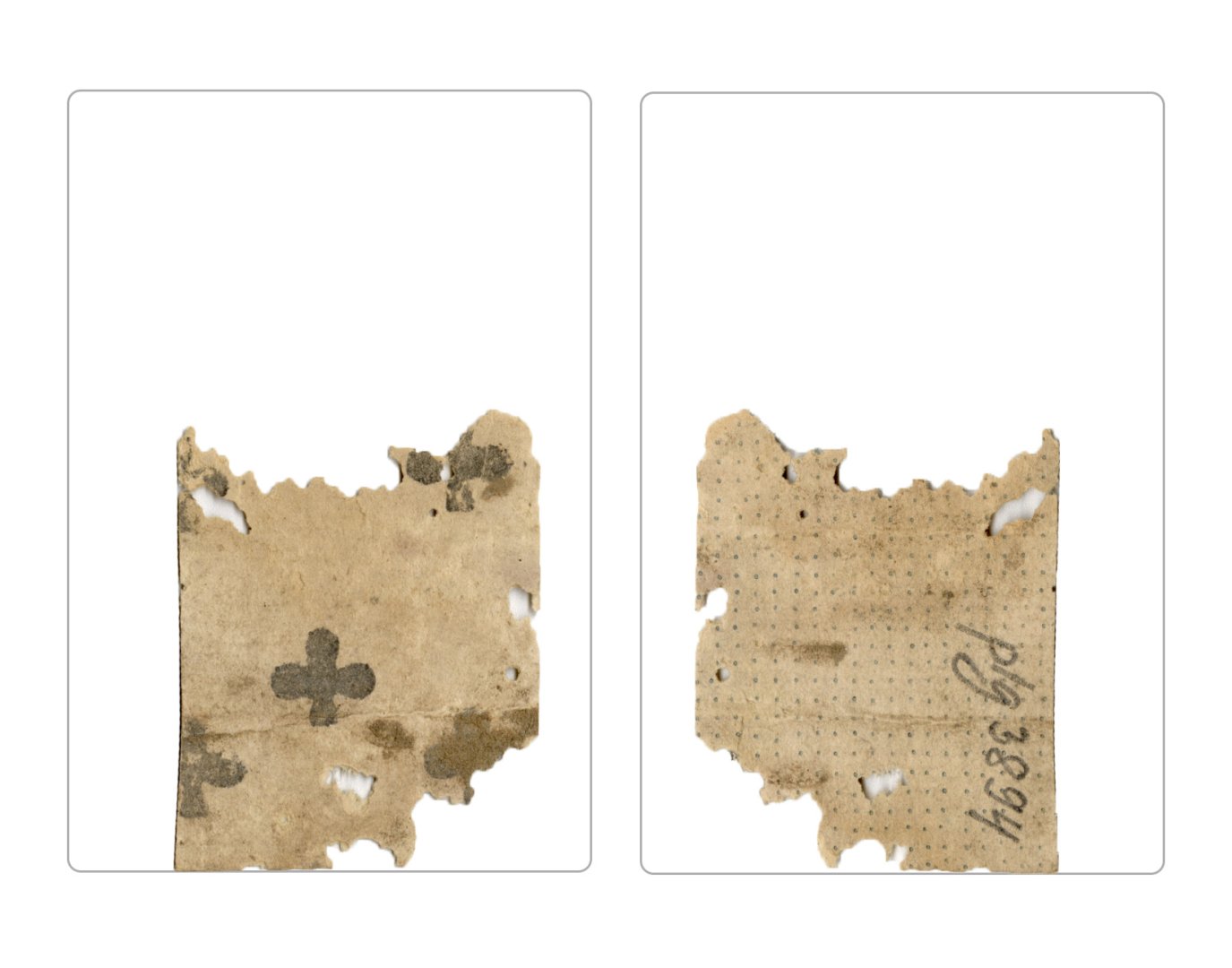
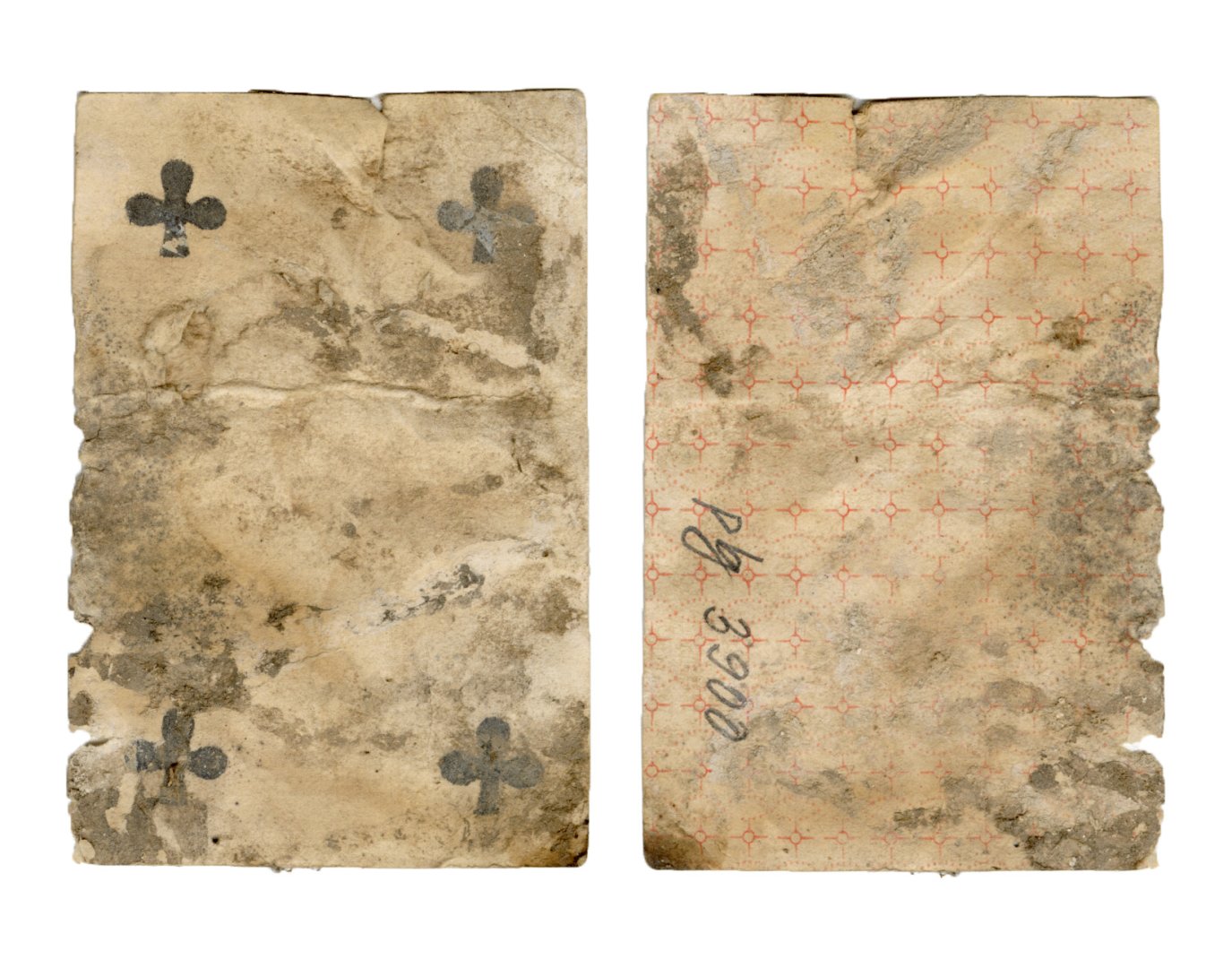
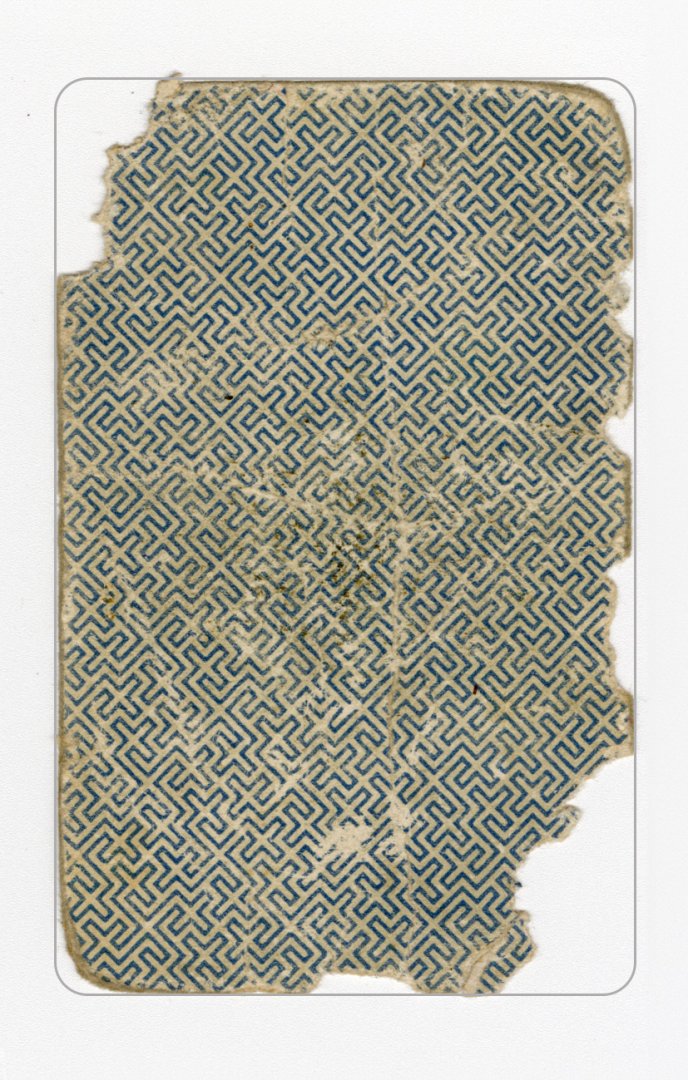
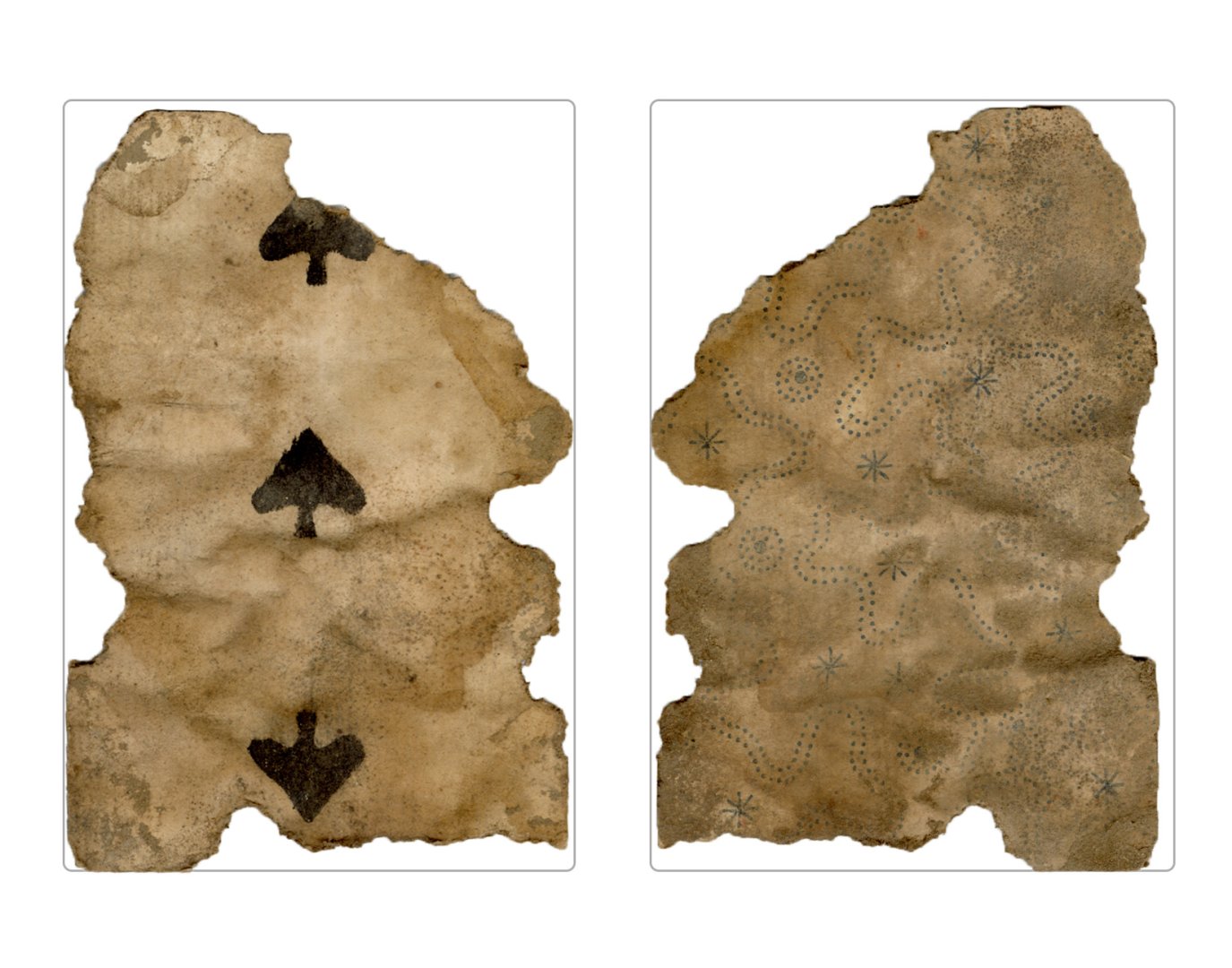
When dating playing cards, the backside design provides little information, since the same pattern can appear across different time periods and countries. The oldest playing cards tend to have either a simple pattern or no pattern at all. Interestingly, in Germany, playing cards were once called Brief or Spiel-Brief, which stands for ‘a letter’. This may be linked to the Crusades when German knights reportedly wrote letters to their families on Arab playing cards, which had blank backs. [28] The Rundāle Palace Compendium also includes several examples of this kind. As printing and publishing techniques advanced, more intricate decorative patterns emerged. The Compendium’s examples likely date to the mid-to-late 18th century.


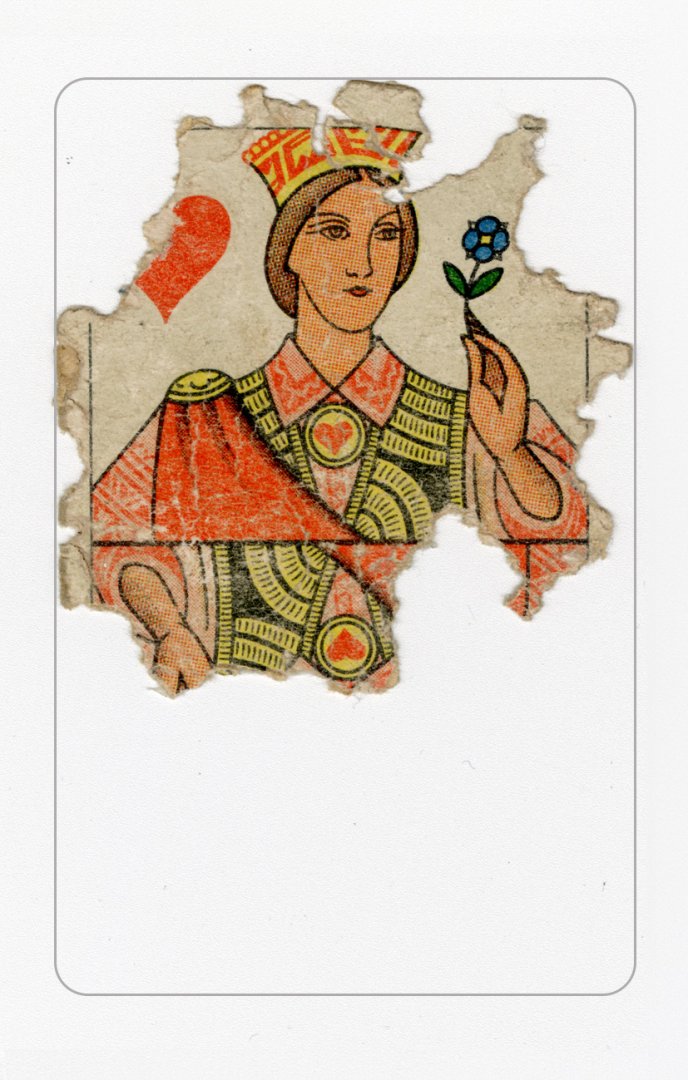
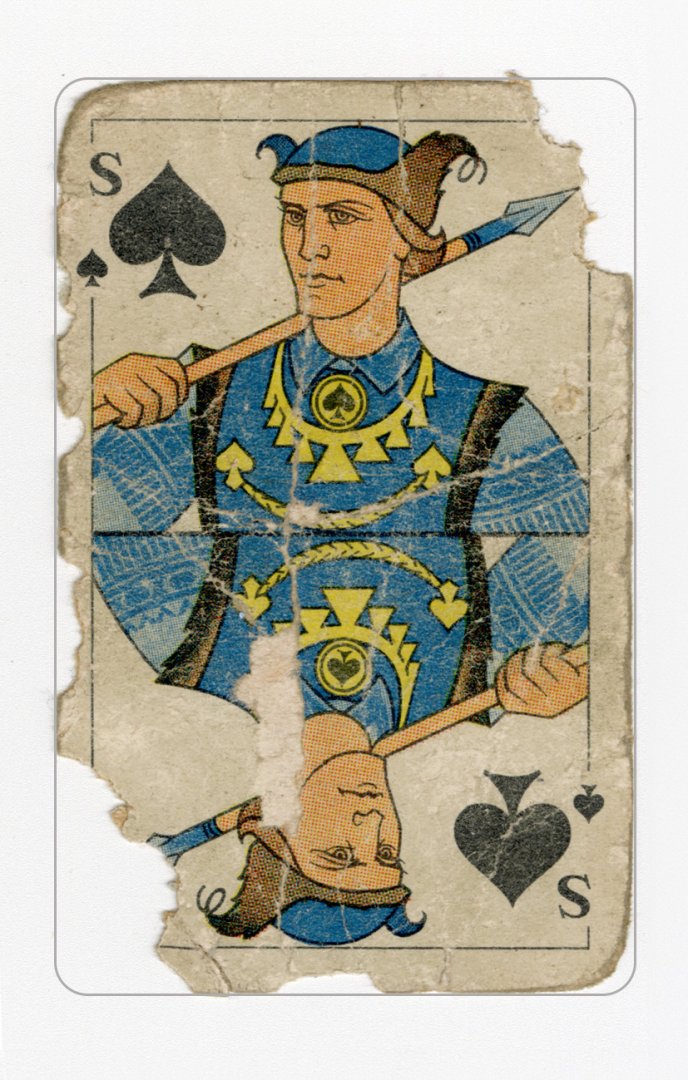
Two notable examples displayed on the museum’s basement floor deserve special mention. These two cards, found in Room 95, were produced during the interwar period as part of a deck published by the Latvian Red Cross (LRC). LRC released several decks during this time, beginning with the first national card deck in 1921, designed by Rihards Zariņš (1869–1939). [29] According to the 1922 rulebook on playing cards, ‘The rights to publish, introduce, and promote playing cards lie solely with the Latvian Red Cross.’ [30] As a result, LRC held a monopoly in this industry. RPM’s collection includes two cards – a queen of hearts and a jack of spades – from a deck released in 1936, designed by the graphic artist Alfrēds Švedrēvics (1887–1979). [31] Interestingly, LRC sold over 98,000 card decks that year. [32] The cards’ design blends the national romanticism of the 1930s with the elegance of Art Deco. The court card illustrations are clearly defined, and the mirrored composition is skilfully executed.
How did the cards end up at the Palace?
The playing cards found at Rundāle Palace are most likely connected to its building and restoration works. The oldest examples may have been played by labourers during the first phase of the Palace’s construction (1736–1740). [33] The playing cards found in the Small Gallery could likely be dated to this period. The cards found on the Palace’s first floor (excluding the Small Gallery), in turn, are likely linked to the second phase of construction in the 1760s following Duke Ernst Johan’s return from exile.
Some of the card fragments can be dated to early 19th century. During the brief occupation by Napoleon’s troops in 1812, the Palace was used as a field hospital and looted, with its interiors severely damaged. These were restored in 1813, when the Palace was under the ownership of Prince Platon Zubov. [34] As in the 18th century, the labourers may have found time to enjoy the occasional game of cards.
Likewise, it could be argued that the playing cards found on the Palace’s ground floor are linked to the 1860s, when the living quarters of its new owners – the Shuvalovs – were refurbished, [35] as we know the floor was replaced during that time. [36]
Written by Dzintra Spradzenko
Researcher at the Department of Collections and Scientific Research, RPM
[1] E. von der Recke, Kādas Kurzemes muižnieces atmiņas [Memoirs of a Noblewoman of Courland]. Aizpute, Harro von Hirschheydt, 2004, p. 254.
[2] ‘Sachen, die zu verauctioniren sind’, Rigische Anzeigen, issue 29, 20 June 1786, p. 281.
[3] G. Beal, Playing Cards and their Story. New York, Arco Pub. Co., 1975, p. 8.
[4] S. W. Singer, Researches into the History of Playing Cards; with Illustrations of the Origin of Printing and Engraving on Wood. London, R. Triphook, 1816, p. 7.
[5] J. K. Van Rensselaer, The Devil’s Picture-Books: a History of Playing Cards. New York, Dodd, Mead and Co., 1890, pp. 49–50.
[6] G. Beal, p. 10.
[7] W. H. A. Willshire, A Descriptive Catalogue of Playing and Other Cards in the British Museum, Accompanied by a Concise General History of the Subject and Remarks on Cards of Divination and of a Politico-Historical Character. London, printed by Order of the Trustees, 1876, p. 13. It is believed that the invoice is kept in the French National Archives.
[8] G. Beal, p. 7.
[9] W. H. Willshire, p. 13.
[10] ibid 18.
[11] T. Husband, ‘Before Fortune-Telling: The History and Structure of Tarot Cards’, The Metropolitan Museum of Art Perspectives [web blog], https://www.metmuseum.org/perspectives/tarot-2 (accessed 3 March 2025).
[12] W. H. Willshire, p. 28.
[13] ibid 30.
[14] J. K. Van Rensselaer, p. 143.
[15] W. H. Willshire, p. 30. The French Playing Card Museum at Issy-les-Moulineaux is said to have cards with the so-called Paris pattern dating back to ca. 1510. See: https://i-p-c-s.org/pattern/PS112.pdf (accessed 19 February 2025).
[16] G. Beal, p. 45.
[17] D. Hoffmann, The Playing Card; an Illustrated History, New York, Graphic Society, 1973, p. 31.
[18] ibid 32–33.
[19] ibid 33.
[20] Sir W. G. Benham, Playing Cards: History of the Pack and Explanations of its Many Secrets, London, Spring Books, 1931, p. 12.
[21] G. Beal, p. 67.
[22] https://www.britishmuseum.org/collection/object/P_1896-0501-457 (accessed 24 February 2025).
[23] https://dlc.library.columbia.edu/field_playing_cards/10.7916/D8T74135 (accessed 24 February 2025).
[24] https://dlc.library.columbia.edu/field_playing_cards/10.7916/D83N3M20 (accessed 24 February 2025).
[25] https://dlc.library.columbia.edu/field_playing_cards/10.7916/D82N6JWR (accessed 24 February 2025).
[26] Some sources claim that mirrored court cards only appeared at the end of the 18th century or the beginning of the 19th century. However, the digital library of Columbia University contains examples of French-suited cards dating back to the 1750s. URL: https://dlc.library.columbia.edu/field_playing_cards/10.7916/D8T74135 (accessed 24 February 2025).
[27] URL: https://gallica.bnf.fr/ark:/12148/btv1b10533333q/f49.planchecontact.r=cartes%20%C3%A0%20jouer (accessed 25 February 2025).
[28] J. K. Van Rensselaer, p. 85.
[29] ‘The Latvian Red Cross 1921 Annual Overview’, The Latvian Red Cross magazine, issue 2, 15 April 1922, p. 7.
[30] Laws and Government decrees, 10 October 1922 (Latvia), p. 392.
[31] The author expresses her gratitude to the Kuldīga Regional Museum for the information provided.
[32] ‘The Lottery Department’s operations in 1936’, p. 10.
[33] I. Lancmanis, Rundāles pils I. Vēsture [Rundāle Palace, vol. 1: History]. Rundāle Palace Museum, 2015, p. 48.
[34] Lancmanis, I. Rundāles pils I. Vēsture. Rundāle: Rundāles pils muzejs, 2015. – 48. lpp.
[35] ibid 172.
[36] The Scientific Archive at Rundāle Palace
16.04.2025